
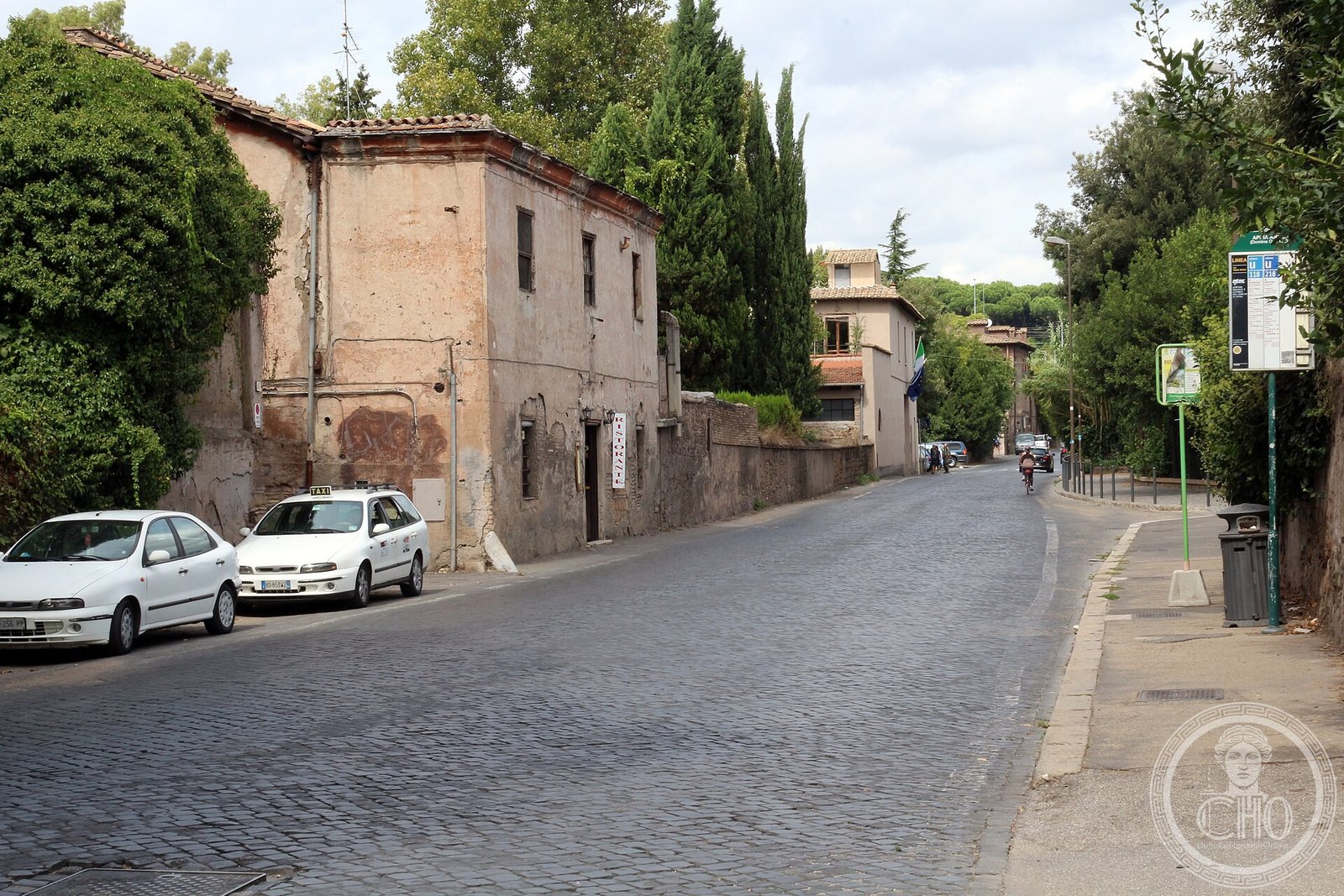
A former industrial plant on the Appian Way now serves as the headquarters of the Appian Way Regional Park, preserving centuries of production history within its walls.
At a glance
The Cartiera Latina occupies a strategic position near the Aurelian Walls, where the Almone river flows along its entire length. Granted to the Appian Way Regional Park in 1998, this rare surviving industrial site has been repurposed as a multifunctional cultural and educational center. Its location bridges the ancient Appian Way and modern via Cristoforo Colombo.
History
The site’s productive use traces back to 1061, when a fulling mill processed woolen cloth. From 1600, Capuchin Fathers operated a textile workshop here, connected to their convent in Rome. Early in the 19th century, the structure transformed into a mill for grinding natural substances for various applications.
In 1912, the plant underwent modification to begin paper production from linen and cotton rags, later shifting to waste paper. The factory operated until 1985, when production ceased. Five years after closure, the industrial complex transferred to the Appian Way Regional Park for conversion into a public facility.
What you see
The complex retains its industrial structure while accommodating contemporary uses. Two exhibition rooms—Nagasawa and Appia—display rotating exhibitions alongside a dedicated conference space available for public events. The library serves researchers and visitors. Di Natura, a naturalistic didactic exhibition area, engages schoolchildren and families with guided activities. An Info Point and bookshop facilitate visitor orientation and education.
Beyond the buildings, the grounds feature Hortus Urbis, an educational garden preserving Roman countryside traditions, complemented by parking facilities and landscaped outdoor space.
Cultural significance
The Cartiera Latina represents a rare example of industrial heritage within Rome’s urban fabric. Its thousand-year trajectory—from medieval fulling works through monastic textile production to modern paper manufacturing—documents the evolution of craft and industry along the Almone river. As the park’s headquarters, it embodies a contemporary commitment to interpreting both cultural and natural heritage for public engagement.
Key facts
- Address: Via Appia Antica, 42, Rome
- Coordinates: 41.868543, 12.502423
- Phone: +39 06 5135316
- Website: parcoappiaantica.it
Practical information
The complex operates as a public cultural facility with exhibition rooms, library, and educational spaces. Di Natura offers activities for schools and families. The conference room is available for rental; consult the official website for booking and event regulations. Opening hours and admission charges are available on the park’s official website.
Getting there
The Cartiera Latina is situated on the Appian Way (Via Appia Antica) in southeastern Rome, within the Appian Way Regional Park boundaries. It is accessible by public transportation and private vehicle; the site provides parking facilities for visitors.
See the place
Sources & resources
Find it on the map
See this place and what’s around it →Historical events at this place (3)
📷 Become a Cultural Heritage Online photographer
Share your photos of places: they stay published under your name as the author. The more they're seen, the more you get noticed — and soon a contest will reward the most appreciated photos.
Log in or sign up free to add a photoIs this page about you?
This page is read by travellers and heritage enthusiasts who find it on Google. Tell us how you are connected to this place and we will take it from there.