
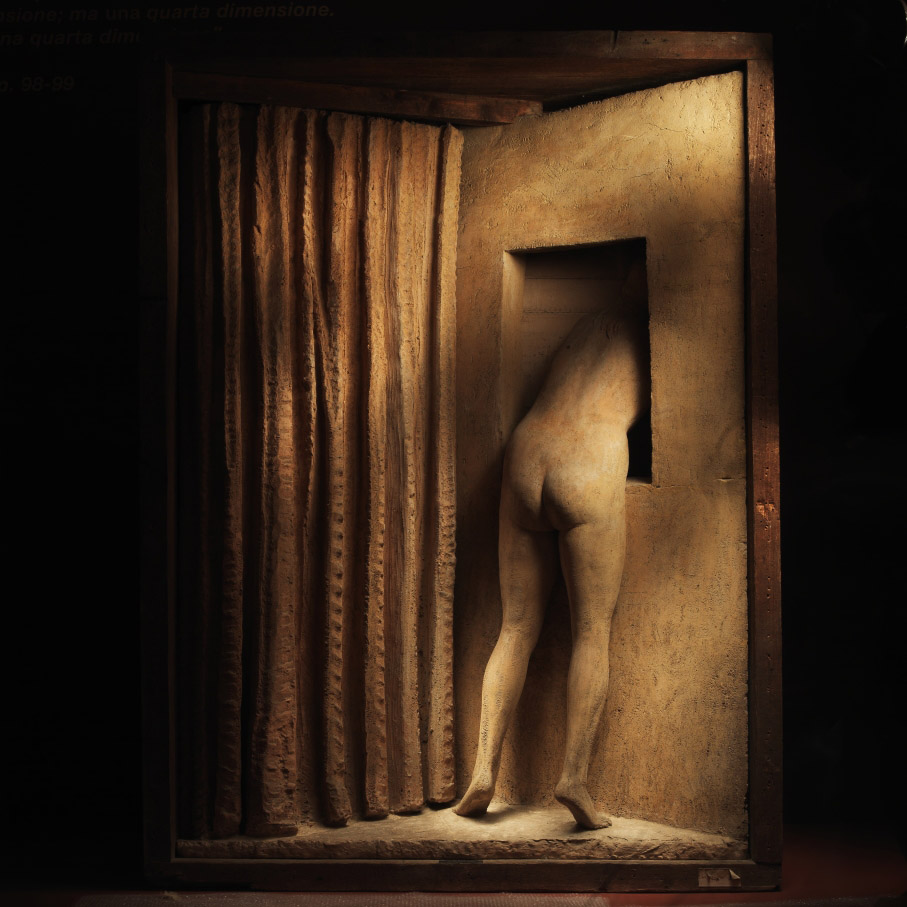
La veglia is a work by Arturo Martini created in 1932. The sculpture dates from the period when Martini, having moved beyond his early Futurist phase, developed a distinctive approach combining classical form with modernist sensibility and ironic reinvention of traditional sources.
Martini’s artistic trajectory spanned the two decades between the world wars, a period marked by constant negotiation between archaic and contemporary modes. His works from this era reveal an “eclectic capacity to combine or reinterpret sources,” operating with what contemporaries recognized as agility and formal inventiveness. La veglia belongs to this mature phase of his practice.
About Arturo Martini
Born in Treviso in 1889 to a working-class family, Martini pursued arts and crafts training through night classes. He engaged with the Futurist movement between 1914 and 1918, corresponding with key figures including Umberto Boccioni. His early modernist works employed archaic tendencies, two-dimensionality and polychrome effects. During the 1920s and 1930s, his work evolved toward a more traditional sculptural language while retaining formal complexity and conceptual sophistication. Martini continued his practice until his death in 1947.
Details
- Creator: Arturo Martini
- Year: 1932
- Period: Italian interwar sculpture
- Movement: Transition from Futurism to Novecento classicism
Frequently asked questions
Who was Arturo Martini?
Arturo Martini (1889–1947) was an Italian sculptor active between the two world wars who moved fluidly between vigorous classicism and modernist forms, beginning as a Futurist before developing an eclectic, ironic approach to traditional sculptural sources.
When was La veglia created?
La veglia was completed in 1932, during the mature phase of Martini’s career when he had established himself as a major figure in Italian sculpture.
What characterized Martini’s artistic approach?
Martini’s work was marked by an ability to combine and reinterpret diverse sources with agility and irony, moving between modernist and classical vocabularies rather than adhering rigidly to a single aesthetic doctrine.
