

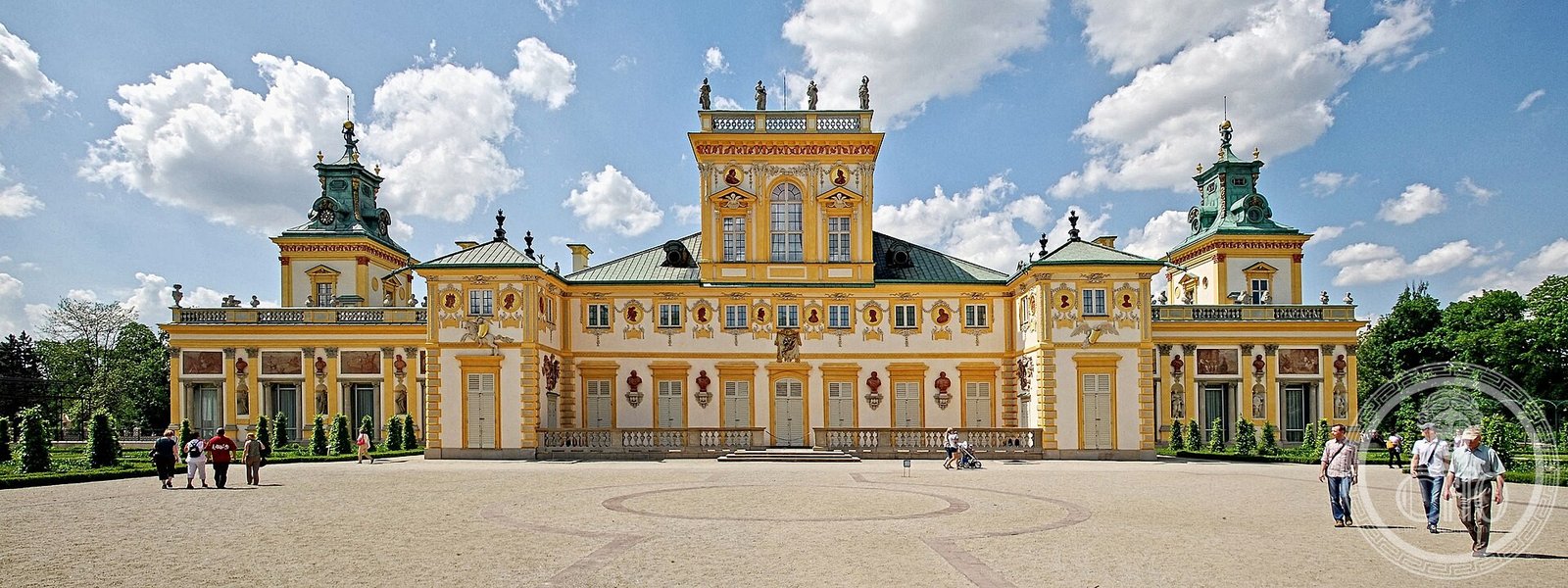
Wilanów Palace is a Baroque royal residence in the Wilanów district of Warsaw, built between 1677 and 1696 for King John III Sobieski of Poland. One of the finest examples of Baroque architecture in the country, it survived the partitions of Poland and both World Wars intact, and today houses a museum of decorative arts and portraiture within its richly ornamented state apartments.
At a glance
- Type
- Baroque royal palace and museum
- Period
- Built 1677–1696; extended through 18th century
- Style
- Baroque; architect Augustyn Wincenty Locci
- Location
- ul. Stanisława Kostki Potockiego 10/16, Warsaw, Poland · 52.1652° N, 21.0883° E
Overview
Wilanów Palace is regarded as one of Poland’s most important Baroque monuments and a rare survivor of Warsaw’s turbulent history. The palace and its formal gardens occupy a large estate in the southern outskirts of Warsaw, now absorbed into the city. It stands as a testament to the ambitions of King John III Sobieski, who sought to create a residence that would rival the great royal palaces of Western Europe.
History
Construction began in 1677 under the direction of the Italian-born architect Augustyn Wincenty Locci, who transformed an existing manor house into a Baroque country villa for King John III Sobieski. Sobieski named the estate “Villa Nova” — later Polonised to Wilanów. After Sobieski’s death in 1696, the palace passed through several aristocratic and royal owners who extended the wings and enriched the interiors. The Potocki family acquired Wilanów in 1799 and opened it as Poland’s first public museum in 1805. Despite the destruction of much of Warsaw during World War II, the palace and its collections were largely preserved.
What you see
The palace facade is one of the most distinctive in Polish Baroque architecture, its central body flanked by two lower wings and enriched with decorative attic parapets, painted friezes, and gilded coats of arms. The state apartments inside display original furnishings, Flemish tapestries, historical portraits, and decorative arts from the seventeenth to nineteenth centuries. The formal gardens behind the palace extend in a series of terraced parterres, fountains, and tree-lined avenues down to a lake, offering one of Warsaw’s most beautiful green retreats.
Cultural significance
Wilanów Palace is a symbol of Polish royal culture and aristocratic patronage at their peak, and its role as Poland’s first public museum gives it a special place in the history of cultural heritage preservation. Together with the Royal Castle and Łazienki, it forms the triad of major Warsaw palace-museums that anchor the city’s identity as a centre of European court culture. The palace and its gardens are listed as a Historic Monument of Poland and are proposed for UNESCO World Heritage status as part of the historic centre of Warsaw.
Practical information
- Address
- ul. Stanisława Kostki Potockiego 10/16, 02-958 Warszawa, Poland
- Tickets
- Separate tickets for palace interiors and gardens; check official website for current prices
Getting there
Wilanów is located approximately 10 kilometres south of central Warsaw. Bus lines 116, 180, and 519 run from the city centre (near the Old Town and Łazienki) to a stop at the palace gates. The journey takes approximately 25–40 minutes depending on traffic. Taxis and ride-hail services are readily available. There is no direct Metro connection; the nearest Metro station is Wilanowska on Line M1, from which bus connections continue to the palace.
Sources & resources
Find it on the map
See this place and what’s around it →📷 Become a Cultural Heritage Online photographer
Share your photos of places: they stay published under your name as the author. The more they're seen, the more you get noticed — and soon a contest will reward the most appreciated photos.
Log in or sign up free to add a photoIs this page about you?
This page is read by travellers and heritage enthusiasts who find it on Google. Tell us how you are connected to this place and we will take it from there.