
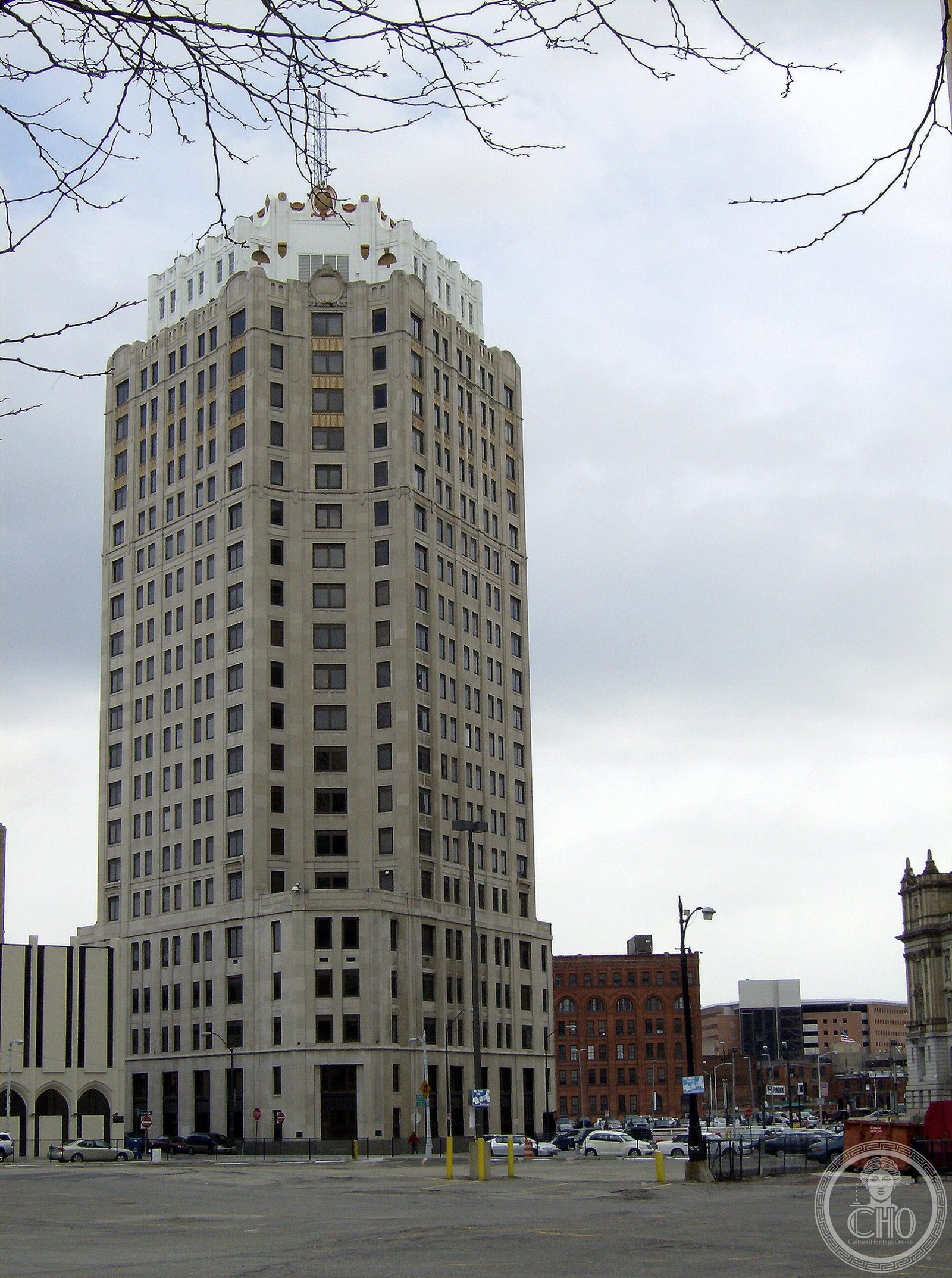
A 23-story Art Deco office tower in downtown Detroit, designed by Louis Kamper and completed in 1928, exemplifying the geometric sophistication and material richness of the era.
At a glance
The Water Board Building stands at 735 Randolph Street in the heart of Detroit’s commercial district. This high-rise combines functional office space with distinctive Art Deco ornamentation, marking a pivotal moment in the city’s architectural development during the prosperous 1920s.
History
Constructed in 1928, the Water Board Building emerged during Detroit’s economic boom, when the automobile industry fueled rapid urban growth. The building served the city’s water department and commercial tenants, establishing itself as a landmark of the era’s optimism and investment in civic infrastructure.
What you see
Louis Kamper’s design showcases hallmark Art Deco features through geometric forms and vertical emphasis. The exterior wraps itself in granite, limestone, marble, and terra cotta—materials chosen for both durability and visual impact. Ornamental detailing in terra cotta provides texture and relief across the façade, while the building’s proportions and setbacks create a dynamic silhouette against Detroit’s skyline.
Cultural significance
The Water Board Building represents a pivotal moment in American commercial architecture. Its design by a leading Detroit architect reflects the city’s confidence during the interwar period, when innovative building techniques and stylistic ambition defined major urban centers.
Key facts
- Location: 735 Randolph Street, Detroit, Michigan, United States
- Completed: 1928
- Height: 23 stories
- Architect: Louis Kamper
- Style: Art Deco
- Primary materials: Granite, limestone, marble, and terra cotta
- Coordinates: 42.3327°N, 83.0441°W
Practical information & getting there
The Water Board Building is located at 735 Randolph Street in downtown Detroit. The building remains accessible as part of the city’s downtown streetscape and may be viewed from the street. For current visiting hours or interior access information, contact local Detroit tourism resources or the building’s management office.
Sources & resources
Find it on the map
See this place and what’s around it →📷 Become a Cultural Heritage Online photographer
Share your photos of places: they stay published under your name as the author. The more they're seen, the more you get noticed — and soon a contest will reward the most appreciated photos.
Log in or sign up free to add a photoIs this page about you?
This page is read by travellers and heritage enthusiasts who find it on Google. Tell us how you are connected to this place and we will take it from there.