
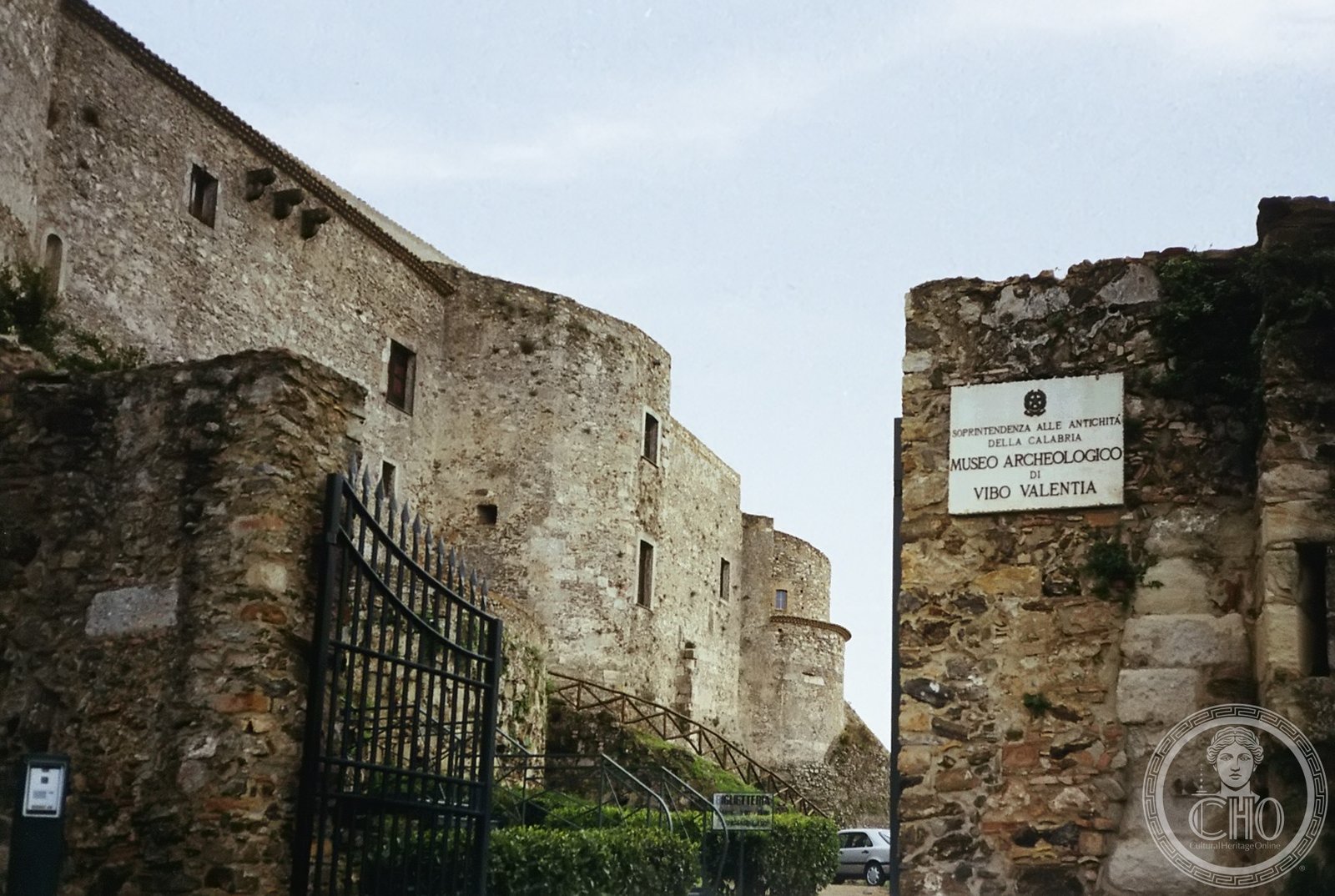
Housed in a Norman-Swabian castle, this museum preserves the archaeological heritage of ancient Hipponion and Roman Valentia through collections spanning prehistory to the medieval period.
At a glance
The Vito Capialbi National Archaeological Museum occupies the Castle of Vibo Valentia, a landmark structure dating to the era of Frederick II. Established in 1969 and named after the 19th-century antiquarian scholar Count Vito Capialbi, the museum moved to its present location in 1995 following careful restoration of the Norman-Swabian fortress.
History
Count Vito Capialbi (1790–1853) was an antiquarian whose passion for preserving local testimony transformed understanding of the city’s past. He traced its continuity from the Greek colony of Hipponion through the Roman settlement of Valentia, assembling the first systematic collection of artifacts.
The museum was formally founded in 1969 and initially occupied Palazzo Gagliardi before relocating to the castle. Since 1995, the Norman-Swabian fortress has served as its home, restored and adapted to house growing collections that include materials from excavations initiated by archaeologist Paolo Orsi in 1921, alongside the Capialbi, Cordopatri, and Albanese private collections.
What you see
The castle itself represents a defining monument of medieval southern Italy. Its Norman-Swabian origins, established under Frederick II, form the core of the complex, which underwent sensitive restoration to accommodate the museum’s display and research functions.
Exhibits follow chronological and topographical organization. The protohistoric period opens the narrative on the first floor, giving way to extensive Greek materials on the ground and first floors. Roman and medieval artifacts occupy the ground floor, creating a layered journey through millennia.
Sacred deposits from Scrimbia reveal exceptional Corinthian, Rhodian, and Attic ceramics, bronze basins and helmets, and fine metalwork—earrings, rings, brooches, pins—dating from the late 7th to 5th centuries BC. Architectural fragments of a large Doric temple, built around 550 BC, anchor understanding of the sanctuary’s monumental scale. Pinakes and terracotta temple models from Locri Epizefiri showcase the refined craftsmanship of Magna Graecia artisans.
Cultural significance
The museum documents a critical intersection of Greek colonization and Roman expansion in southern Italy. Its collections illuminate the transition from Hipponion’s prosperity as a Locrian outpost to its transformation under Roman rule as Valentia.
The holdings—particularly objects from sacred contexts—shed light on religious practice, trade networks, and artistic production in Magna Graecia. The presence of imported wares and locally crafted temple models reveals the region’s engagement with wider Mediterranean currents while maintaining distinct cultural identity.
Key facts
- Established: 1969
- Named after: Count Vito Capialbi (1790–1853)
- Current location: Castello Normanno Svevo, since 1995
- Castle dating: Fredericean era (Norman-Swabian period)
- Address: Castello Normanno Svevo, 89900 Vibo Valentia
- Coordinates: 38.67078952446818, 16.108145713806152
- Phone: 0963 43350
- Website: http://musei.calabria.beniculturali.it/
Practical information
The museum is open to the public year-round. For current opening hours, admission fees, and any temporary closures, consult the official website or telephone the museum directly.
Getting there
Vibo Valentia is accessible by road in the Calabrian Tyrrhenian region. The castle museum sits within the historic center of the city. Detailed directions and parking information are available through the regional cultural heritage authority’s website.
See the place
Sources & resources
Find it on the map
See this place and what’s around it →📷 Become a Cultural Heritage Online photographer
Share your photos of places: they stay published under your name as the author. The more they're seen, the more you get noticed — and soon a contest will reward the most appreciated photos.
Log in or sign up free to add a photoIs this page about you?
This page is read by travellers and heritage enthusiasts who find it on Google. Tell us how you are connected to this place and we will take it from there.