
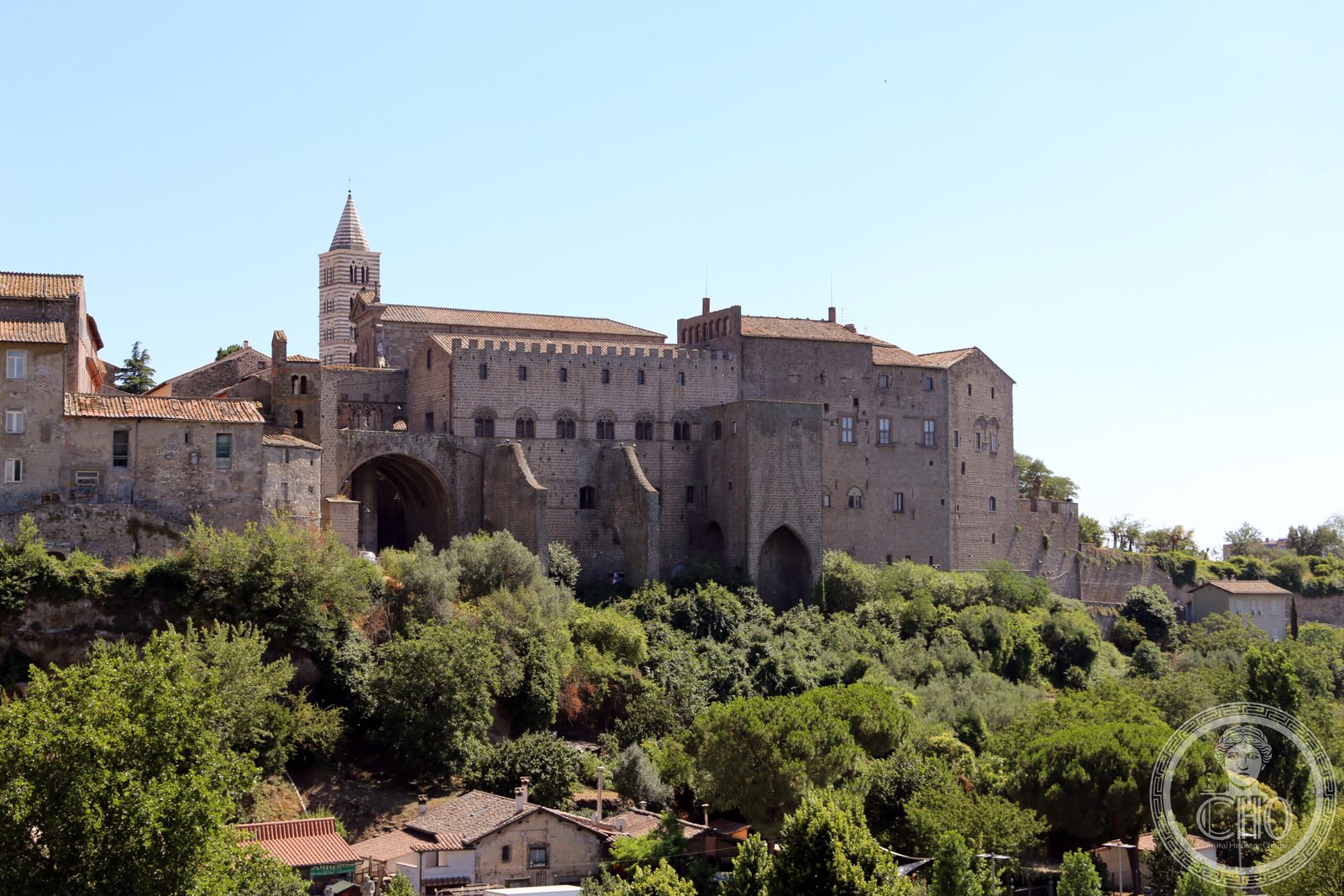
Once the seat of the papal court, Viterbo preserves a remarkable medieval center within ancient walls and remains famous for the annual procession of the Machine of Santa Rosa, an UNESCO-recognized tradition.
At a glance
Viterbo’s name likely derives from the Latin Vetus Urbs (Old Town), reflecting its ancient foundations. The city features well-preserved medieval districts surrounded by historic walls, with archaeological and thermal areas extending westward—including the necropolis of Castel d’Asso and the thermal spring of Bullicame. Modern development surrounds the city on other sides.
History
Known historically as the City of Popes, Viterbo became the papal seat in the 13th century. Pope Alexander IV transferred the Papal Curia to the city in 1257, seeking refuge from Rome’s hostile climate. For roughly 24 years, the Papal Palace hosted and elected various popes until Pope Martin IV definitively relocated the papal court on his election in February 1281.
The city endured severe bombing during World War II. Following allied raids in 1943–44, particularly the devastating attack of 17 January 1944, Viterbo received the Silver Medal for Civil Valor in 1962 in recognition of its casualties and damage.
What you see
The medieval districts within the city walls showcase well-preserved architecture from Viterbo’s period as a papal center. The Papal Palace remains a defining landmark of this era, while the surrounding urban fabric reflects centuries of development layered upon earlier Etruscan and Roman foundations.
Cultural significance
Viterbo is celebrated above all for the Machine of Santa Rosa, an annual procession held on the evening of 3 September. An illuminated wooden structure standing 30 meters high and weighing 52 quintals is carried on the shoulders of approximately 100 men—the Porters of Santa Rosa—through the darkened streets in honor of the city’s patron saint. UNESCO recognized the Machine as Intangible Heritage of Humanity in 2013, cementing its global cultural importance.
The city also hosts significant institutional presences, including the University of Tuscia (established 1979), the National Army Aviation Command, and several military academies.
Key facts
- Address: Via Saffi 49, 01100 Viterbo
- Coordinates: 42.4168639, 12.1051342
- Phone: 0761 3131
- Official website: http://www.provincia.viterbo.it/
Practical information
The Machine of Santa Rosa procession takes place annually on the evening of 3 September. Hours for visiting the medieval center and other monuments are not listed; check the official provincial website or contact the city directly for current information.
Getting there
Viterbo is located in Lazio, north of Rome. The city is accessible by road and rail connections to the capital and surrounding regions. The medieval center is best explored on foot.
See the place
Sources & resources
Find it on the map
See this place and what’s around it →Historical events at this place (7)
- 2018 Biennale Arte Contemporanea di Viterbo - sezione di Orvieto
- 2018 Weekend formativo PATRIMONIO CULTURALE Valorizzazione, tutela, crimini
- 2018 Il segno di Serge Uberti alla Biennale d'Arte Contemporanea di Viterbo
- 2020 Buongiorno ceramica! Da Deruta a Faenza.
- 2021 Meraviglie del Lazio: Palazzo e Giardini Farnese a Caprarola
- 2022 Biennale di Viterbo Arte Contemporanea 7a edizione
- 2022 Presentazione libro FILIPPO LA PORTA
📷 Become a Cultural Heritage Online photographer
Share your photos of places: they stay published under your name as the author. The more they're seen, the more you get noticed — and soon a contest will reward the most appreciated photos.
Log in or sign up free to add a photo