

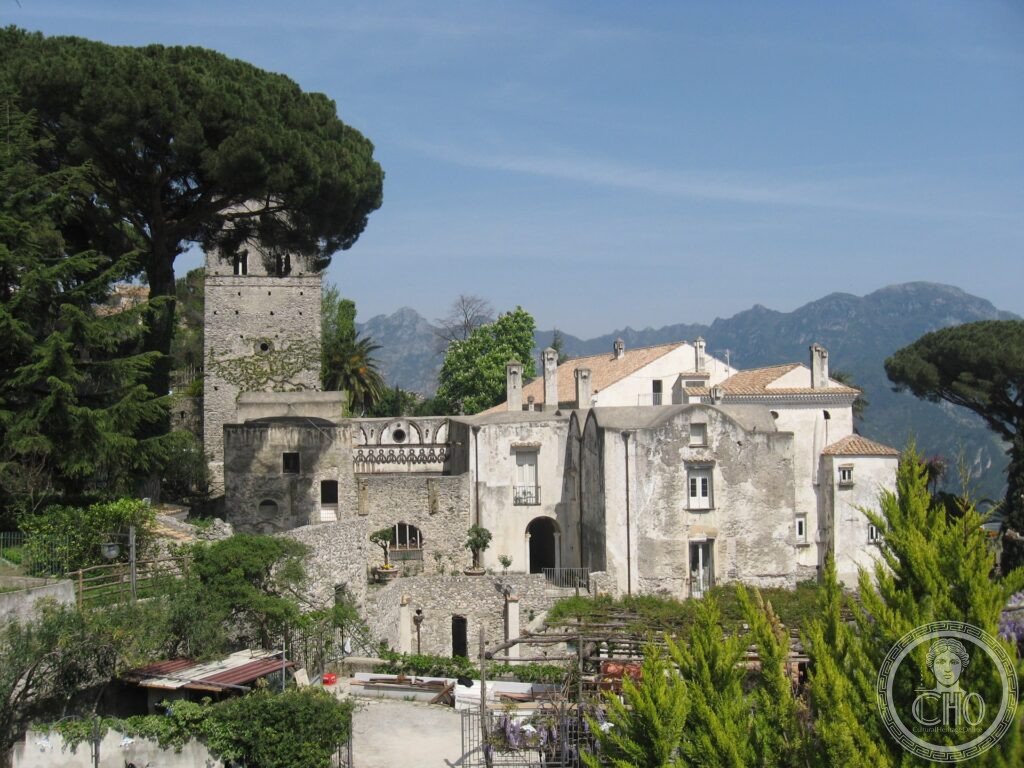
Richard Wagner wrote here in 1880 that he had found the Klingsor Garden of Parsifal — and from that day Villa Rufolo has hosted every summer the most spectacular music festival in Italy, with the stage suspended above the Tyrrhenian Sea.
At a glance
Villa Rufolo stands at the edge of the hilltop town of Ravello, 350 metres above the Tyrrhenian Sea on the Amalfi Coast. Built in the 13th century by the wealthy Rufolo family of Ravello — merchants who traded with the Near East and numbered among the most powerful families of Angevin Naples — the villa was a complex of towers, courtyards and gardens that combined Norman, Arab and Gothic elements into the hybrid architectural tradition of the medieval Kingdom of Sicily. By the 19th century the villa had fallen into ruin; it was purchased in 1851 by the Scottish botanist Francis Neville Reid, who restored the gardens and opened them to visitors. In 1880, Richard Wagner visited Ravello while composing Parsifal and, standing in the lower garden, wrote in his diary: “Klingsor’s magic garden is found.” The garden has hosted the Ravello Festival since 1953, and every summer its clifftop stage — cantilevered above the void with the Tyrrhenian behind it — hosts orchestral concerts that are among the most extraordinary musical experiences in Italy.
Key facts
- Founded: 13th century by the Rufolo family of Ravello; expanded 14th century
- Style: Norman-Arab-Gothic (Norman towers, Moorish arcade, Gothic courtyard); characteristic of the medieval Kingdom of Sicily
- Restored: 1851 by Scottish botanist Francis Neville Reid; romanticised garden layout dates from this restoration
- Wagner connection: Richard Wagner visited 26 May 1880 while writing Parsifal; identified the lower garden as “Klingsor’s magic garden”; the Ravello Festival (est. 1953) commemorates this each summer
- Ravello Festival: annual summer festival; the clifftop stage overhangs the sea; world-class orchestras perform against a backdrop of sky and water
- UNESCO context: part of the Amalfi Coast UNESCO World Heritage Site (1997)
History
The Rufolo family were among the most powerful merchants of medieval southern Italy, with trading connections extending to the Levant, Sicily, Tunisia and the Angevin court in Naples. At the peak of their wealth in the 13th and 14th centuries, they built a complex of towers and ceremonial halls on the promontory above Ravello that reflected this cosmopolitan background: the square Norman tower mixed with Moorish arcading and a Gothic cloister-courtyard in the manner of Frederick II’s Sicilian-Arab-Norman hybrid tradition. The family declined in the late 14th century and the complex gradually fell to ruin, though the towers survived.
The Scottish botanist Francis Neville Reid purchased the property in 1851 and undertook a romantic restoration: he cleared the undergrowth, terraced the slopes, planted exotic species brought back from his botanical travels, and opened the gardens to visitors. It was Reid’s restored garden that Wagner visited in 1880. The composer was staying in Ravello while working on the second act of Parsifal — the opera’s central scene takes place in the enchanted garden of the sorcerer Klingsor — and the combination of the terraced heights, the Arab-Norman ruins, and the exotic plantings convinced him he had found the physical prototype of his imagined garden. He wrote “den Zaubergarten des Klingsor hab ich gefunden” in the villa’s guestbook. Wagner died three years later, in 1883, without returning to Ravello; but his note launched a cultural association between Ravello and romantic musical Wagnerism that has never ended.
What you see
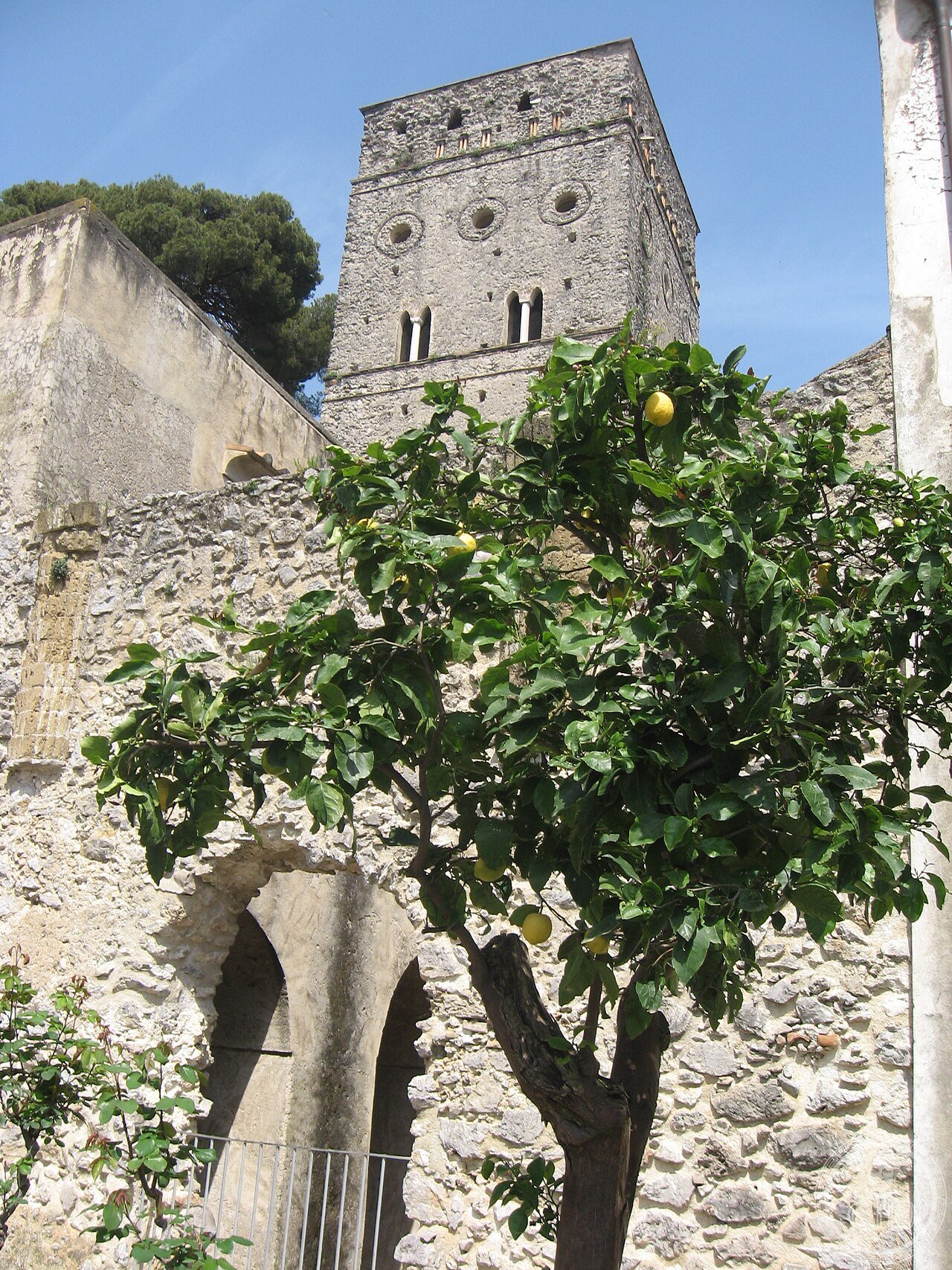
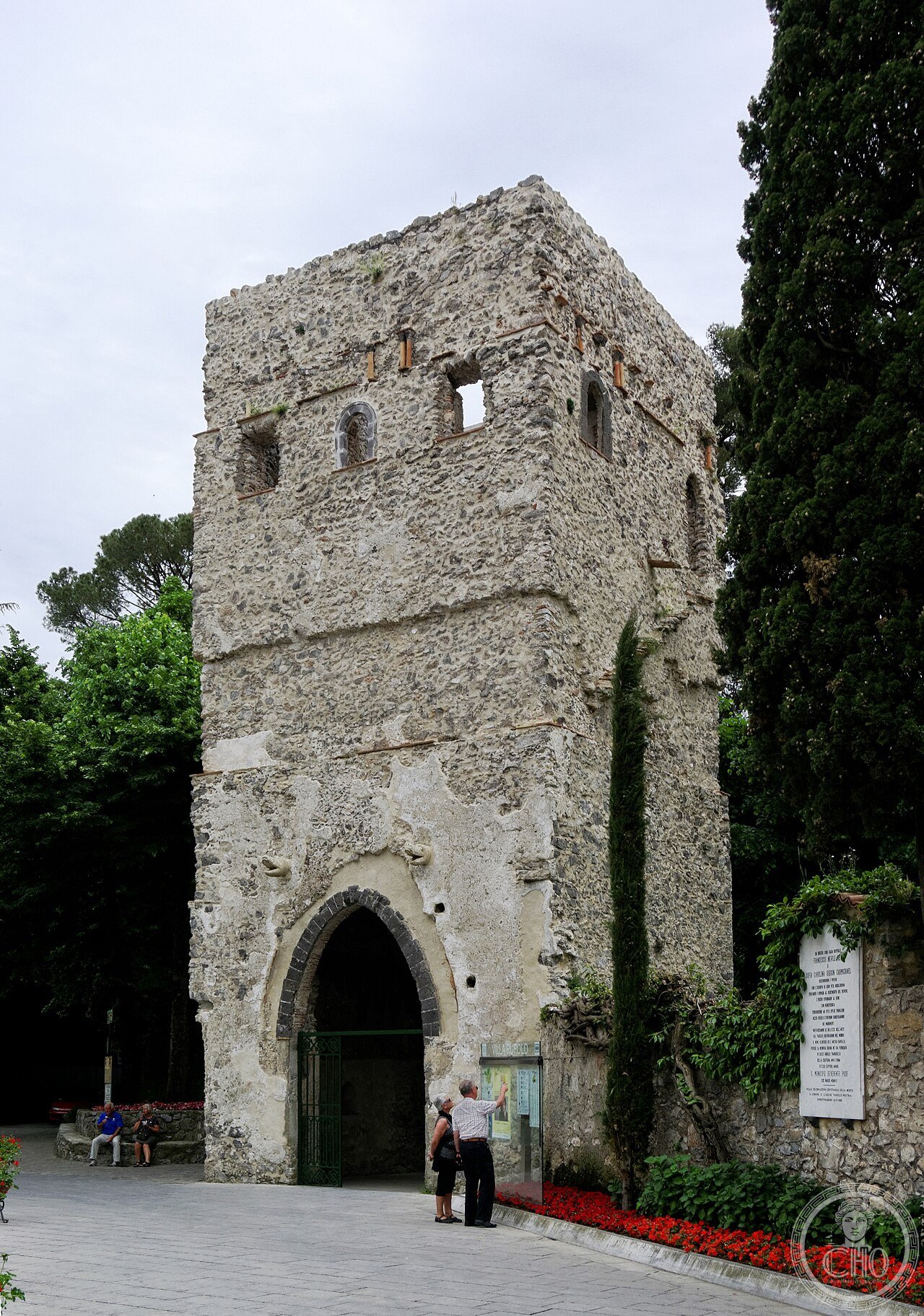
The approach to Villa Rufolo is from the main square of Ravello, through a 13th-century gateway tower. The courtyard beyond mixes Norman columns and Moorish interlaced arches in the hybrid style that is specific to 12th-13th century Sicily and southern Italy: pointed arches in warm tufa stone, with slender paired columns and a geometric interlace frieze that has exact parallels in the Cappella Palatina and the Martorana in Palermo. A larger square tower, partly restored in the 19th century, overlooks the lower garden.
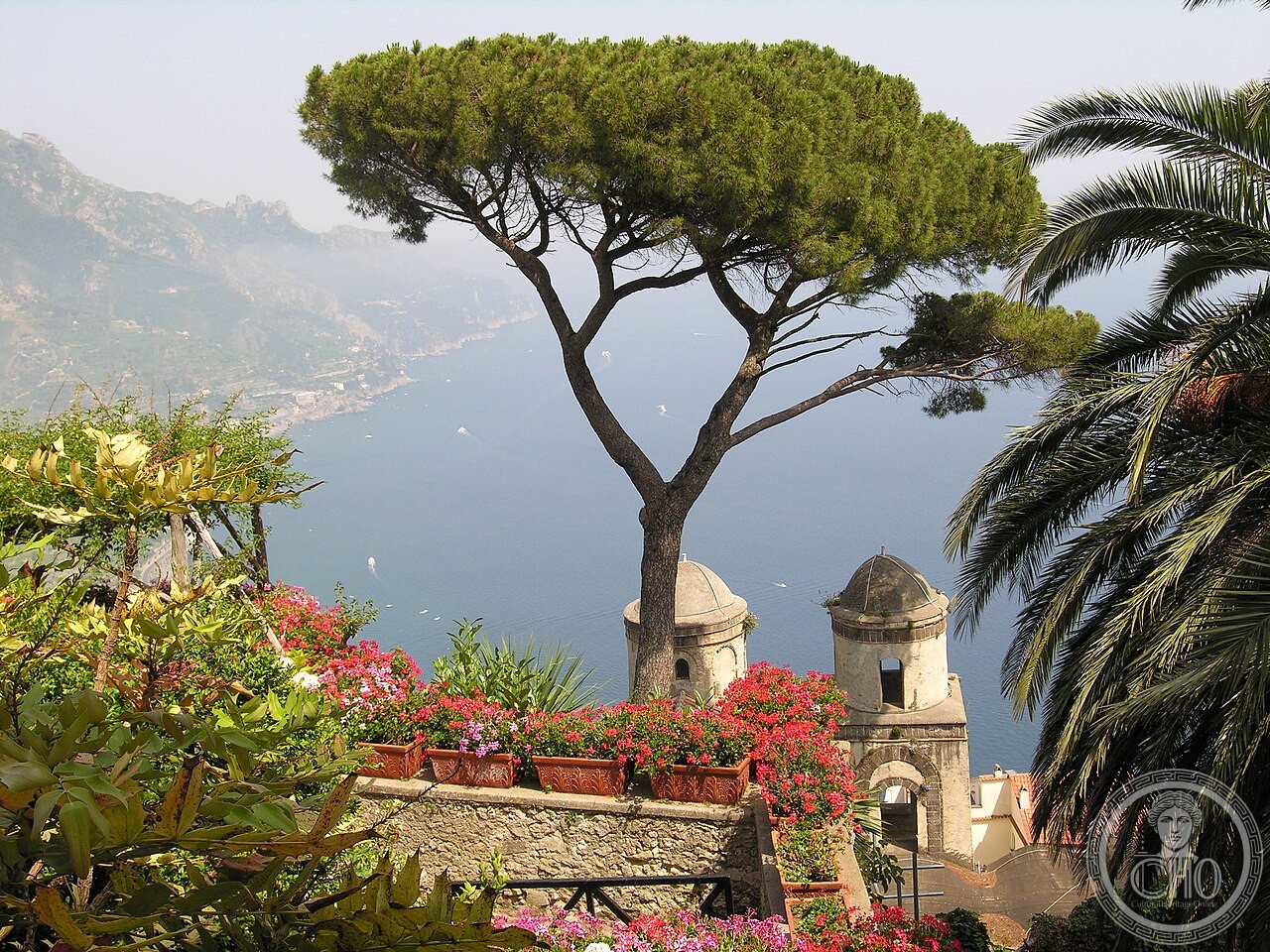
The terraced garden descends toward the sea in a sequence of platforms of colourful plantings — camellias, bougainvillea, roses, palms, and the exotic species that Reid introduced. The lower terrace gives the most famous view: the stage of the Ravello Festival is installed here each summer, cantilevered over the ravine with the Tyrrhenian Sea and the Amalfi Coast mountains behind it. On a clear day, the horizon extends beyond Capri to the volcanic outline of Ischia.
Practical information
- Opening hours: daily, year-round; summer 09:00–20:00, winter 09:00–16:30 approximately
- Admission: entrance fee (includes tower and garden); reduced for under-18 and over-65
- Ravello Festival: July–August; tickets at ravellofestival.com; book well in advance for popular concerts
- Best season: spring (April–May) for flowering season; summer for the festival; winter for solitude and clear views
- Time needed: 1–1.5 hours for the villa and garden
Getting there
Ravello is reached from Amalfi (7 km) by bus (SITA line, frequent) or by car on the SS373 switchback road. From Naples, take the Circumvesuviana to Sorrento then ferry or SITA bus along the Amalfi Coast; journey 2.5–3 hours. GPS: 40.6488° N, 14.6126° E.
Nearby
- Villa Cimbrone — the other great garden of Ravello, 15 minutes walk; the Terrazza dell’Infinito looks south toward the horizon
- Duomo di Ravello — 11th-century cathedral with Rufolo family ambo and bronze door, on the main piazza
- Amalfi — the medieval maritime republic town with its Norman-Arab Duomo, 7 km below
Sources
- Wikipedia — “Villa Rufolo” (en.wikipedia.org/wiki/Villa_Rufolo)
- Ravello Festival — official programme (ravellofestival.com)
- Francis Neville Reid — restoration diary, cited in John Pemble, The Mediterranean Passion, Oxford, 1987
- Richard Wagner, diary entry 26 May 1880; cited in multiple biographies
Find it on the map
See this place and what’s around it →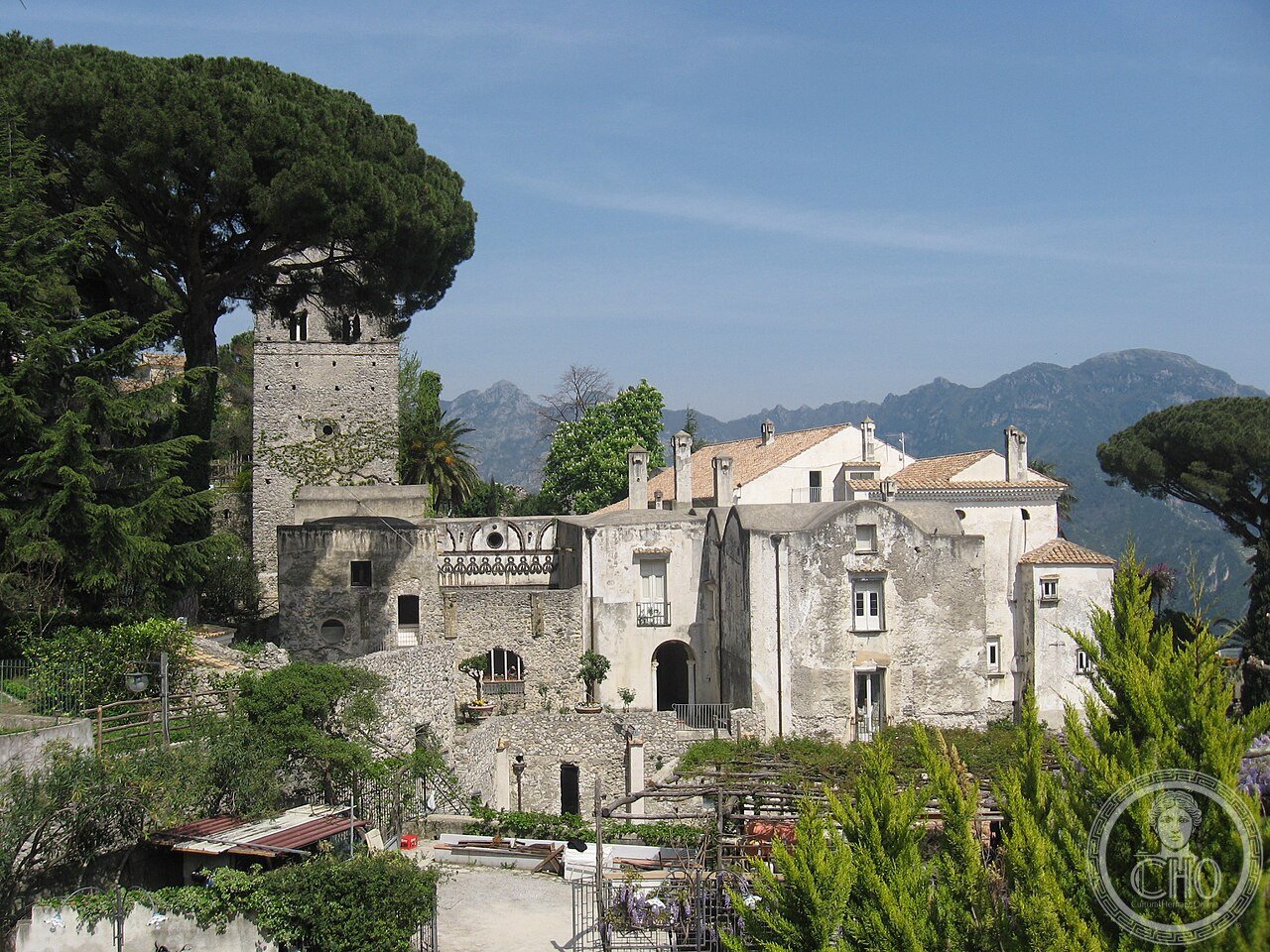
📷 Become a Cultural Heritage Online photographer
Share your photos of places: they stay published under your name as the author. The more they're seen, the more you get noticed — and soon a contest will reward the most appreciated photos.
Log in or sign up free to add a photo