
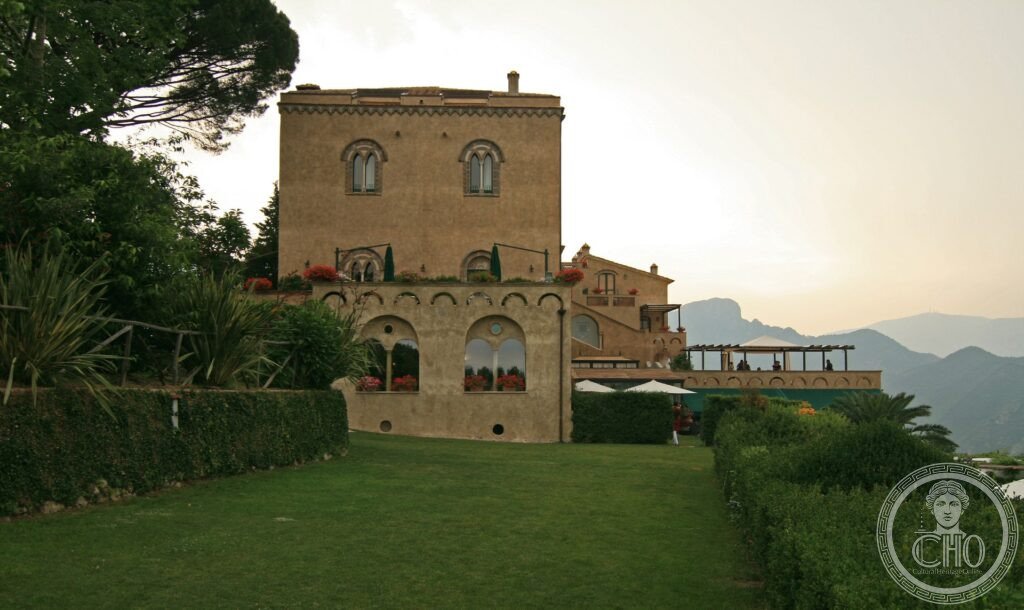
Ernst William Beckett rifece un rudere medievale in giardino eclettico tra 1904 e 1917, con una terrazza a picco sul Tirreno che Greta Garbo definì “il posto più bello del mondo” — e qui si rifugiò, nel 1938, per sfuggire a Hollywood.
At a glance
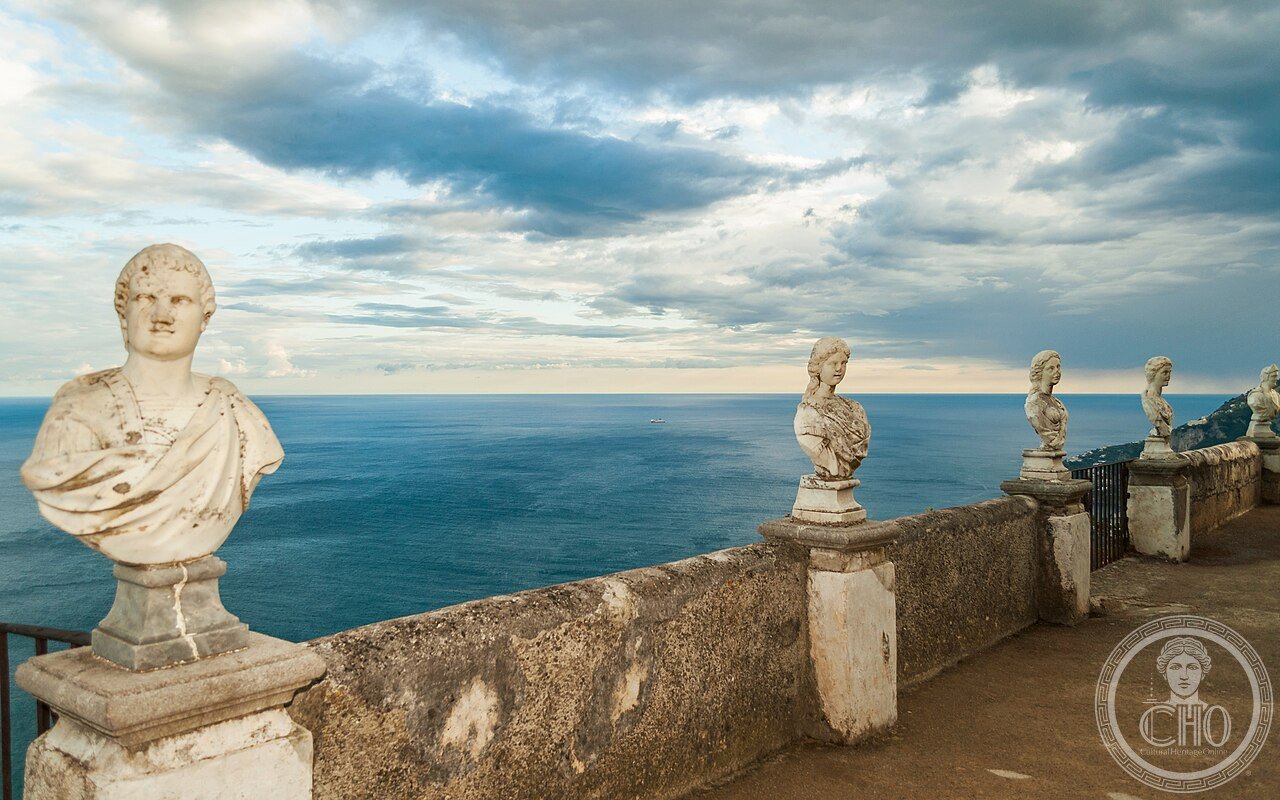
Villa Cimbrone stands at the southern edge of Ravello, a 15-minute walk from the main square across the ridge of the Lattari Mountains. The villa occupies the site of a medieval structure that had belonged to several Ravellese noble families; the existing garden and villa were created between 1904 and 1917 by Ernest William Beckett (later Lord Grimthorpe), an English banker and politician, as a private retreat that blended medieval ruins, classical statuary and romantic garden design. Beckett invited the Bloomsbury Group — Virginia Woolf, E.M. Forster, Gore Vidal, D.H. Lawrence — and aristocratic visitors including Winston Churchill to stay at Cimbrone; the villa became an informal salon for English literary and political society in the early 20th century. Its most famous element is the Terrazza dell’Infinito (Terrace of the Infinite), a belvedere at the garden’s southern edge where a balustrade of classical busts looks out over the sea to a horizon that seems to dissolve into sky.
Key facts
- Created: 1904–1917 by Ernest William Beckett, 2nd Baron Grimthorpe (1856–1917), English banker and Liberal MP
- Style: eclectic romantic garden with Gothic, Moorish and classical elements; ruined medieval tower incorporated
- Terrazza dell’Infinito: belvedere at 350 m elevation, balustrade of 20th-century copies of classical and Roman busts; 360° view from Capri to Calabria on clear days
- Famous guests: Winston Churchill (sketched here); Greta Garbo and Leopold Stokowski (secret holiday 1938); Virginia Woolf; Gore Vidal; D.H. Lawrence
- Current use: luxury hotel (Belmond Villa Cimbrone) with public garden access in daytime hours
- UNESCO context: part of the Amalfi Coast UNESCO World Heritage Site (1997)
History
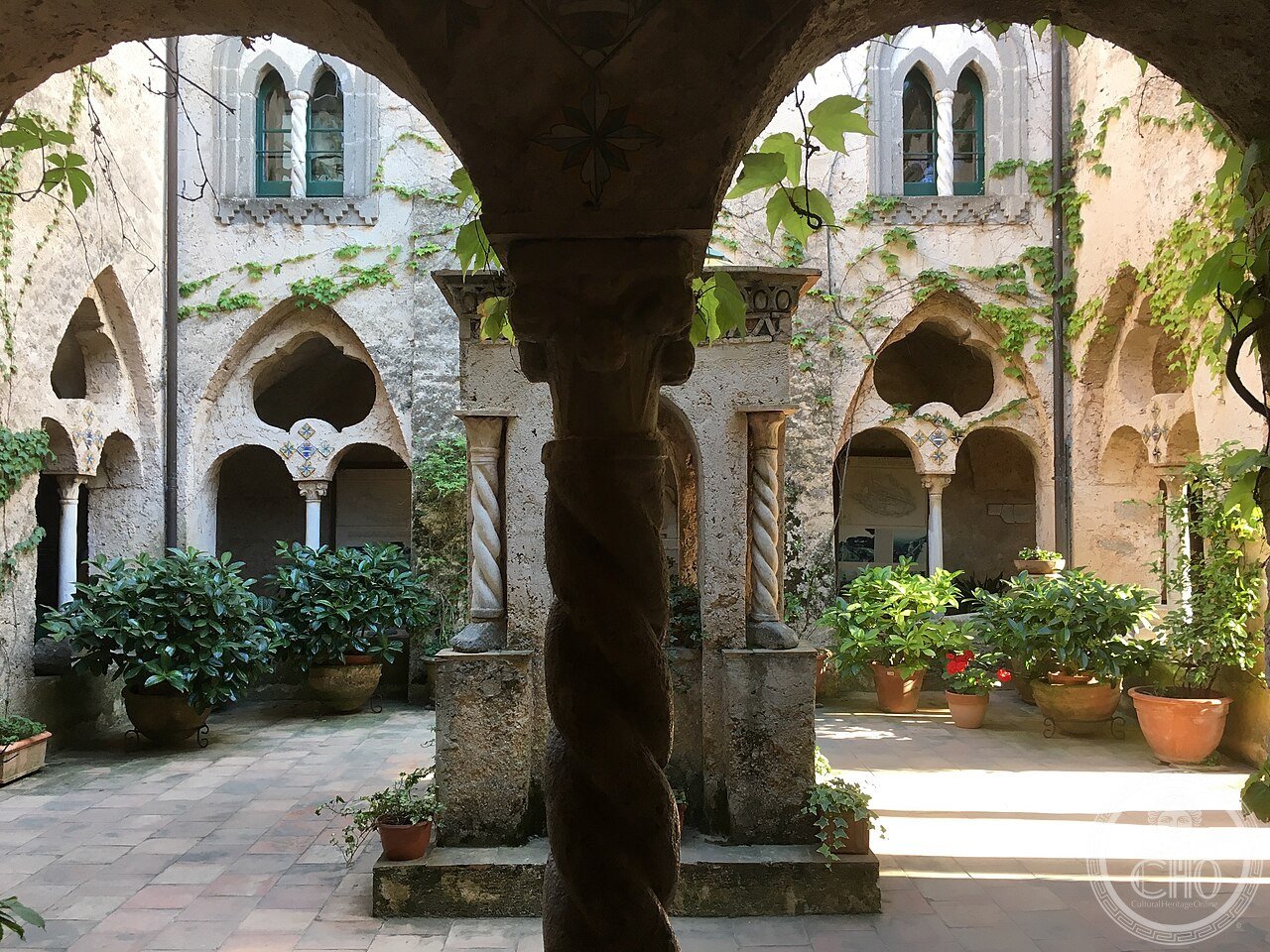
The property known as Cimbrone had medieval origins — the name appears in documents from the 11th century — but by the early 20th century it was a collapsed ruin. Ernest William Beckett purchased it in 1904, aged 48, and spent the next thirteen years transforming the site into a garden that was part romantic medieval revival, part classical anthology, and part subtropical botanical collection. Beckett worked with Nicola Mansi, a local craftsman, to restore the existing medieval tower, add Gothic cloisters and loggias in the local tufa stone, and lay out the garden with long allees, grottoes, temples and the great belvedere terrace at the southern edge.
Beckett died in 1917, and the villa passed through several owners before becoming closely associated with the English literary world. Virginia Woolf visited in 1904 and described the view from the Terrazza as “the most beautiful place in the world.” The villa’s most famous episode was in 1938, when Greta Garbo — at the height of her film fame — chose Cimbrone as the hiding place for a clandestine holiday with conductor Leopold Stokowski, away from the Hollywood press. Photographs of the couple at the Terrazza dell’Infinito were eventually published and caused a sensation. The villa is now managed as a luxury hotel (Belmond Villa Cimbrone) while maintaining public access to the garden during the day.
What you see
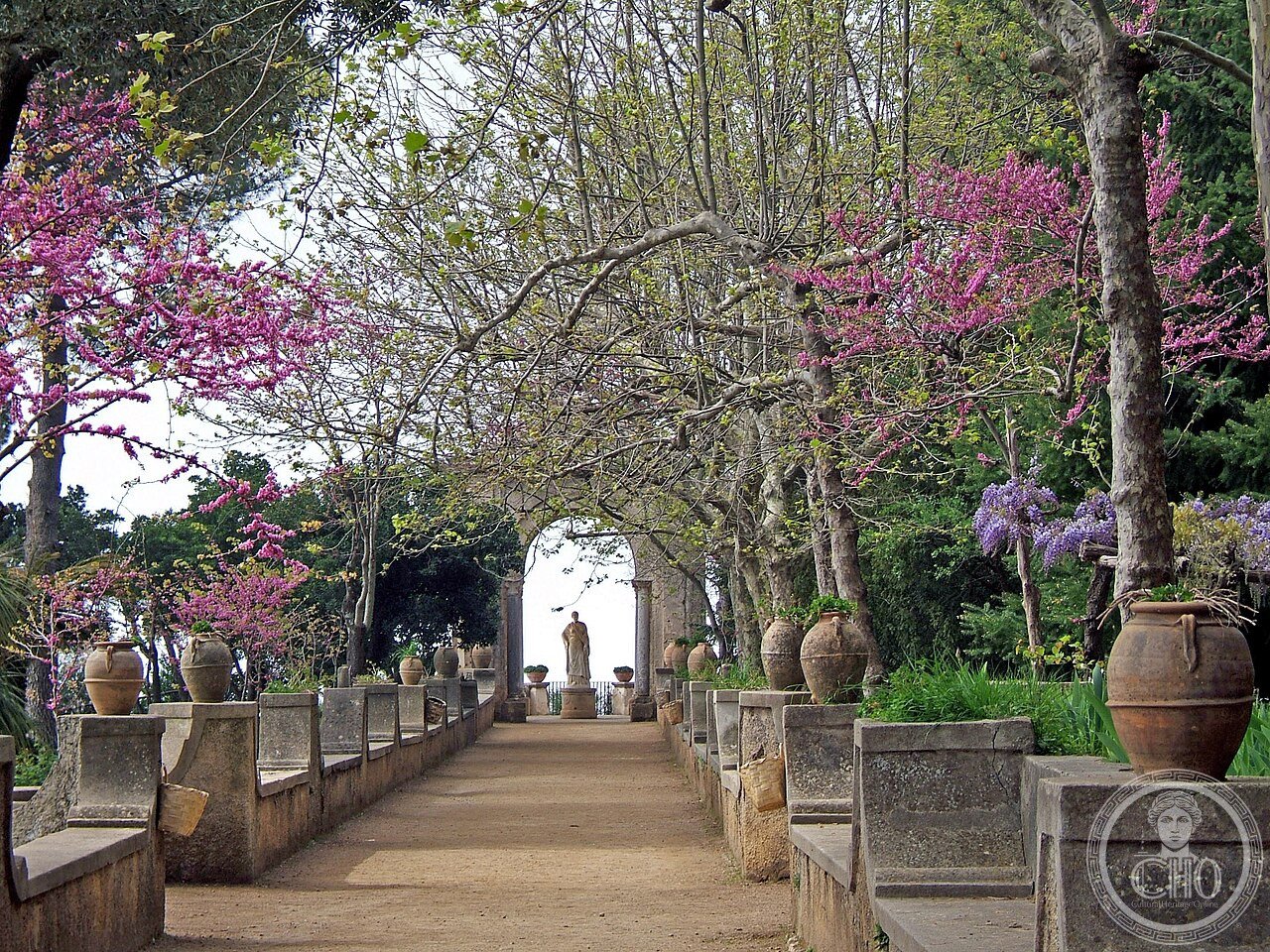
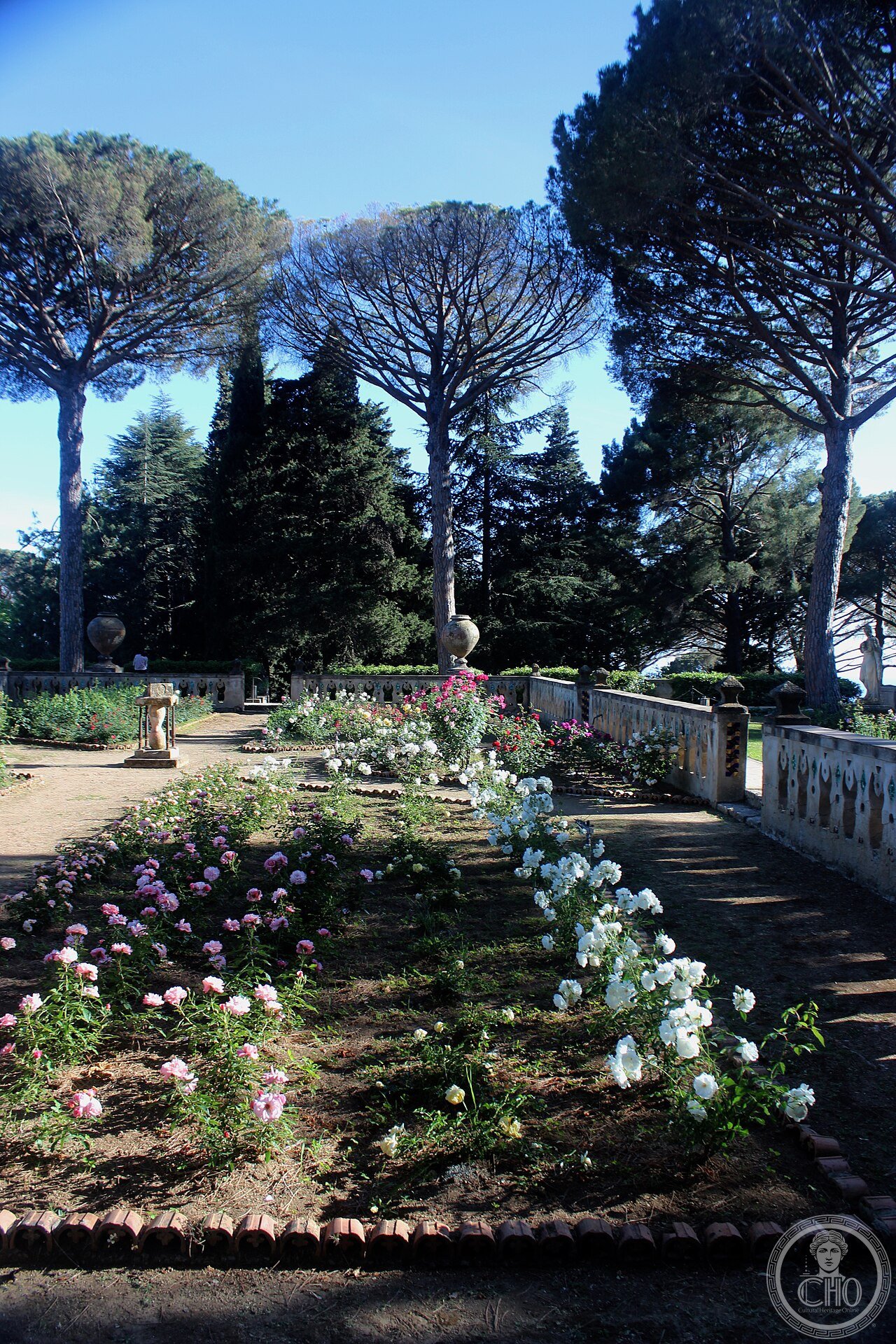
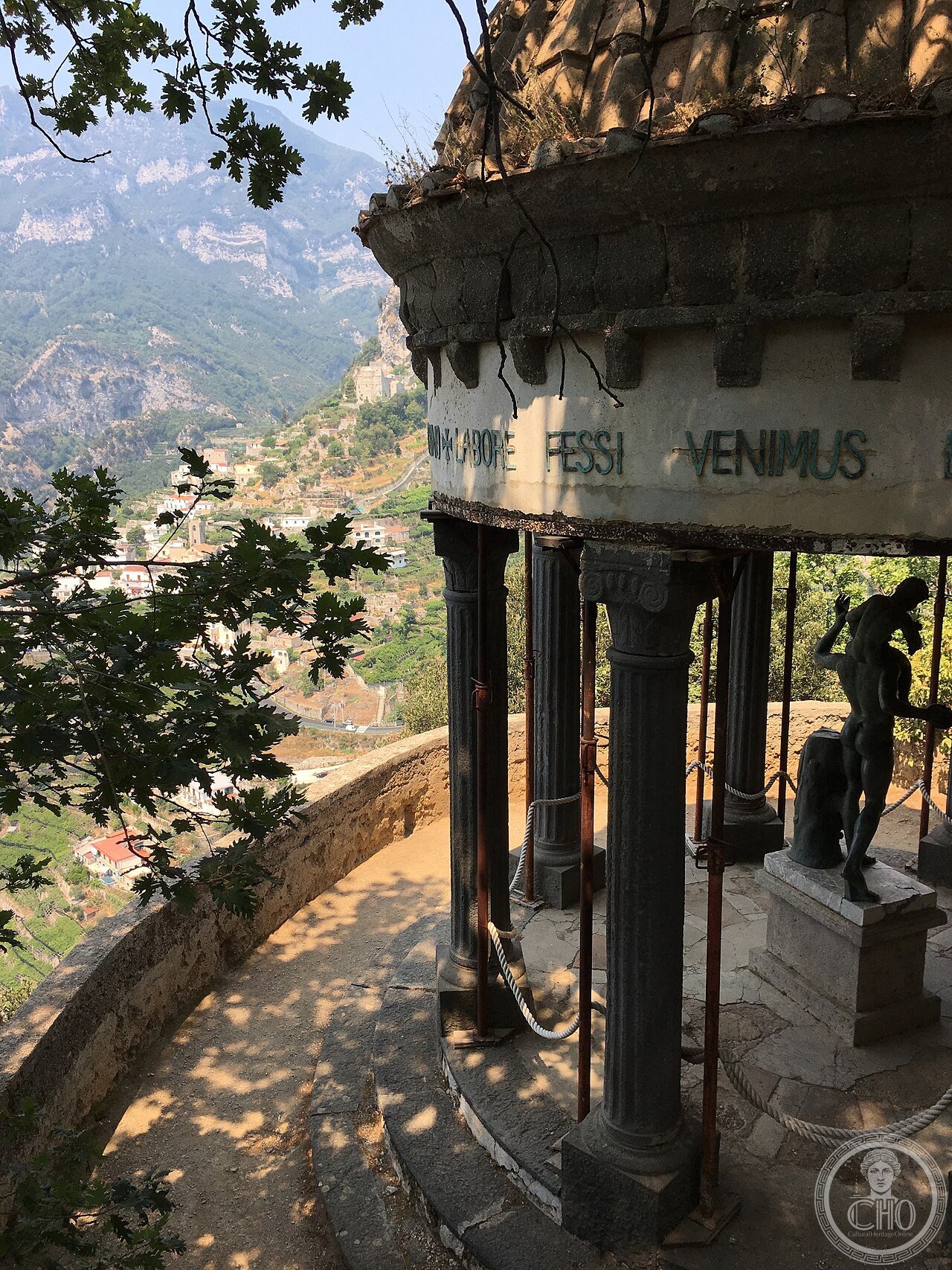
From the medieval gateway at the entrance, the garden path leads through a long allee of roses toward the main terrace and the villa building — a Gothic-Moorish ensemble in cream tufa with pointed arches and a cloister walk. The garden descends in a series of rooms: a Temple of Bacchus (1920s, with original Roman figures), a grotto, a wisteria pergola, an Eve fountain, and a network of allees planted with old roses, camellias and sub-tropical specimens. The garden reads as a private anthology of historical garden types, none quite dominant, all subordinated to the overriding goal of reaching the belvedere.
The Terrazza dell’Infinito is the climax: a stone-paved platform with a low parapet set with 20 stone busts on pedestals, copied in the 1920s from originals in Rome and Naples. The view southward is unobstructed — 350 metres of vertical drop to the sea, then open water to the horizon. On the clearest days of winter and spring, the Aeolian Islands are visible 200 km to the south.
Practical information
- Opening hours: garden open daily 09:00–sunset (entrance fee); hotel guests have additional access
- Admission: entrance fee for the garden; advance booking not required for walk-in garden visits
- Best season: spring (March–May) for roses and wisteria; September–October for clear skies
- Time needed: 1–1.5 hours for the full garden walk
- To reach it: 15 minutes walk from Ravello main square on a paved path; no vehicles allowed
Getting there
Walk from Ravello main square (Piazza Duomo) following signs to Villa Cimbrone, 15 minutes on a level footpath. Ravello is reached from Amalfi by SITA bus (7 km). GPS: 40.6455° N, 14.6143° E.
Nearby
- Villa Rufolo — the medieval garden with Wagner connection, 15 minutes walk; the Ravello Festival stage overlooks the sea
- Duomo di Ravello — 11th-century Norman cathedral with 12th-century ambo and Rufolo chapel, on the piazza
- Scala — tiny medieval town across the valley, with views back to Ravello, 3 km
Sources
- Wikipedia — “Villa Cimbrone” (en.wikipedia.org/wiki/Villa_Cimbrone)
- Belmond Villa Cimbrone — property history (belmond.com)
- John Pemble, The Mediterranean Passion: Victorians and Edwardians in the South, Oxford, 1987
- Greta Garbo and Leopold Stokowski, 1938 Ravello photographs — documented in Barry Paris, Garbo, Knopf, 1994
Find it on the map
See this place and what’s around it →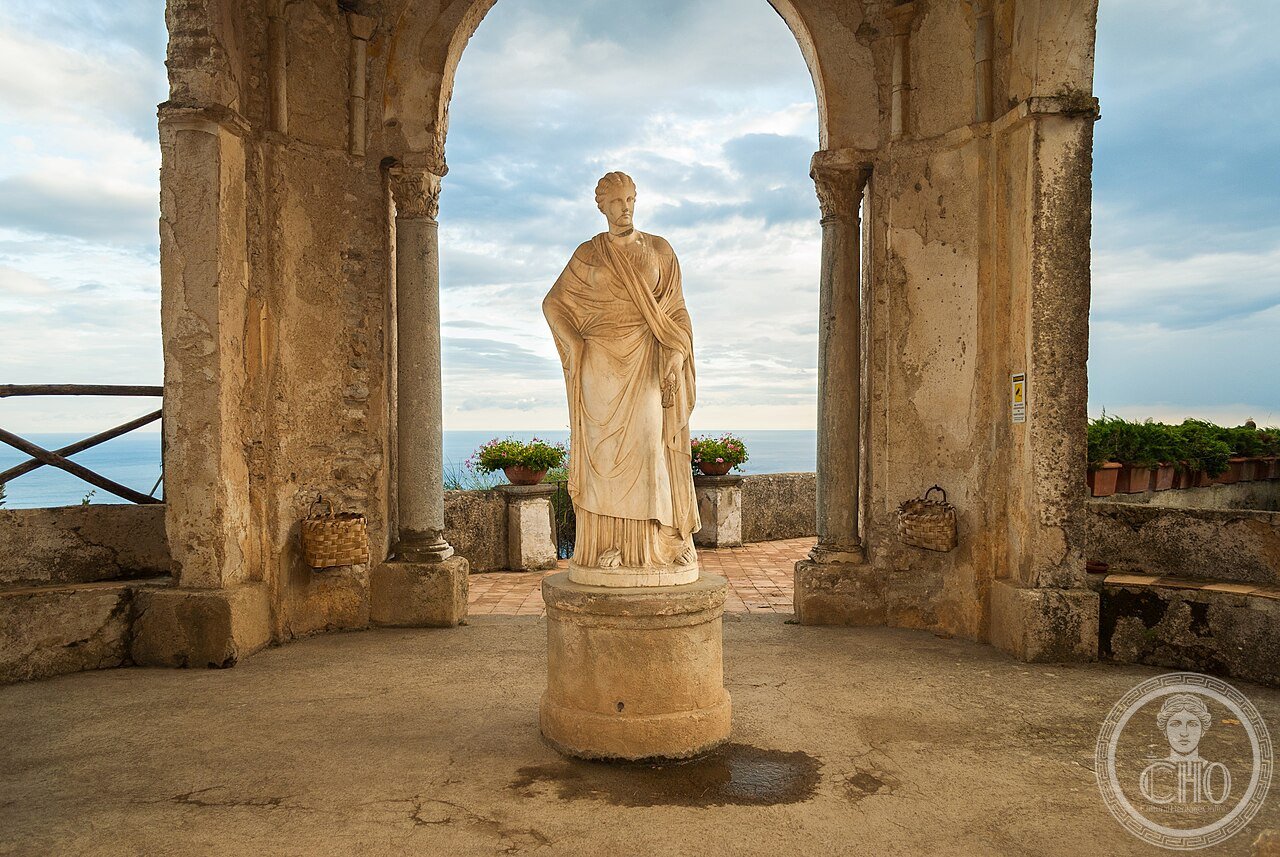
📷 Become a Cultural Heritage Online photographer
Share your photos of places: they stay published under your name as the author. The more they're seen, the more you get noticed — and soon a contest will reward the most appreciated photos.
Log in or sign up free to add a photo