
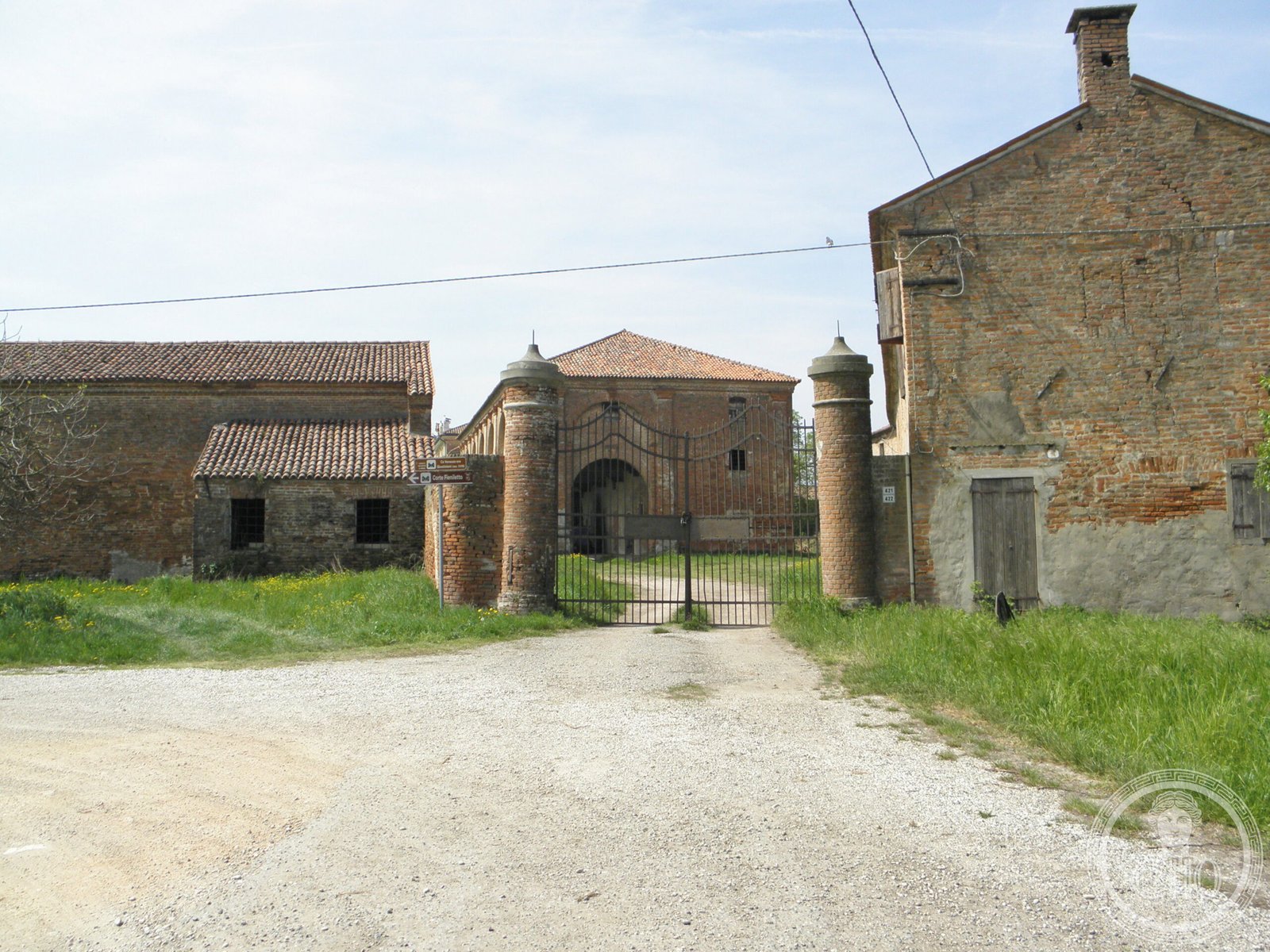
A substantial Venetian villa complex dating from the sixteenth century, this residence belonged to the Giustiniani family and reflects the refined agrarian culture that flourished across the Polesine region during the Republic’s dominion.
At a glance
Villa Giustiniani stands in the Polesine countryside twelve kilometres north-east of Rovigo, a landscape shaped by centuries of Venetian land reclamation. The property encompasses a fenced complex with origins in the sixteenth century, substantially renovated in the mid-eighteenth century and again expanded during the nineteenth century. A chapel on the grounds was completed in 1758 and underwent restoration in 1884. Visits are available with the permission of the current owners.
History
The Polesine region experienced profound transformation following the 1516 Treaty of Bologna, which ended decades of violent conflict between the Duchy of Ferrara and Venice. With Venetian control secured, nearly three centuries of peace and prosperity began—a climate that would sustain villa construction until the Treaty of Campoformio in 1797.
Venetian nobility and wealthy Emilian landowners, encouraged by extensive land reclamation works, discovered the region’s appeal as a rural retreat. The Giustiniani family acquired this property as part of a broader movement among northern Italian aristocrats seeking to establish country estates in the Polesine. Early villas were modest, but successive generations invested in architectural enrichment and expansion.
What you see
The villa reflects eighteenth-century refinement in its renovation programme, undertaken in the 1750s when Venetian taste favored elegant restraint. The mid-nineteenth-century expansions added further chambers and refined the surrounding agricultural structures typical of working estates. The chapel, dated 1758, represents devotional architecture of the period and retains original features despite its 1884 restoration.
Many villas in the Polesine region share characteristics with those of the Riviera del Brenta: a dependence on water access via rivers and navigable canals rather than roads, reflecting the region’s relationship with its waterways.
Cultural significance
Villa Giustiniani exemplifies the agrarian prosperity and refined tastes that defined Venetian provincial life during the Republic’s final centuries. The property demonstrates how political stability and land reclamation transformed the Polesine from a disputed frontier into a landscape of aristocratic investment and agricultural innovation. The Giustiniani family’s long tenure here reflects the stability of Venetian rule and the enduring appeal of rural estates among the merchant aristocracy.
Key facts
- Address: Via Feniletti, 420, 45030 San Martino di Venezze
- Coordinates: 45.1057489, 11.8668608
- Phone: 0425 99667
- Website: https://www.tenutacastelvenezze.it/agriturismo-castel-venezze/storia-tenuta-castel-venezze/
Practical information
The villa is privately owned. Visits are available by arrangement with the current proprietors; contact the listed phone number or website to request access.
Getting there
San Martino di Venezze lies twelve kilometres north-east of Rovigo in the Polesine district. The villa’s location near the Adige river reflects the region’s historic dependence on water transport. For specific directions and visiting arrangements, contact the property directly via phone or website.
See the place
Sources & resources
Find it on the map
See this place and what’s around it →📷 Become a Cultural Heritage Online photographer
Share your photos of places: they stay published under your name as the author. The more they're seen, the more you get noticed — and soon a contest will reward the most appreciated photos.
Log in or sign up free to add a photoIs this page about you?
This page is read by travellers and heritage enthusiasts who find it on Google. Tell us how you are connected to this place and we will take it from there.