
A working institute and scholarly hub where Swiss archaeologists study ancient Greek civilisation through decades of excavation and research.
At a glance
The Swiss School of Archaeology in Greece (ESAG) operates as one of several foreign archaeological institutes based in Greece. Its headquarters occupies an Art Nouveau building in central Athens, while field operations centre on the ancient site of Eretria in Euboea.
History
Since 1964, Swiss archaeologists affiliated with the school have conducted systematic excavations at Eretria, an ancient city that played a significant role in the development and wider influence of Greek civilisation. The school itself is hosted and supported by the University of Lausanne, establishing a direct link between Swiss scholarship and Greek archaeological heritage.
What you see
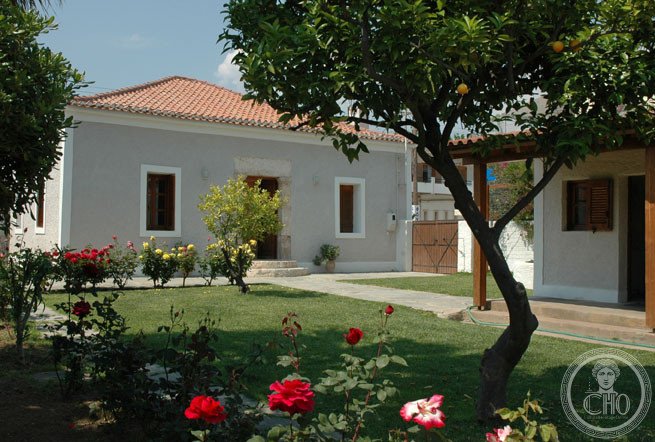
The Athens headquarters occupies a refined Art Nouveau building at Odos Skaramanga 4B, reflecting early 20th-century European architectural sensibilities. A secondary office in Eretria operates from a 19th-century neoclassical house at Odos Apostoli 15, serving as both workspace and archive for the ongoing excavation programme.
Cultural significance
The school represents a sustained international commitment to understanding Greek antiquity. Through long-term excavation and scholarly work, it contributes to broader knowledge of how ancient Greek culture developed and spread throughout the Mediterranean world.
Key facts
- Location: Athens, Greece (37.9902, 23.7286)
- Host institution: University of Lausanne
- Excavation site: Eretria, Euboea (since 1964)
- Headquarters building style: Art Nouveau
Practical information & getting there
The school’s Athens office is located at Odos Skaramanga 4B. As a research institute rather than a public museum, access may be restricted to scholars and researchers. Eretria itself is accessible to visitors and contains archaeological remains from the excavation programme.
Sources & resources
Find it on the map
See this place and what’s around it →📷 Become a Cultural Heritage Online photographer
Share your photos of places: they stay published under your name as the author. The more they're seen, the more you get noticed — and soon a contest will reward the most appreciated photos.
Log in or sign up free to add a photoIs this page about you?
This page is read by travellers and heritage enthusiasts who find it on Google. Tell us how you are connected to this place and we will take it from there.