

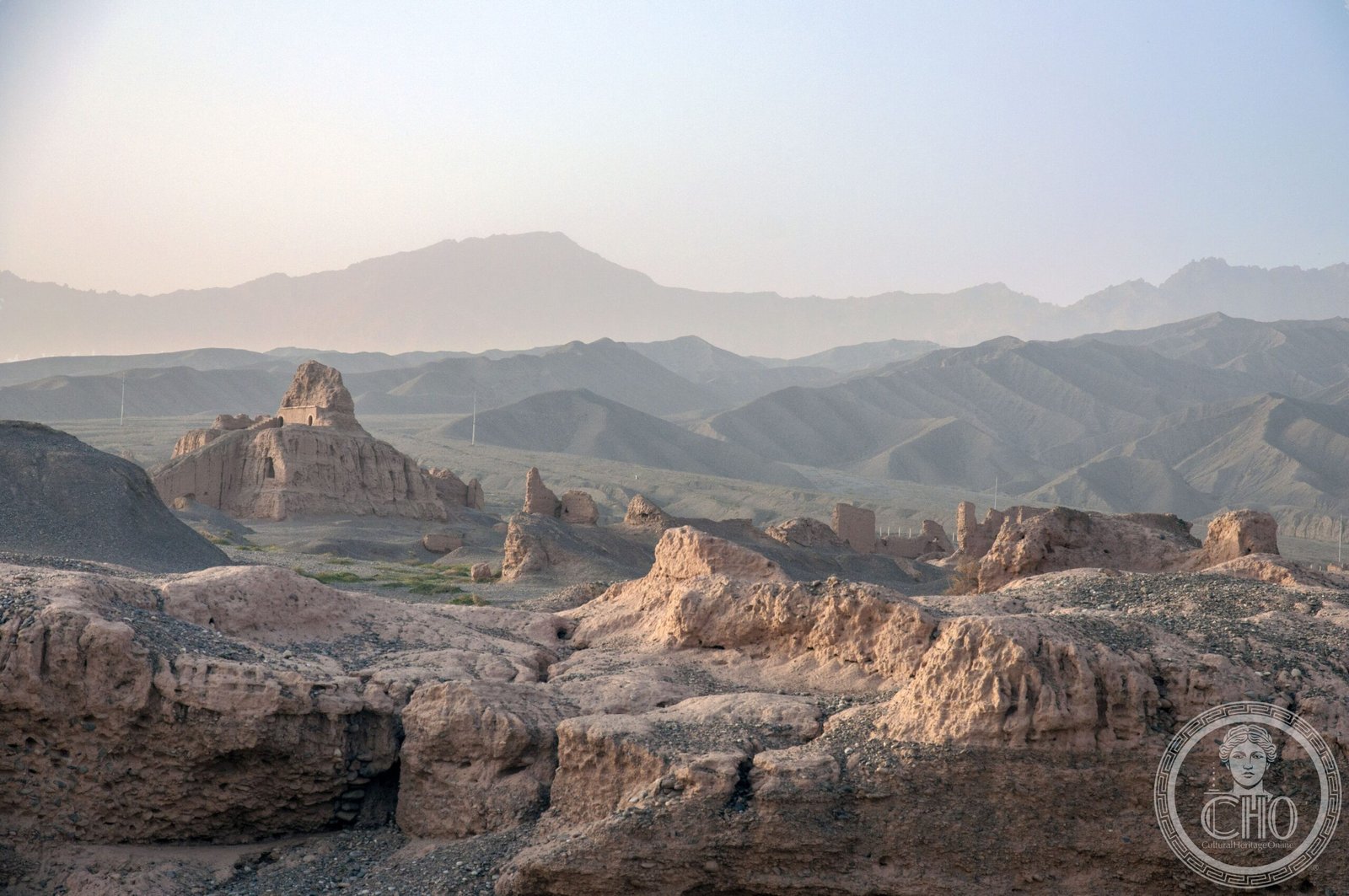
A ruined Buddhist sanctuary in the Taklamakan Desert, Subashi Temple stands as a testament to the spiritual and cultural exchanges along the ancient Silk Road, its scattered stones still bearing witness to Central Asian devotion.
At a glance
Subashi Temple lies near Kucha in Xinjiang’s vast Taklamakan Desert, positioned on one of history’s most vital trade and pilgrimage routes. The site is part of the broader Silk Roads landscape, anchoring a constellation of sacred caves and grottos that shaped Buddhist art across Central Asia.
History
The temple flourished during the 6th and 7th centuries, a period of intense religious building along the Silk Road. Japanese archaeologist Count Otani conducted partial excavations of the site, revealing fragments of its layered past. Subashi’s prominence grew as Buddhism spread eastward from Central Asia into China, making it a natural gathering point for monks, merchants, and pilgrims moving between worlds.
What you see
Today, visitors encounter the weathered remains of Buddhist structures set against the desert’s austere landscape. The surviving elements speak to skilled construction techniques adapted to an extreme environment, though much has succumbed to centuries of wind and shifting sands.
Cultural significance
Subashi illuminates the multicultural fabric of Central Asia. A sarira—a Buddhist relic box from the 6th–7th century—discovered here depicts Central Asian figures in long tunics, echoing artistic conventions of the Tocharians. The “Witch of Subashi,” a remarkably preserved mummy wearing a distinctive pointed hat, represents early Caucasian populations inhabiting the region around the Common Era’s threshold. These artifacts reveal the complex ethnic and religious tapestry that animated the Silk Road.
In 2014, Subashi and neighbouring sites including the Kizil Caves, Kumtura Caves, and Ah-ai Grotto received UNESCO World Heritage designation as part of the Silk Roads: the Routes Network of Chang’an-Tianshan Corridor.
Key facts
- Location: Near Kucha, Xinjiang, China (41.856°N, 83.047°E)
- Period: 6th–7th century
- UNESCO: Silk Roads World Heritage Site (inscribed 2014)
- Notable finds: Sarira with Central Asian iconography; the “Witch of Subashi” mummy
Practical information & getting there
Subashi Temple is located in the remote Taklamakan Desert region. Access requires travel to Kucha in western Xinjiang. The site’s harsh desert climate and archaeological sensitivity mean visits should be undertaken with local expertise and proper preparation. Check regional travel advisories before planning a journey.
Sources & resources
Find it on the map
See this place and what’s around it →📷 Become a Cultural Heritage Online photographer
Share your photos of places: they stay published under your name as the author. The more they're seen, the more you get noticed — and soon a contest will reward the most appreciated photos.
Log in or sign up free to add a photoIs this page about you?
This page is read by travellers and heritage enthusiasts who find it on Google. Tell us how you are connected to this place and we will take it from there.