
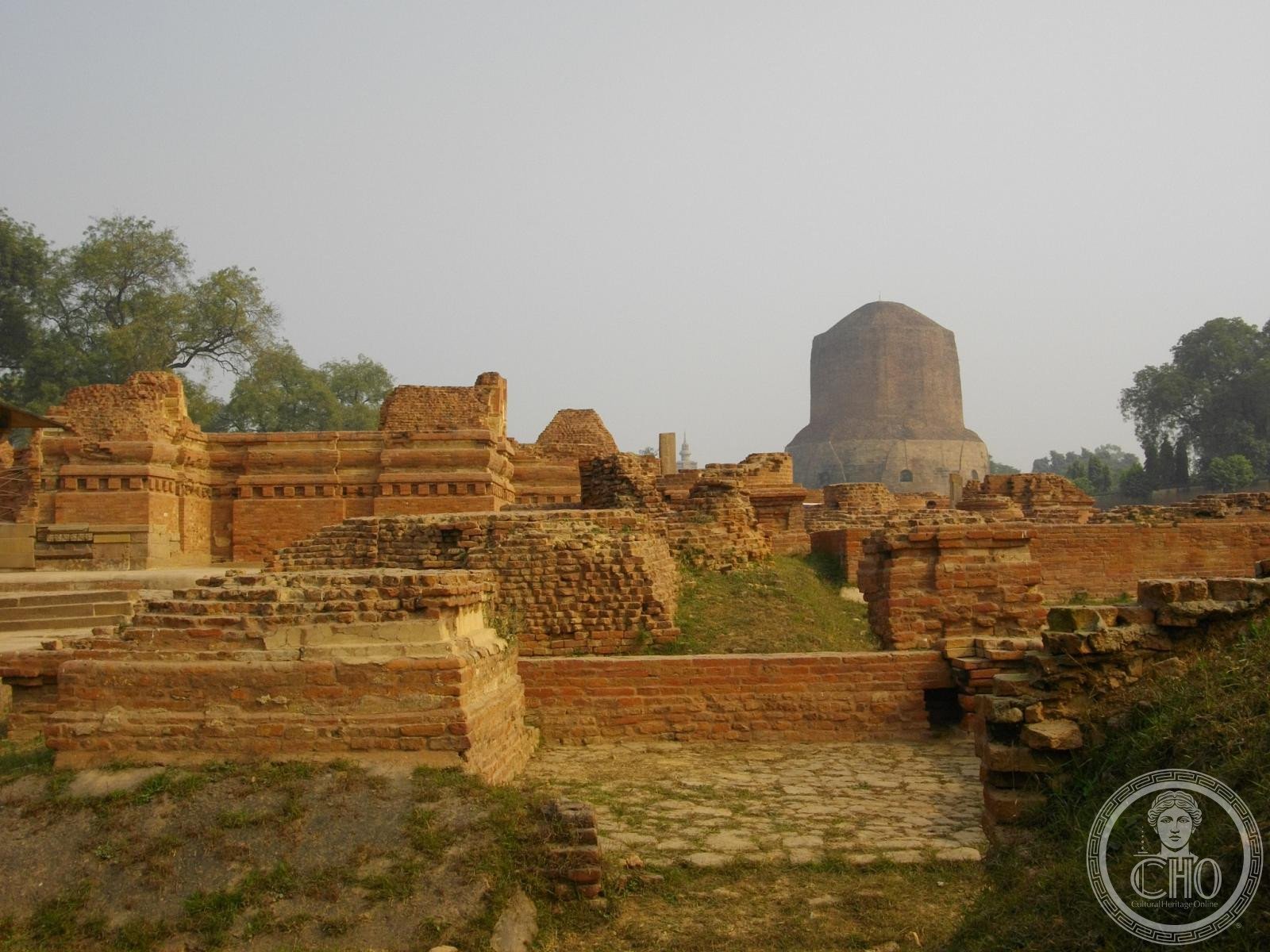
Where Gautama Buddha delivered his first teaching after enlightenment, setting in motion a spiritual tradition that would shape Asia for millennia.
At a glance
Sarnath, also known as Deer Park, lies eight kilometres northeast of Varanasi where the Ganges and Varuna rivers converge. Around 528 BCE, the Buddha came here to share his first sermon with five disciples—an event called The First Turning of the Wheel of Dharma. Today it ranks among Buddhism’s eight most sacred pilgrimage destinations.
History
According to the Lalitavistara sutra, Buddha chose this park for his inaugural teaching after attaining enlightenment at Bodh Gaya. When he arrived circa 528 BCE at age thirty-five, his original five disciples—Kaundinya, Assaji, Bhaddiya, Vappa, and Mahanama—gathered to hear the Dhammacakkappavattana sutra.
The name Sarnath likely derives from Saranganath, meaning “Lord of the Deer.” Buddhist tradition recalls a compassionate buck that offered his life to save a doe hunted by the local king, prompting the ruler to consecrate the ground as a sanctuary.
The Buddhavamsa records that Kassapa Buddha, a predecessor of Gautama, was also born in Sarnath and gave his first teaching there to a sangha of monks and nuns.
Cultural significance
The Buddha himself designated Sarnath as one of four cardinal pilgrimage sites—alongside Lumbini (birthplace), Bodh Gaya (enlightenment), and Kushinagar (parinirvana)—according to the Mahaparinibbana sutra. Pilgrims visit with samvega, a profound sense of reverence and spiritual urgency rooted in Buddhist practice.
Key facts
- Country: India
- City: Varanasi, Uttar Pradesh
- Coordinates: 25.378°N, 83.0251°E
- Nominated for UNESCO World Heritage Site status
- One of eight most important Buddhist pilgrimage sites
Practical information & getting there
Sarnath is located 8 kilometres northeast of Varanasi. You can reach it from the city by road via taxi, auto-rickshaw, or local transport. The site remains an active pilgrimage centre and major destination for Buddhist visitors worldwide.
Sources & resources
Find it on the map
See this place and what’s around it →📷 Become a Cultural Heritage Online photographer
Share your photos of places: they stay published under your name as the author. The more they're seen, the more you get noticed — and soon a contest will reward the most appreciated photos.
Log in or sign up free to add a photo