

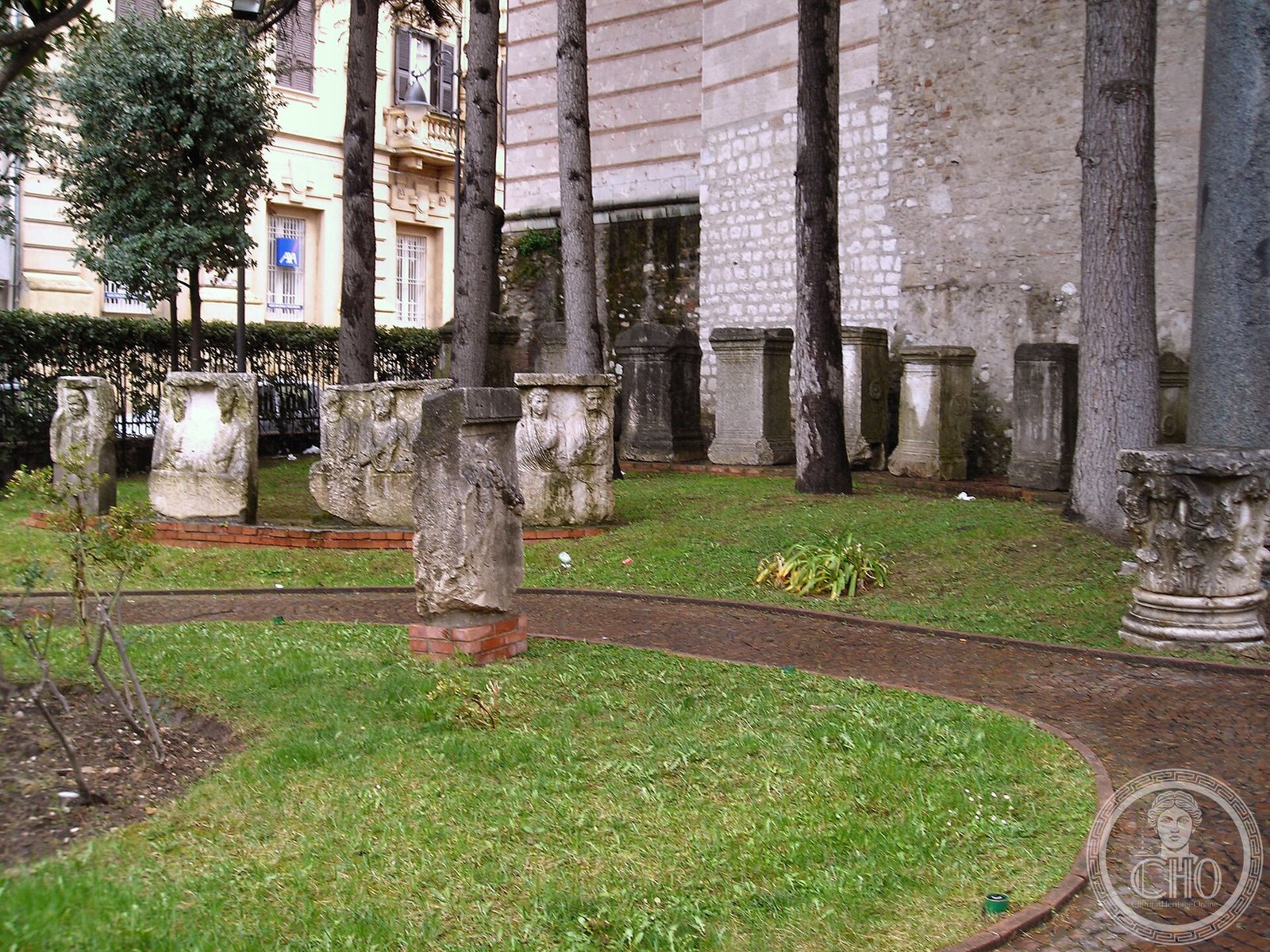
A provincial museum of extraordinary breadth, housing archaeological materials spanning millennia and anchored within the medieval Church of Santa Sofia, a UNESCO World Heritage site since 2011.
At a glance
The Sannio Museum preserves the cultural and material heritage of the ancient Samnite region through collections assembled over two centuries. Its home, the Church of Santa Sofia with its exceptional medieval cloister, transforms the museum into a dialogue between epochs. The institution functions as a multifaceted cultural center, hosting exhibitions, performances, and scholarly research alongside its core archaeological holdings.
History
The museum’s origins trace to 1806, when Talleyrand, Prince of Benevento, established a municipal archaeological collection in a former Jesuit house. After the Restoration, the Jesuits reclaimed the building and reopened their college while preserving the accumulated materials.
On 4 September 1873, the province formally founded the Sannio Museum to consolidate scattered holdings from the Jesuit College, municipal acquisitions beginning in 1865, and works from private collections and the provincial territory. In 1893, curator Almerico Meomartini arranged the first grouping of materials at the Rocca dei Rettore.
Under Alfredo Zazo’s direction, the collections moved in 1929 to the monumental Santa Sofia complex, purchased to serve as the museum’s primary seat alongside the provincial archive and library. Post-World War II recovery brought substantial growth through discoveries in wartime rubble. Mario Rotili’s reorganization in the early 1960s established modern curatorial standards; official recognition as a “large museum” followed in 1964.
From 1973, Director Elio Galasso dramatically expanded the institution’s scope, establishing it as a national model through rigorous research programs and opening its doors to contemporary art, performance, and music. Comprehensive restoration of the Santa Sofia cloister and museum, designed by Ezio De Felice, Eirene Sbriziolo, and Roberto Fedele, concluded in 1999.
What you see
The Church of Santa Sofia showcases the rare medieval artistry of its cloister, where capitals, columns, and pulvini employ symbolic language to express the eternal struggle between good and evil, the turning of seasons, and the passage of historical epochs. These carved elements represent some of southern Italy’s most sophisticated medieval stonework.
The museum’s galleries are organized to guide visitors through layers of regional history, from prehistoric to Roman periods and beyond, with contemporary installations and exhibitions regularly integrated throughout the complex.
Cultural significance
The Sannio Museum anchors understanding of the Samnite civilization and Campania’s broader archaeological narrative. Its elevation to UNESCO World Heritage status reflects the irreplaceable value of both its collections and the Church of Santa Sofia itself.
Beyond archaeology, the museum’s role as a contemporary cultural center—programming concerts, theater, and innovative exhibitions—demonstrates how heritage institutions can remain vital to living communities rather than serving as mere repositories of the past.
Key facts
- Address: Piazza Matteotti, 5/A, Benevento
- Phone: 0824.774763
- Website: http://www.museodelsannio.it/
- Coordinates: 41.130892138220624, 14.781525135040283
- UNESCO World Heritage Site: Since June 2011
Practical information
Current opening hours, admission fees, and exhibition schedules are available on the official website. The museum regularly hosts musical performances and temporary exhibitions; consult the website or phone line for details on upcoming events.
Getting there
The museum is located in central Benevento at Piazza Matteotti. For specific directions and transport options, contact the museum directly at the phone number listed above or check their website.
Sources & resources
Find it on the map
See this place and what’s around it →📷 Become a Cultural Heritage Online photographer
Share your photos of places: they stay published under your name as the author. The more they're seen, the more you get noticed — and soon a contest will reward the most appreciated photos.
Log in or sign up free to add a photoIs this page about you?
This page is read by travellers and heritage enthusiasts who find it on Google. Tell us how you are connected to this place and we will take it from there.