
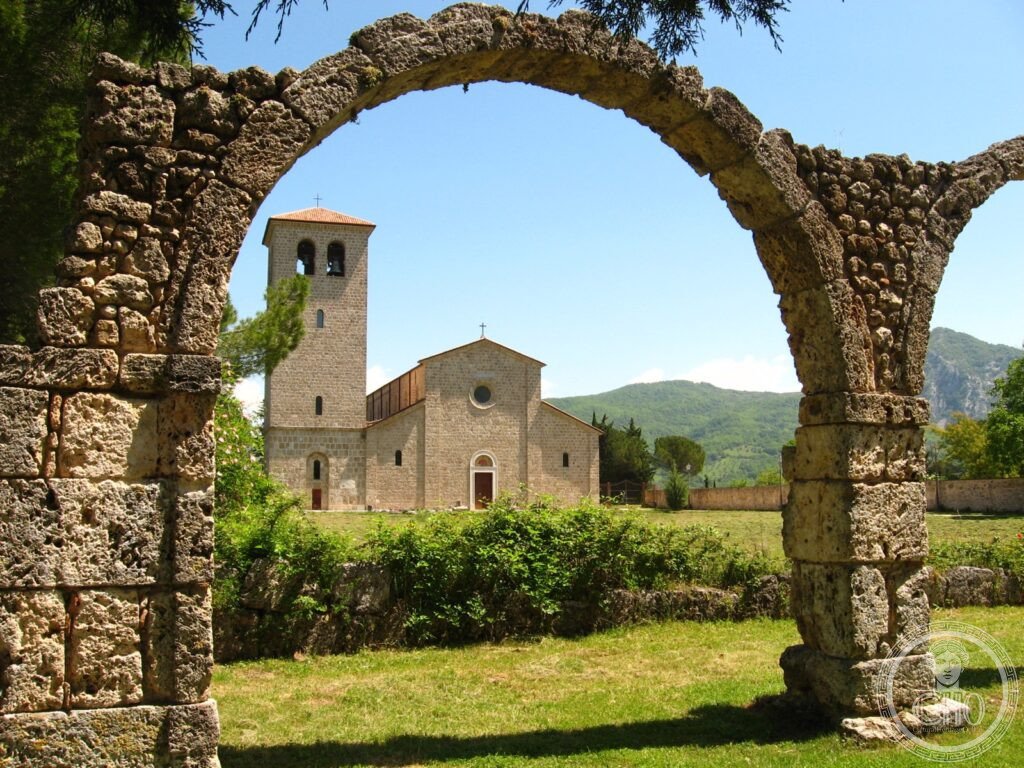
Nel 703 tre pellegrini longobardi fondarono un monastero sul Volturno. Un secolo dopo era una delle tre più grandi abbazie d'Italia, con 600 monaci, una biblioteca di manoscritti e un ciclo di affreschi nella cripta che costituisce oggi il più grande repertorio della pittura carolingia conservato in Italia.
At a glance
San Vincenzo al Volturno is an early medieval Benedictine abbey located in the upper Volturno valley, 20 km south of Isernia in the Mainarde mountains of Molise. Founded in 703 by three Lombard pilgrims (Paldo, Tato, and Taso) who obtained the land from the Lombard duke of Benevento, it grew under Carolingian patronage to become one of the three great abbeys of southern Italy, alongside Montecassino and Farfa. At its peak in the 830s under Abbot Epiphanius, it had 600 monks, a vast library, a scriptorium producing illuminated manuscripts, and a new atrium church decorated with an extraordinary cycle of frescoes. The Saracens destroyed the abbey in 881 and killed about 70 monks; it was rebuilt on the opposite bank of the Volturno and continued to function, but never regained its Carolingian grandeur. The original abbey (now called San Vincenzo Maggiore) was excavated beginning in 1980 by a British archaeological team from the University of Sheffield, revealing the foundations of the Carolingian complex and, in 1990, the intact crypt of Abbot Epiphanius with its 9th-century frescoes still in place.
Key facts
- Founded: 703 by Lombard pilgrims Paldo, Tato, and Taso; Benedictine; one of three great abbeys of early medieval southern Italy (with Montecassino and Farfa)
- Peak: under Abbot Joshua (792–817) and Abbot Epiphanius (824–842): 600 monks, extensive library, scriptorium, large atrium church (125 m long — one of the largest pre-Romanesque churches in Italy)
- Crypt of Epiphanius: built 824–842; rediscovered with intact frescoes in 1990; the programme includes Christ in Majesty, angels, apostles, saints, and the Life of Christ; the largest and best-preserved Carolingian fresco cycle in Italy
- Saracen destruction: 881; about 70 monks killed; the surviving monks built a new abbey (San Vincenzo Minore) on the opposite bank and continued the Benedictine community; the original site (San Vincenzo Maggiore) was buried and forgotten
- Archaeology: British excavations 1980–ongoing (University of Sheffield, then Molise University); hundreds of objects in the site museum; foundations of the Carolingian atrium church visible
History
The foundation story of San Vincenzo al Volturno follows the pattern of the great early medieval abbeys: a gift of uninhabited land from a secular ruler, an initial period of poverty, and then explosive growth under royal patronage. The Lombard dukes of Benevento, who controlled most of southern Italy, saw in San Vincenzo a useful religious institution that could legitimize their rule and provide prayer support for their campaigns; they made large donations of land, serfs, and revenues. The Carolingians, who replaced the Lombards as rulers of Italy after 774, continued the same patronage and added their own: Charlemagne and his successors gave the abbey the right to hold markets, collect tolls, and govern its own territory.
The building of the new abbey church under Abbot Joshua (792–817) and its decoration under Abbot Epiphanius (824–842) brought San Vincenzo to the peak of its ambition. The new atrium church — 125 m long, with a westwork tower, a nave of eleven bays, and an elaborate monastic choir — was one of the largest pre-Romanesque churches in the world. The crypt, built beneath the high altar to house the relics of St Vincent, was decorated by a team of painters working directly for Epiphanius; their style combines Byzantine icon conventions with Carolingian narrative energy and an almost cinematic sense of space. The Saracen raid of 881 ended all this in a day: the monks were killed or dispersed, the buildings burned, and the entire complex buried under the rubble. The survivors built a smaller abbey (San Vincenzo Minore) on the north bank and carried on, but the lost grandeur of the Maggiore became a legend preserved in the 11th-century chronicle written there.
What you see
The archaeological site of San Vincenzo al Volturno is in the Volturno valley 5 km south of the modern village of Castel San Vincenzo. The excavations have exposed the foundations of the Carolingian atrium church, the cloister, the refectory, and the monks' dormitory; the plan of the pre-881 abbey is now legible from the excavated walls. The centrepiece is the crypt of Epiphanius, re-entered in 1990 with its frescoes intact: a barrel-vaulted chamber about 12 m by 5 m, with painted walls and vault showing Christ in Majesty in the apse, angels, and apostles on the lateral walls, and scenes from the Life of Christ in the lunettes above the arches. The colours — deep reds, blues, and gold on a white ground — are remarkably preserved. The site museum contains architectural fragments, sculptures, and liturgical objects from the excavations. The still-functioning abbey of San Vincenzo Minore (11th century), 5 km north-east, is the surviving Benedictine community.
Practical information
- Archaeological site: open Apr–Oct daily 09:00–13:00 and 15:00–18:00; Nov–Mar by appointment
- Crypt of Epiphanius: visits with the guide included; max 10 people at a time
- Site museum: open same hours as site; small entrance fee (combined with site)
- Time needed: 1.5–2 hours
Getting there
By car from Isernia (20 km south-east): SS85 (Via Venafrana) to Castel San Vincenzo, then signs to Abbazia. No public transport. GPS: 41.6333° N, 14.1000° E.
Nearby
- Lago di Castel San Vincenzo — 1 km north; artificial reservoir; swimming; camping; local trattorie serving Molise cuisine (agnello, tartufo, vino Tintilia)
- Abbazia di Montecassino — 50 km south-east; the founding Benedictine model for southern Italy; rebuilt after Allied bombing 1944
- Isernia — 20 km north-west; Paleolithic site (700,000 years BP, among the oldest human traces in Europe); Museo Nazionale del Paleolitico; Romanesque cathedral
Sources
- Wikipedia — “San Vincenzo al Volturno” (en.wikipedia.org/wiki/San_Vincenzo_al_Volturno)
- Hodges, R., Light in the Dark Ages: The Rise and Fall of San Vincenzo al Volturno, London 1997
- Mitchell, J., The Frescoes of San Vincenzo al Volturno, University of Sheffield 1994
Find it on the map
See this place and what’s around it →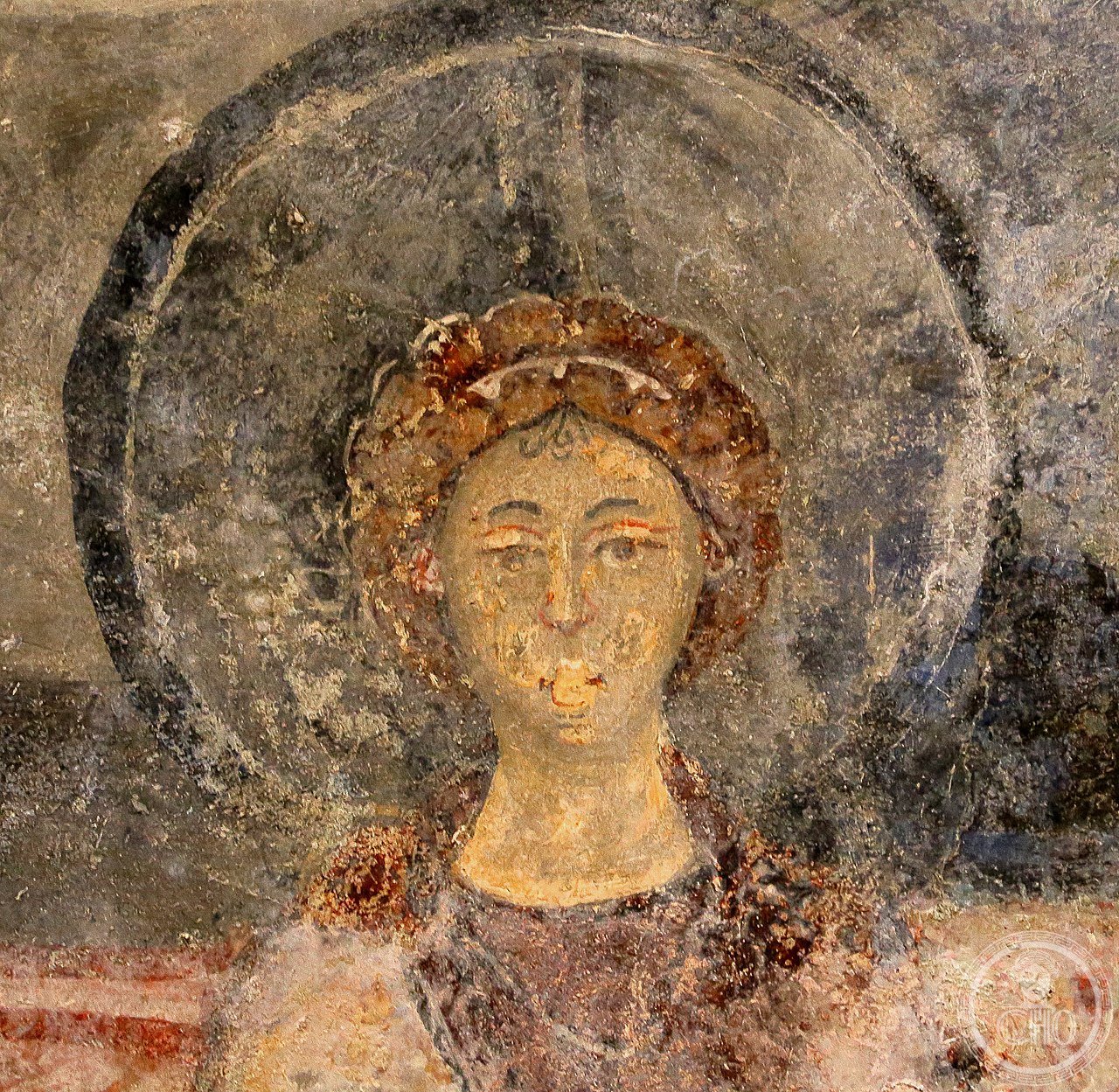
📷 Become a Cultural Heritage Online photographer
Share your photos of places: they stay published under your name as the author. The more they're seen, the more you get noticed — and soon a contest will reward the most appreciated photos.
Log in or sign up free to add a photoIs this page about you?
This page is read by travellers and heritage enthusiasts who find it on Google. Tell us how you are connected to this place and we will take it from there.