
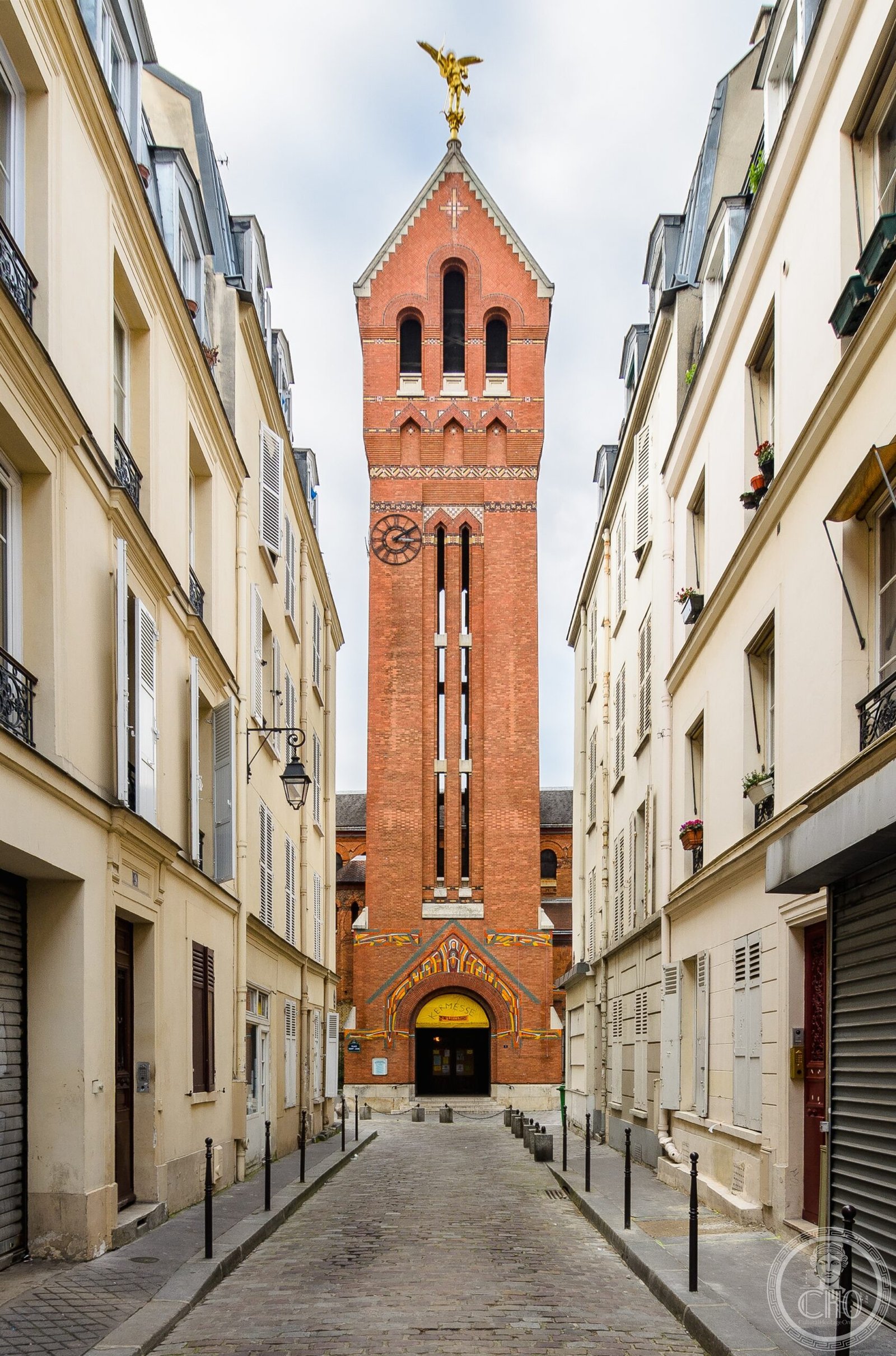
A Roman Catholic church in Paris’s 17th arrondissement, designed by architect Bernard Haubold and constructed across three decades of the early twentieth century.
At a glance
Saint-Michel des Batignolles stands on Place Saint-Jean, where rue Saint-Jean meets the Passage Saint-Michel. The church was designed by architect Bernard Haubold and built between 1913 and 1938, marking a significant period of sacred architecture in interwar Paris.
History
The church was constructed over an extended period from 1913 to 1938. This prolonged building campaign reflects the ambitions of the Paris parish and the architectural vision of Bernard Haubold, who guided the project through its quarter-century realization in the Batignolles district, a neighborhood that was itself developing during this era.
What you see
The building’s design reflects early twentieth-century approaches to Catholic church architecture. Bernard Haubold’s design synthesizes the sacred and the urban, positioning the structure at a prominent intersection within the neighborhood’s street grid.
Cultural significance
Saint-Michel des Batignolles represents an important addition to Paris’s religious heritage during the interwar period. The church serves the local community and exemplifies how parish churches were integrated into developing neighborhoods across the city.
Key facts
- Country: France
- City: 17th arrondissement of Paris
- Architect: Bernard Haubold
- Construction dates: 1913–1938
- Coordinates: 48.88905, 2.32456
- Location: Place Saint-Jean, at the corner of rue Saint-Jean and Passage Saint-Michel
Practical information & getting there
The church is located in the 17th arrondissement, accessible by Paris’s public transport network. You can reach Place Saint-Jean via the nearby metro stations and bus routes serving this neighborhood.
Sources & resources
Find it on the map
See this place and what’s around it →📷 Become a Cultural Heritage Online photographer
Share your photos of places: they stay published under your name as the author. The more they're seen, the more you get noticed — and soon a contest will reward the most appreciated photos.
Log in or sign up free to add a photoIs this page about you?
This page is read by travellers and heritage enthusiasts who find it on Google. Tell us how you are connected to this place and we will take it from there.