
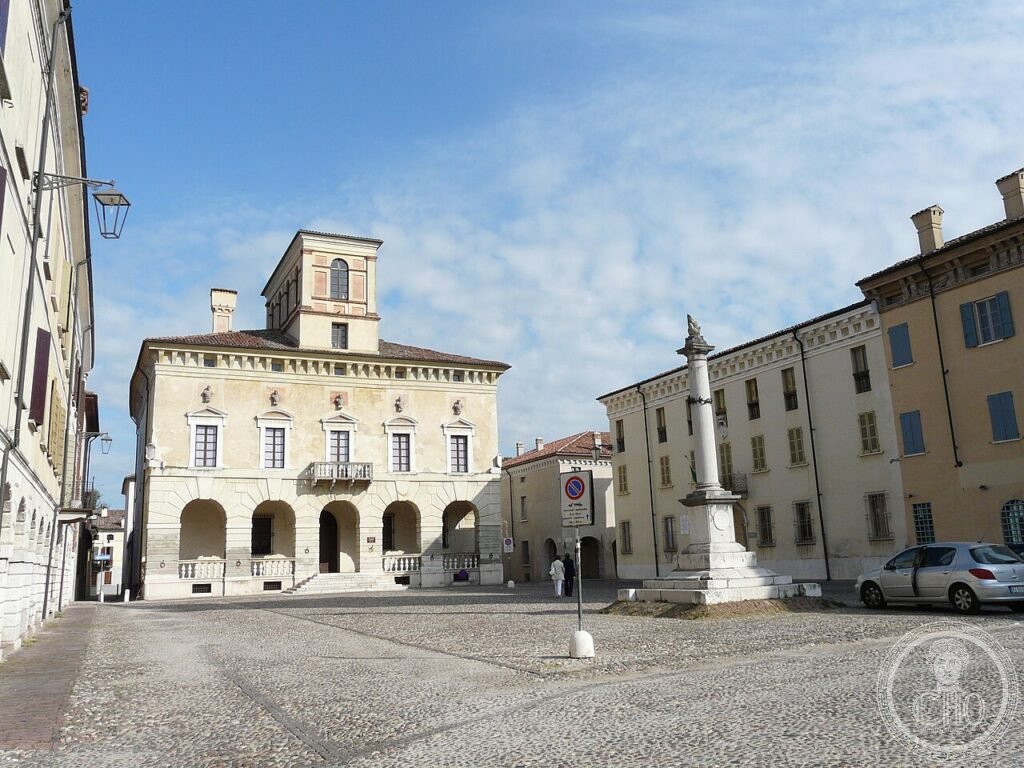
The only surviving complete Renaissance ideal city — built from scratch between 1554 and 1591 on a flat Mantuan plain by Vespasiano Gonzaga, a military governor with enough ambition to found a city and enough money to see it finished — Sabbioneta is a hexagonal fortress, a planned street grid, a ducal palace, a church, a garden villa, a covered gallery for antiquities, and the oldest surviving permanent theatre in Europe, all built within a thirty-seven-year campaign by a single patron and preserved almost intact for four and a half centuries.
At a glance
Sabbioneta is a small town (population approximately 4,000) 30 kilometres south-west of Mantua on the Po plain. It was founded by Vespasiano Gonzaga Colonna (1531–1591), a member of a junior branch of the Gonzaga dynasty who served as a military commander for the Spanish crown in Italy and the Netherlands, as viceroy of Valencia, and as the effective ruler of a small independent principality in the Mantuan plain. Between 1554 and his death in 1591, Vespasiano built Sabbioneta from the beginning on a site that was largely uninhabited: a regular hexagonal plan enclosed by walls and bastions, with a main street (the Corso Vittorio Emanuele) bisecting the city east-west, a main square (Piazza d’Armi), a ducal palace, a palace for the garden (Palazzo del Giardino), a church (Santa Maria Assunta), a Gallery of Antiquities (Galleria degli Antichi), and the Teatro Olimpico (1588), the oldest surviving permanent theatre in Europe.
Sabbioneta is inscribed together with Mantua on the UNESCO World Heritage List (2008, ref. 1287, “Mantua and Sabbioneta”) as an exceptional example of Renaissance urban planning.
Key facts
- Vespasiano Gonzaga Colonna: 1531–1591; military commander for Spain; viceroy of Valencia (1575–1578); Duke of Sabbioneta from 1577; the last significant Gonzaga ruler of an independent principality
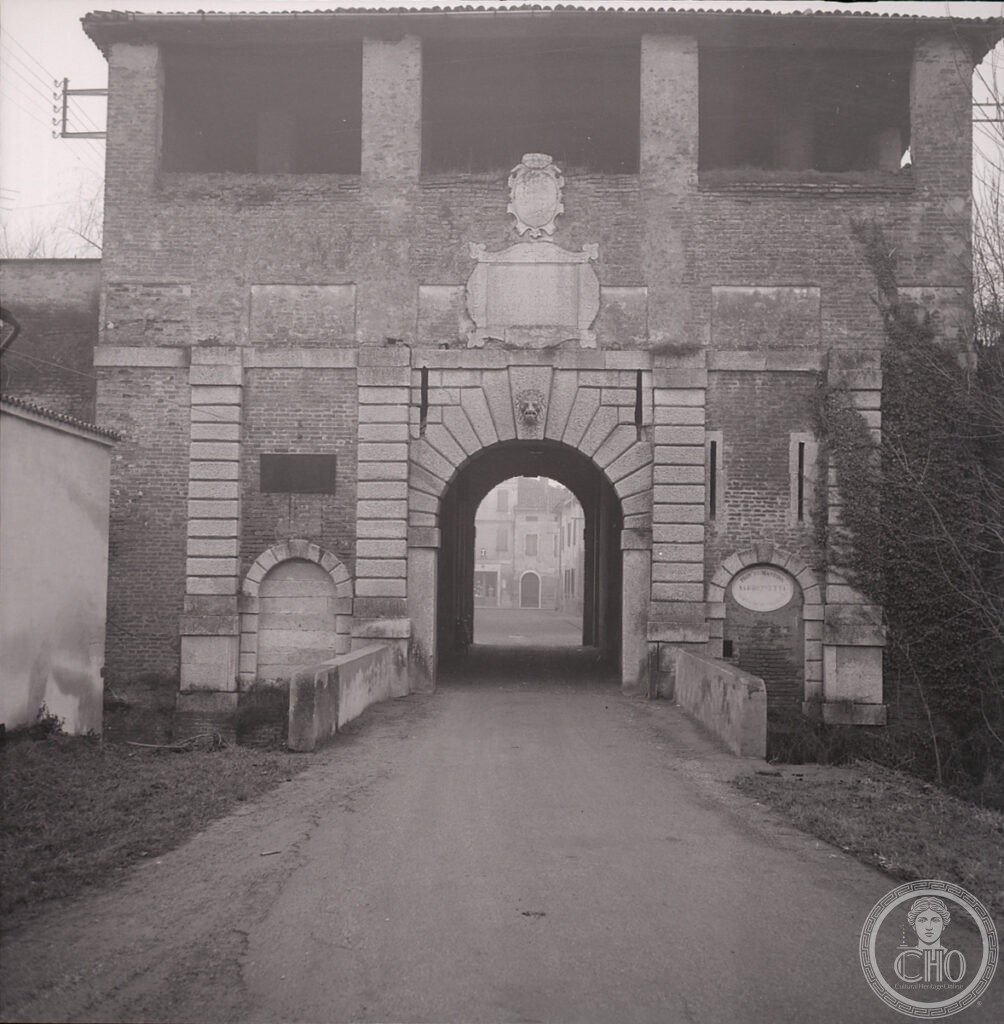
- City plan: Regular hexagonal; 750 m × 650 m; enclosed by earthen ramparts with 6 bastions; 3 main gates (still standing)
- Teatro Olimpico: 1588; architect unknown (possibly Vincenzo Scamozzi or Bernardino Campi); the oldest surviving purpose-built permanent theatre in Europe; 250 seats; used for court entertainment 1588–1591; closed after Vespasiano’s death; reopened 1960s; still used for performances
- Galleria degli Antichi: 1584; 97 m long corridor for Vespasiano’s collection of ancient sculpture and casts; the models included the Column of Trajan; the original sculptures are now in the Ducal Palace in Mantua
- Palazzo Ducale: 1560–1580; Vespasiano’s residence; the Sala degli Elefanti (ceiling with 16 gilded elephants) and the equestrian statue of Vespasiano (original: 1588, now in church; cast in Palazzo)
- UNESCO: 2008, ref. 1287 — “Mantua and Sabbioneta”
- GPS: 45.0003, 10.4917 — Google Maps
History
The concept of the ideal city — a rationally planned urban settlement designed according to geometric principles — was one of the most debated theoretical questions of the Italian Renaissance. Leon Battista Alberti, Francesco di Giorgio Martini, Filarete, Leonardo, and many others produced plans, treatises, and designs for ideal cities. What almost none of them produced was an actual city. Sabbioneta is the only complete exception: the one case where a Renaissance patron had the resources, the power, the time, and the determination to build an ideal city from scratch and see it finished.
Vespasiano Gonzaga began building Sabbioneta in 1554, when he inherited the small fief from his father. The work proceeded in a logical sequence: fortifications first (the hexagonal bastions, 1554–1575), then the Palazzo Ducale (1560–1580), then the main public building (the Galleria degli Antichi, 1584), then the theatre (1588). By 1591, when Vespasiano died, the city was functionally complete: a working administrative centre, with a court, a court theatre, a gallery of antiquities, a ducal library (dispersed after his death), a mint, and a printing press. The dynasty ended with Vespasiano — he had no male heirs — and the principality was absorbed into the Gonzaga duchy of Mantua. Without a court to maintain it, Sabbioneta froze in the 1590s. What survives is essentially what Vespasiano built, almost without later additions or alterations.
What you see
The city is small enough to walk in under an hour. The main axis (Corso Vittorio Emanuele) runs from Porta Vittoria (east, 1554) to Porta Imperiale (west, 1557), with the principal monuments on or near it. The Piazza d’Armi (the main square, now Piazza Ducale) is at the centre; on its north side is the Palazzo Ducale, visible from the outside as a long low facade with a loggia. Inside the palazzo, the tour includes the Sala degli Elefanti (the audience room, with sixteen gilded elephants on the coffered ceiling), the sala of the tapestries, and the equestrian statue of Vespasiano (the original bronze, 1588, by Leone Leoni; after Vespasiano’s death, moved to the church of the Incoronata; the palazzo shows a fibreglass cast).
The Teatro Olimpico is south of the Palazzo Ducale, on a side street. The exterior is unremarkable; the interior — a 250-seat horseshoe auditorium with a wooden stage and an elaborately painted ceiling (1588) — is immediately striking for its intimacy and its completeness. No Italian theatre of the sixteenth or seventeenth century is better preserved. The stage set visible in most photographs is a later addition (1960s) and can be removed; the original stage machinery and the ceiling fresco are intact from 1588.
Gallery
Practical information
- Palazzo Ducale + Teatro Olimpico + Galleria + Palazzo del Giardino: Combined ticket ~€8. Open Tuesday–Sunday 10:00–13:00 and 14:30–18:00 (shorter hours in winter). All monuments are visited on a guided tour; self-guided audio tours also available. Tours depart every 30 minutes from the Palazzo Ducale entrance.
- Performances in the Teatro: The Teatro is used for performances several times per year; check the programme at the Sabbioneta municipal website.
- Duration: 1.5–2 hours for a full visit to all monuments.
- Best season: Spring and autumn; the town is largely uncrowded outside summer weekends.
Getting there
Sabbioneta, Mantova, Lombardia. 30 km south-west of Mantua. By car: the most practical approach; from Mantua by SS10 (30 minutes); from Cremona by SP10 (30 minutes); from Milan (A21 to Cremona exit, then SS10 south; 2h total). By train: no direct train; take the Mantua–Bozzolo bus (APAM), which stops at Sabbioneta (45 minutes from Mantua bus station; 3–4 daily). From Verona: 1h by car (A22 to Mantova, then SS10 west). From Milan: 130 km, 1h45 by car. The town is small and entirely walkable; no internal transport needed. Parking at Piazza d’Armi or Via Dondi (free).
Nearby
- Mantova — 30 km north-east; UNESCO 2008 (same inscription); Palazzo Ducale with the Camera degli Sposi by Mantegna; Palazzo Te by Giulio Romano; the three lakes on three sides of the city
- Brescello (Guareschi / Don Camillo) — 20 km south; the set of the Don Camillo films (1952–1965, directed by Julien Duvivier and others); the Po river; Romanesque church of Santa Maria Assunta
- Cremona — 35 km west; the city of Stradivari (1644–1737) and the great violin-making tradition; the Museo del Violino (displays some 50 instruments including Stradivari violins); the Duomo and its campanile (the Torrazzo, 112 m, the tallest medieval tower in Italy)
Sources
- UNESCO: whc.unesco.org/en/list/1287
- Wikipedia EN: Sabbioneta
- Carpeggiani, Paolo: Sabbioneta, una città di fondazione, Mantova, 1977
- Romei, Danilo (ed.): Vespasiano Gonzaga e il ducato di Sabbioneta, Mantova, 1991
Find it on the map
See this place and what’s around it →📷 Become a Cultural Heritage Online photographer
Share your photos of places: they stay published under your name as the author. The more they're seen, the more you get noticed — and soon a contest will reward the most appreciated photos.
Log in or sign up free to add a photo