
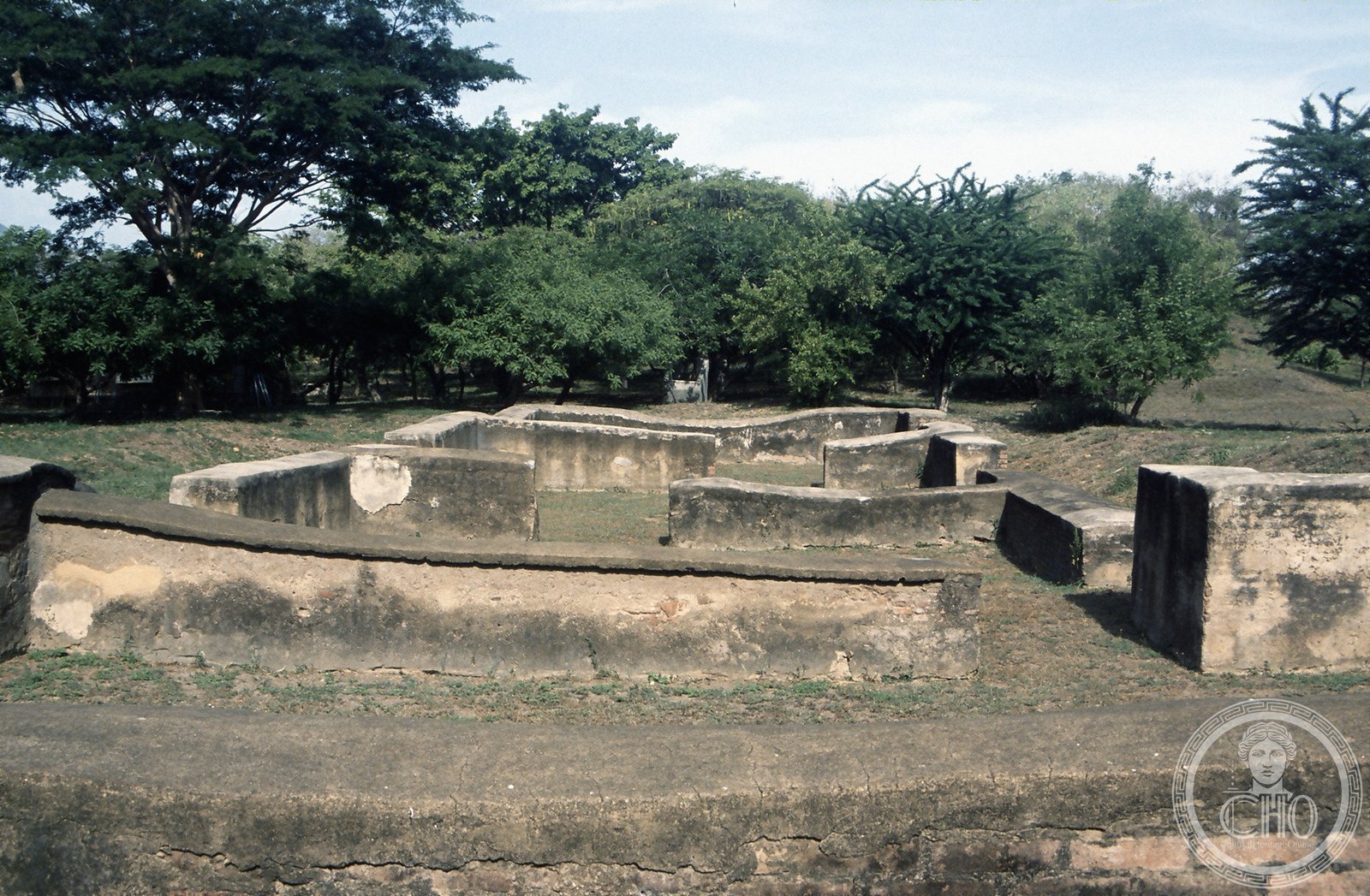
Sealed under volcanic ash for four centuries, León Viejo is the most perfectly preserved early Spanish colonial city in the Americas — a frozen moment from 1610, when the conquistadors abandoned their capital and never returned.
At a glance
León Viejo (Old León) is the excavated remains of the first permanent Spanish city on the Pacific coast of Central America. Founded in 1524 by Francisco Hernández de Córdoba on the shores of Lake Xolotlán (Lake Managua), at the foot of the active Momotombo volcano, it served as the administrative capital of Nicaragua for nearly ninety years. After a series of volcanic eruptions and a devastating earthquake in 1610, the population relocated to a new site 35 km away. The abandoned city was then buried under ash and debris, preserving it almost intact until systematic excavations began in 1967. UNESCO inscribed it as a World Heritage Site in 2000.
Key facts
- UNESCO inscription: 2000 (World Heritage Site)
- Founded: 1524 by Francisco Hernández de Córdoba
- Abandoned: 1610, following volcanic eruptions and earthquake damage
- Duration as capital: Approximately 86 years, capital of the Province of Nicaragua
- Destroyed by: Momotombo eruptions (1594, 1610) and 1610 earthquake
- Excavations began: 1967
- Notable burial: Francisco Hernández de Córdoba, founder (executed by Pedrarias Dávila), buried in the cathedral ruins
- Location: Near Puerto Momotombo, León Department, on the north shore of Lake Xolotlán
History
León Viejo was founded on 8 June 1524 by Francisco Hernández de Córdoba, the conquistador tasked by Pedrarias Dávila (governor of Castilla del Oro) with subjugating the indigenous peoples of Nicaragua. The city was strategically positioned on Lake Xolotlán, then called the Sweet Sea of Nicaragua, giving access to trade routes and to the indigenous populations of the region. Within a few years it became the administrative and ecclesiastical capital of the Province of Nicaragua.
The city’s history was violent from the start. The founding conquistador Hernández de Córdoba was himself executed by Pedrarias Dávila in 1526 — accused of seeking to establish independent power — and buried in the cathedral he had helped build. The site also contains evidence of the brutal exploitation of indigenous people: mass graves, evidence of forced labour, and the physical fusion of indigenous and Spanish building materials in the same structures.
Momotombo, the volcano that dominates the skyline above the site, erupted destructively in 1594 and again in 1610. The combination of eruption damage and a severe earthquake in 1610 convinced the colonial authorities to relocate entirely to a new site — today’s Ciudad de León — 35 km to the north-west. The old city was stripped of portable valuables and then abandoned. Within decades, volcanic deposits buried the ruins, hiding them for over 350 years.
The first systematic excavations, led by Nicaraguan archaeologist Carlos Tünnermann and later by international teams, began in 1967. They confirmed the remarkable completeness of the site and revealed its significance as a snapshot of early colonial urban planning.
What you see
León Viejo is a remarkably legible ruin. The central plaza — the heart of every Spanish colonial city — is clearly defined, with the ruins of the main cathedral, the bishop’s palace, the town council hall (cabildo), and private residences arranged around it according to the classic Laws of the Indies grid plan, even though the Laws of the Indies were only formally codified after the city’s founding, making this a pre-codification example of the emerging Spanish colonial urban model.
The cathedral ruins are the most dramatic element: heavy stone walls still stand to significant height, and the sanctuary where Hernández de Córdoba was buried has been identified. The bishop’s palace, one of the first episcopal residences in Central America, shows the ambition of the early colonial church in the region.
Beyond the civic core, the site includes residential barrios where indigenous workers lived alongside Spanish colonists, and areas of the site show the cultural mixing — and coercion — that characterised early colonial society. The backdrop throughout is Momotombo volcano, still smoking, a constant reminder of the forces that sealed the city in time.
Practical information
- Entry fee: Approximately USD 2–5 per person
- Opening hours: Tuesday–Sunday, 08:00–17:00; closed Monday
- On-site museum: Small but informative; displays excavated artefacts including ceramics, metalwork, and skeletal remains
- Facilities: Basic (parking, toilets, small shop); no restaurant on site
- Best time to visit: November to April (dry season); the road can be difficult in heavy rain
- Guided tours: Available on site; recommended for full context of excavation areas
Getting there
León Viejo is approximately 90 km north-west of Managua. From Managua, take the Carretera Norte to Telica, then head south towards Puerto Momotombo on the lake shore. The last stretch is an unpaved road of approximately 15 km. The most practical approach is by private vehicle or taxi from the city of León (30 km away), which is the main tourist hub in the region. There is no direct public bus to the site; micro-buses from León to La Paz Centro are the closest option, from where taxis cover the remaining distance.
Nearby
- Ciudad de León — the successor city, 35 km north-west; itself a UNESCO World Heritage Site (cathedral), Nicaragua’s university city and cultural capital
- Momotombo volcano — still active; the volcano that destroyed and preserved León Viejo simultaneously; viewable from the site
- Lake Xolotlán (Lake Managua) — the large lake on whose shore the site sits; boat trips available from Puerto Momotombo
- Managua — Nicaragua’s capital, 90 km south-east; gateway city with international connections
Sources
- UNESCO World Heritage List — whc.unesco.org/en/list/613
- Wikipedia — Ruins of León Viejo
- Instituto Nicaragüense de Cultura (INC) — site documentation
Find it on the map
See this place and what’s around it →📷 Become a Cultural Heritage Online photographer
Share your photos of places: they stay published under your name as the author. The more they're seen, the more you get noticed — and soon a contest will reward the most appreciated photos.
Log in or sign up free to add a photo