

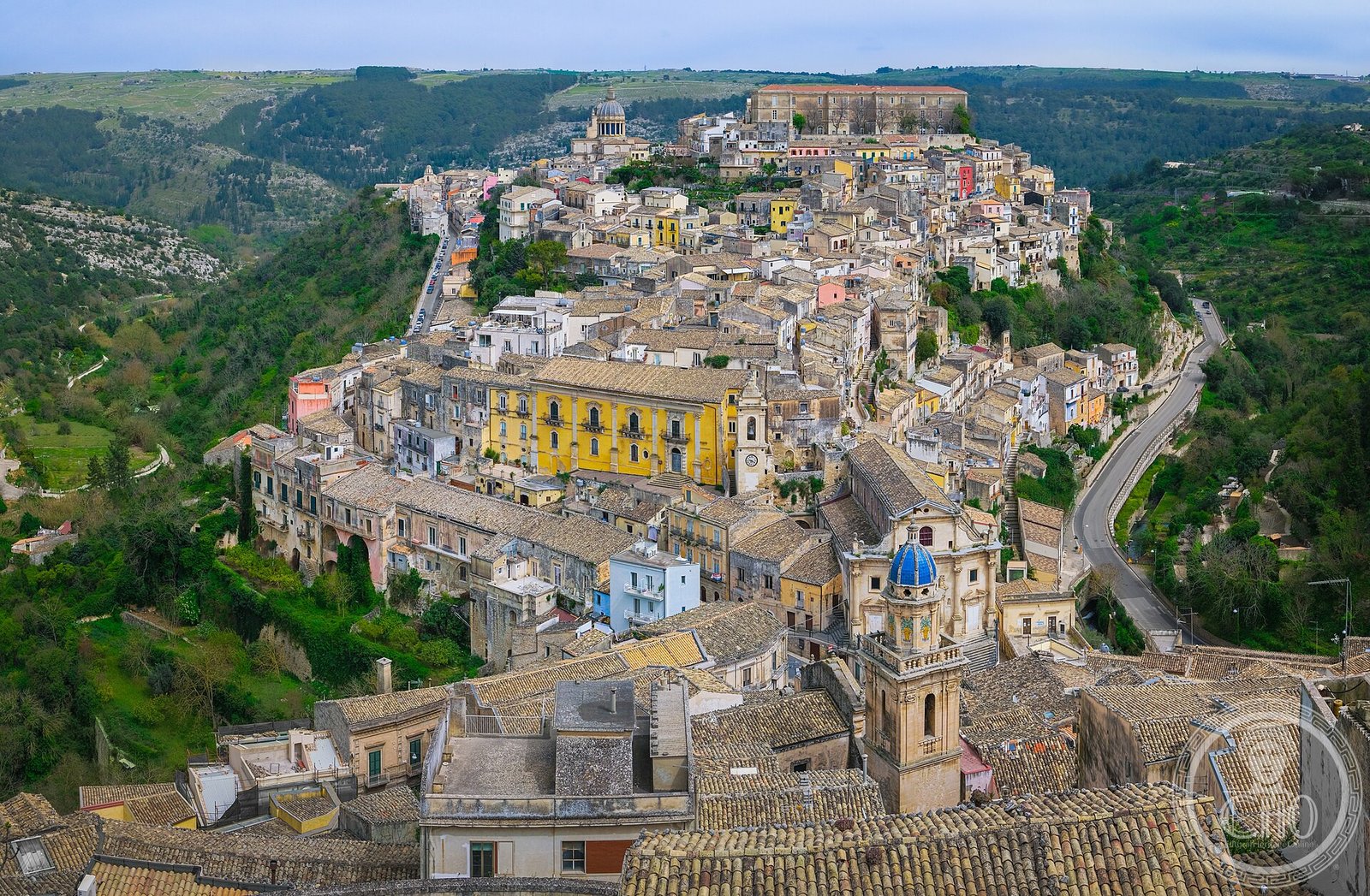
Sicily’s southernmost capital, twice-born from catastrophe. After a devastating 1693 earthquake levelled the city, Ragusa rose again as two distinct districts united by Baroque splendour and three historic bridges.
At a glance
Ragusa serves as capital of the Free Municipal Consortium of Ragusa, the seventh largest municipality in Sicily by population and third by area. The town hall stands at 502 metres above sea level, making Ragusa Italy’s southernmost provincial capital. Known as the “city of bridges” for its three picturesque historic structures, it has earned alternative designations—”the island within the island” and “the other Sicily”—reflecting its distinct history and socio-economic character within the region.
History
In 1693, a devastating earthquake destroyed nearly the entire city, claiming more than five thousand lives. The reconstruction that followed during the eighteenth century fundamentally reshaped Ragusa’s urban geography. Two principal districts emerged: Ragusa Superiore, positioned on the plateau, and Ragusa Ibla, reconstructed from the ancient city’s ruins and rebuilt according to its medieval street pattern. This dual identity persists today.
What you see
Post-earthquake Ragusa showcases exceptional Baroque architecture throughout both districts. Churches and eighteenth-century civic buildings demonstrate the refined aesthetic sensibilities of the reconstruction period. The three bridges connecting different parts of the city remain visually striking landmarks. These structures collectively represent some of Sicily’s finest Baroque achievements alongside those found across the Val di Noto.
Cultural significance
Ragusa stands among Sicily’s most important repositories of Baroque art and architecture. In 2002, UNESCO recognized the late Baroque towns of southeastern Sicily, including Ragusa’s architectural masterpieces alongside those of the Val di Noto, as a World Heritage Site. The city’s reconstruction after 1693 offers a remarkable case study in urban planning and artistic expression during the early modern period.
Key facts
- Address: Corso Italia, 72 – 97100 Ragusa
- Coordinates: 36.9255411, 14.7291569
- Phone: 0932 676111
- Website: https://www.comune.ragusa.gov.it/
Practical information
Ragusa consists of two main areas worth exploring: Ragusa Superiore on the upper plateau and Ragusa Ibla below. Both districts merit separate visits to appreciate their distinct characters and architectural merits. Plan adequate time to see the principal churches and civic buildings that define the city’s Baroque heritage.
Getting there
Ragusa is located in southeastern Sicily. Regular road and rail connections link the city to other Sicilian towns and to the broader region. Consult local transport providers for current schedules and routes.
See the place
Sources & resources
Find it on the map
See this place and what’s around it →Historical events at this place (6)
- 2017 Francesco Balsamo - Dei passaggi e dei culmini
- 2017 XVI Edizione della Sagra dei Sapori Chiaramontani 2017 - Chiaramonte Gulfi (RG)
- 2017 Torna il corteo dei carri allegorici del - Re Cucco
- 2017 Passeggiando sotto le stelle
- 2019 Nuova apertura galleria SACCA e inaugurazione mostra – Pozzallo (RG)
- 2020 Ettore Pinelli | Archivio senza titolo.
📷 Become a Cultural Heritage Online photographer
Share your photos of places: they stay published under your name as the author. The more they're seen, the more you get noticed — and soon a contest will reward the most appreciated photos.
Log in or sign up free to add a photo