

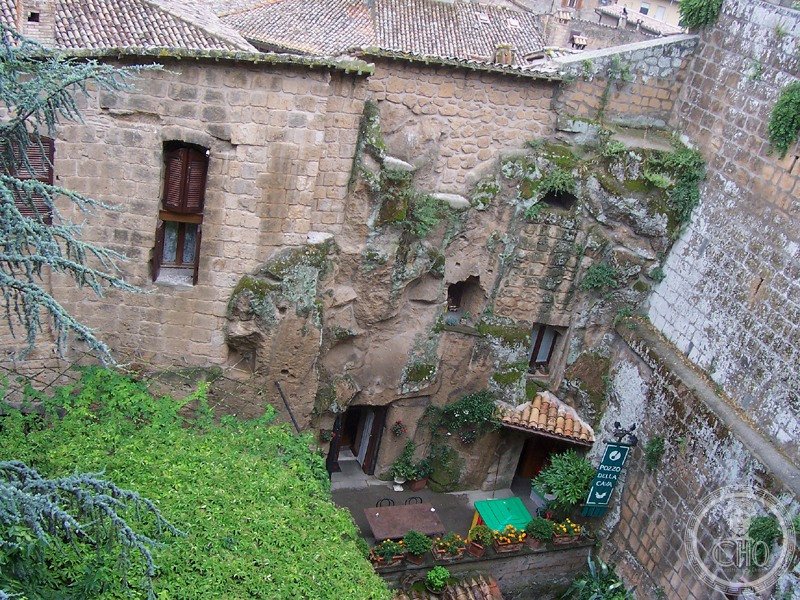
An Etruscan well shaft layered with centuries of engineering innovation, this underground structure traces the hydraulic ambitions of Orvieto from antiquity through the Renaissance.
At a glance
The Quarry Shaft is a multi-period well complex beneath the streets of Orvieto. Its deepest element—a rectangular lateral shaft—dates to the Etruscan period, when it served as a test excavation to locate groundwater before the main well was dug. Renaissance Pope Clement VII commissioned its expansion in 1527, and restoration efforts in the late 20th century revealed its full archaeological significance.
History
The Etruscan shaft represents an early engineering survey, a geological probe into the earth. In 1527, Pope Clement VII ordered the construction of a major well—intended to draw water from an underground spring accessed from street level. Workers restructured the ancient shaft to serve this new purpose; the project finished in 1530 at municipal expense.
For nearly 450 years, the well remained in use until 1646, when local authorities sealed it. A plaque commemorated the closure; popular legend attributed the decision to the drowning of French officers, though records remain uncertain.
After dormancy for over a century, the well was rediscovered in December 1984 by researcher Tersilio Sciarra during renovations. Silt and debris had reduced its accessible depth to just 25 meters. Full restoration took place in spring 1996, and the original street-level entrance reopened to public view in 2004. A 1999 discovery—an autograph letter from Renaissance architect Antonio da Sangallo the Younger, found by historian Lucio Riccetti—established that this was actually the first papal well built in Orvieto, not the later Well of San Patrizio as had been believed.
What you see
The structure combines Etruscan craftsmanship with Renaissance engineering. The original rectangular test shaft demonstrates the precision of ancient surveyors. Above it rises a deeper Renaissance excavation, with a vaulted chamber and a spiral staircase descending into darkness. Visitors experience both the geometric geometry of classical construction and the atmospheric depth of an engineered spring.
Cultural significance
The Quarry Shaft encapsulates Orvieto’s water challenges and ingenuity across millennia. Its Etruscan roots anchor it to the region’s pre-Roman past. The Renaissance expansion reflects papal patronage and urban infrastructure ambitions. Its 20th-century recovery demonstrates how archaeology reshapes historical understanding—Riccetti’s letter discovery fundamentally reordered the narrative of Orvieto’s wells, revealing that beneath one of Europe’s most visited cathedrals lies a hydrological archive written in stone.
Key facts
- Address: Via della Cava, 28, 05018 Orvieto TR
- Coordinates: 42.7184803945413, 12.105404734611511
- Phone: 0763 342373
- Website: http://www.pozzodellacava.it
Practical information
Opening hours and admission fees are available on the official website. The well is accessed via a museum entrance on Via della Cava in central Orvieto.
Getting there
The Quarry Shaft lies in Orvieto’s historic center, a short walk from the Duomo. If driving, park in the Piazza Cahen car park; the entrance is on Via della Cava. Regional trains serve Orvieto station regularly from Perugia and Rome.
Sources & resources
Find it on the map
See this place and what’s around it →📷 Become a Cultural Heritage Online photographer
Share your photos of places: they stay published under your name as the author. The more they're seen, the more you get noticed — and soon a contest will reward the most appreciated photos.
Log in or sign up free to add a photo