
The Pontine Land Museum (Museo della Terra Pontina) is housed in the former palace of the Opera Nazionale Combattenti (O.N.C.), a monumental Rationalist building erected in Littoria — now Latina — during the Fascist land reclamation (bonifica integrale) of the Pontine Marshes in the 1930s. The museum documents the draining of one of Italy’s largest wetlands, the founding of five new towns in the reclaimed territory, and the resettlement of thousands of farmers from Veneto and other northern Italian regions. It is the principal repository of the material and documentary heritage of the Agro Pontino colonisation, a chapter of Italian history that combined engineering ambition with totalitarian social engineering.
At a glance
- Type
- Municipal historical and agricultural museum
- Period
- Building constructed 1932–1936; museum established in the post-war period
- Style
- Italian Rationalism (Razionalismo); simplified Neoclassical Fascist variant
- Location
- Latina, Lazio, Italy
- Coordinates
- 41.4667° N, 12.8983° E
- Original function
- Administrative headquarters of the Opera Nazionale Combattenti, the state body managing Pontine reclamation
Overview
Latina (founded 1932 as Littoria) was the administrative capital of the Fascist reclamation of the Pontine Marshes, a wetland covering approximately 77,000 hectares south of Rome. The O.N.C. Palace served as the command centre of the entire colonisation project, managing land allocation, water control, and the resettlement of settlers (coloni) from northern Italy. The building’s austere Rationalist facades, typical of Fascist-era public architecture, now contain museum halls that trace the technical, social, and human story of the bonifica from its Roman precursors through the Mussolini-era campaign to the present agricultural landscape.
History
The bonifica integrale of the Pontine Marshes, launched by the Mussolini government in 1928–1930, was the largest land reclamation project in 20th-century Italy. Drainage canals, pumping stations, and road networks transformed a malarial wetland into arable farmland within a decade. The Opera Nazionale Combattenti, originally founded after World War I to provide land for veterans, became the operational body for the colonisation. Farmers recruited from Veneto, Friuli, and Emilia were allocated farmhouses (poderi) and expected to cultivate the new land under strict quotas. The palace that now houses the museum was built between 1932 and 1936 as the visible symbol of the state’s transformative power over landscape and society.
What you see
The museum collections include agricultural tools, household objects, photographic archives, maps, and scale models documenting both the engineering works and the daily life of the settler community. A large collection of aerial photographs and technical drawings illustrates the systematic transformation of the Pontine landscape. The building itself is a significant artefact of Rationalist architecture, with monumental entrance stairs, travertine cladding, and geometric window arrangements typical of the Fascist public building programme of the 1930s.
Cultural significance
The Pontine Land Museum sits at the intersection of engineering history, social history, and the contested legacy of Fascist modernisation projects. The bonifica remains a complex episode in Italian memory: a genuine technical achievement that remade a landscape, and simultaneously a project of totalitarian social control that uprooted communities and suppressed traditional wetland cultures. The museum navigates this dual legacy through documentary collections that give voice to both the planners and the settlers.
Practical information
- Address
- Latina, Lazio, Italy (check official municipality website for current address and hours)
Getting there
Latina is served by the Latina Scalo railway station on the Rome–Formia–Naples line; local buses connect the station to the city centre. By car from Rome, take the Via Pontina (SS148) southward; Latina is approximately 60 km from the GRA ring road. Regional bus services from Rome’s EUR Fermi terminal also serve Latina.
Sources & resources
- Pontine Marshes — Wikipedia
- Latina, Lazio — Wikipedia
- Cultural Heritage Online — Italian monuments & cultural sites
See the place
Find it on the map
See this place and what’s around it →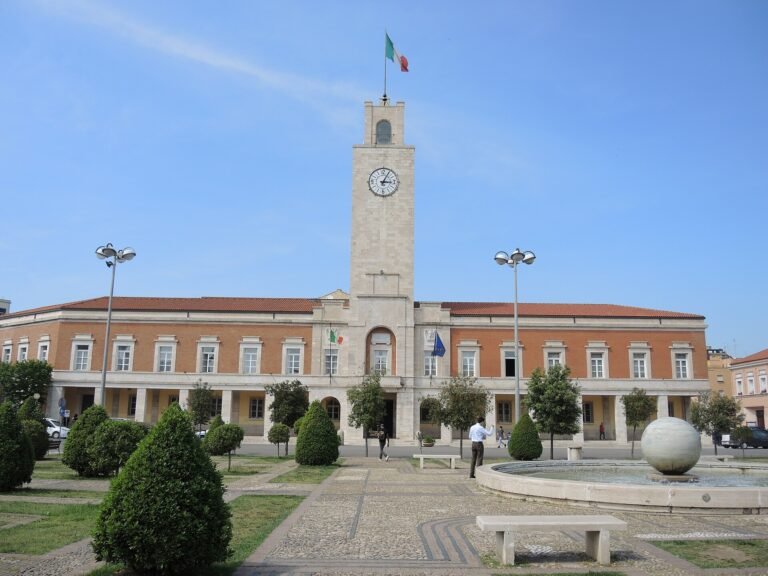
📷 Become a Cultural Heritage Online photographer
Share your photos of places: they stay published under your name as the author. The more they're seen, the more you get noticed — and soon a contest will reward the most appreciated photos.
Log in or sign up free to add a photoIs this page about you?
This page is read by travellers and heritage enthusiasts who find it on Google. Tell us how you are connected to this place and we will take it from there.