
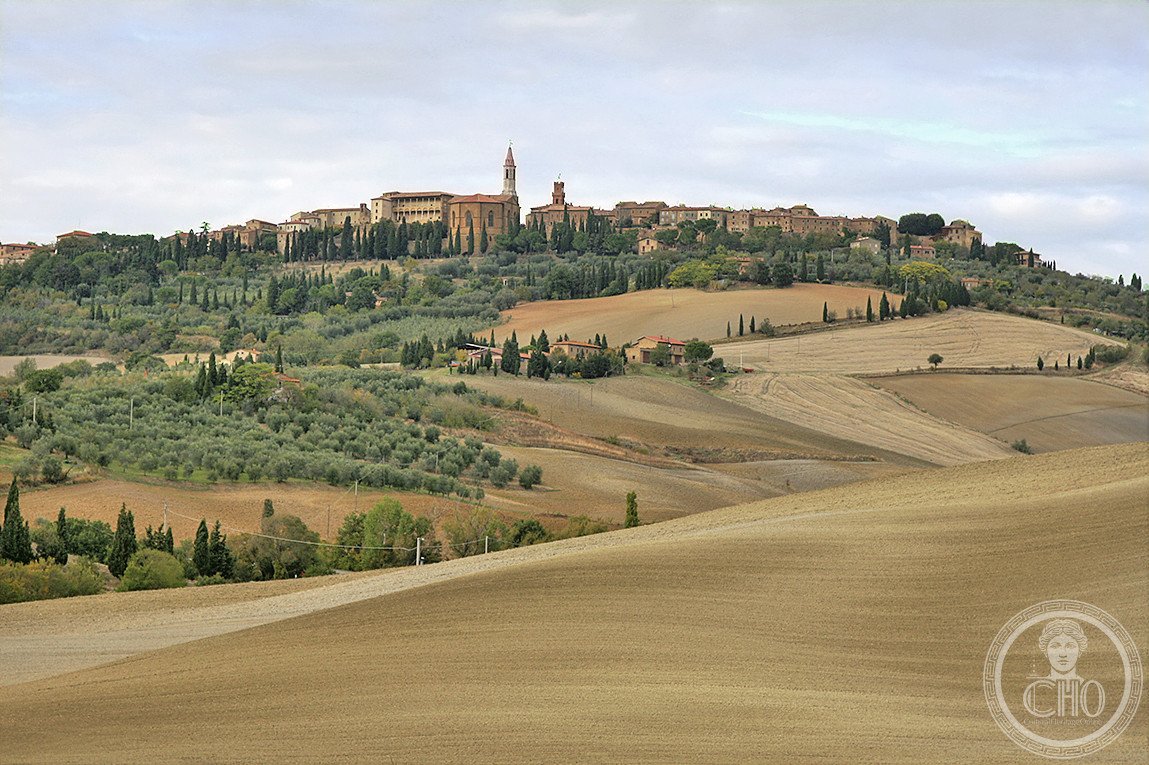
A Renaissance town in Tuscany’s Val d’Orcia, Pienza stands as the exemplary model of Renaissance urban planning and design.
At a glance
Pienza is a small comune in the province of Siena, positioned between Montepulciano and Montalcino in the heart of Tuscany. Its compact layout and harmonious proportions have earned it recognition as the “touchstone of Renaissance urbanism.” The town received UNESCO World Heritage designation in 1996, followed by the broader Val d’Orcia landscape in 2004.
History
Pienza emerged as a planned Renaissance settlement, its urban design reflecting ideals of proportion and civic order that defined the era. The town’s strategic location within the Val d’Orcia connects it to one of Tuscany’s most distinctive landscapes, itself now recognized as a UNESCO World Cultural Landscape.
What you see
The town embodies Renaissance principles through its careful spatial arrangement and architectural coherence. Pienza demonstrates how Renaissance thinkers approached the relationship between buildings, streets, and public space—principles that continue to influence urban design today.
Cultural significance
Pienza holds singular importance as a living document of Renaissance urbanism. Its designation as a World Heritage Site recognizes not merely individual buildings but an entire town conceived as an integrated whole. The broader inclusion of Val d’Orcia acknowledges the cultural landscape that frames Pienza and shapes its identity.
Key facts
- Location: Pienza, province of Siena, Tuscany, Italy
- Coordinates: 43.078611°N, 11.678889°E
- UNESCO World Heritage Site: 1996
- Val d’Orcia UNESCO World Cultural Landscape: 2004
Practical information & getting there
Pienza is accessible by road from Siena, approximately 50 kilometers to the northwest. The town serves as a gateway to exploring the Val d’Orcia region, with Montepulciano and Montalcino nearby for additional Renaissance and medieval architecture.
Sources & resources
Find it on the map
See this place and what’s around it →📷 Become a Cultural Heritage Online photographer
Share your photos of places: they stay published under your name as the author. The more they're seen, the more you get noticed — and soon a contest will reward the most appreciated photos.
Log in or sign up free to add a photo