
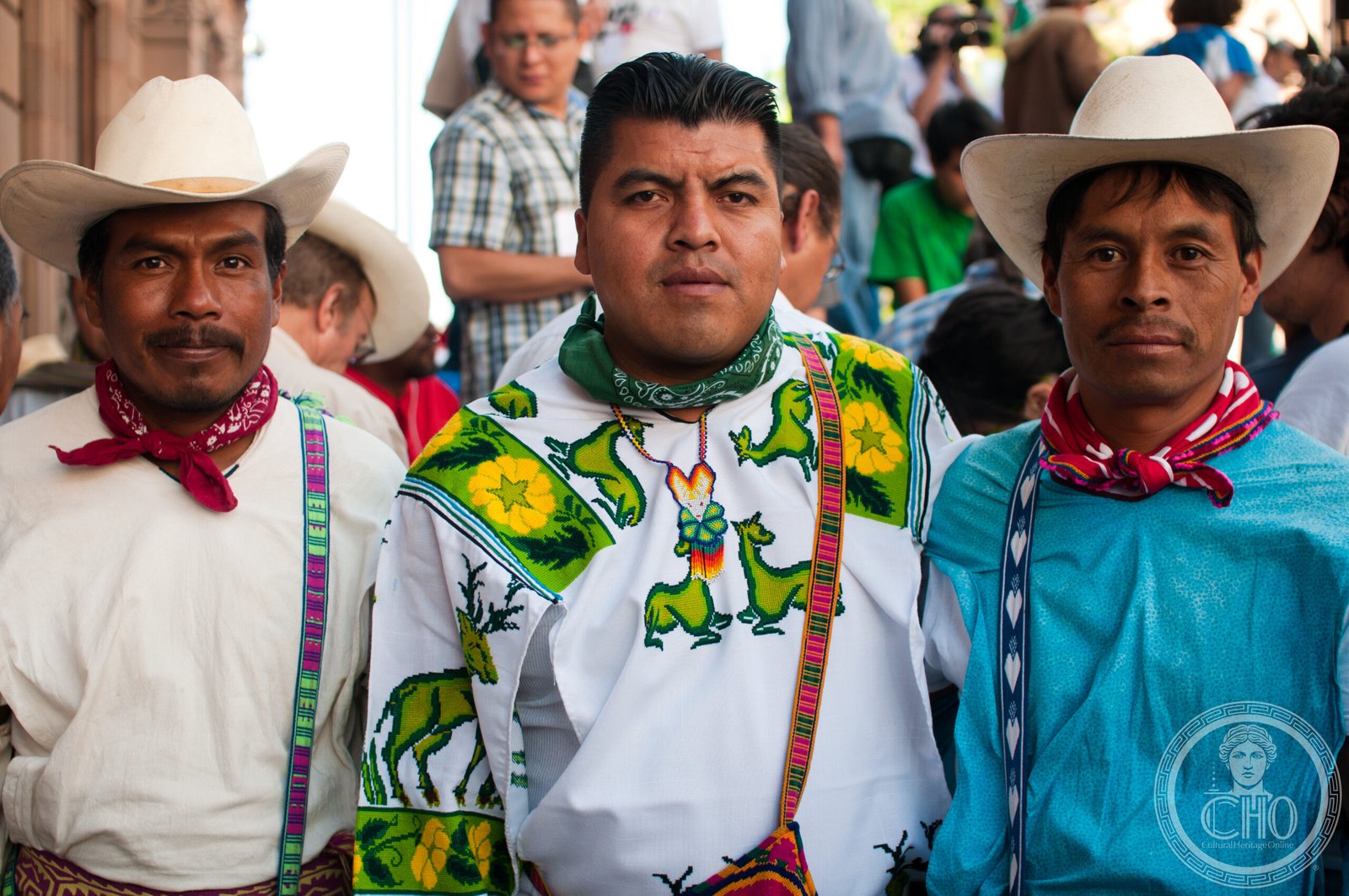
A Journey to the Origin of the World
For the Wixáritari — the people known in Spanish as Huichol — Wirikuta is not merely a desert in San Luis Potosí. It is Tatéi Haramara, the place where the sun rose for the first time, where the ancestral gods dwell, and where the sacred peyote cactus grows. Every year, groups of pilgrims walk or travel up to 900 kilometres from the Sierra Madre Occidental in Jalisco to reach this desert, maintaining a ceremonial route that has been made since before the Spanish conquest.
The Peyote Pilgrimage
The pilgrimage to Wirikuta follows ancient trail markers — rocks, springs, mountain passes — each associated with a deity in the Huichol cosmology. On reaching the desert, pilgrims hunt the “deer-peyote” (the peyote cactus is identified with the sacred deer in Huichol mythology), perform ceremonies, and return carrying peyote buttons used in the ceremonial life of their mountain communities throughout the year. The ritual is unchanged in its essential form for centuries.
The Desert Landscape
Wirikuta itself is the Chihuahuan Desert at high altitude — a semi-arid basin at 1,800 metres elevation near the ghost-town silver-mining settlement of Real de Catorce. The landscape of creosote bush, candelilla, and towering cardón cacti takes on a numinous quality for those who know its cosmological significance. The desert is not simply a backdrop but a text to be read by those who have received the teachings.
Huichol Art as Sacred Knowledge
The Wixáritari transmit their cosmology through extraordinary visual art: yarn paintings (nierika) and beaded objects in which every symbol — the deer, the peyote, the eagle, the sun, the rain goddess — carries specific theological meaning. These artworks have brought Huichol culture international recognition, but their true function is ceremonial: they are maps of the sacred landscape.
UNESCO Recognition
Inscribed in 2024 under criteria iii and v, the Route of the Huichol People to Wirikuta was recognised as an outstanding example of a living sacred landscape — a pilgrimage route maintained across centuries by an indigenous community as the foundation of its spiritual and social identity, and as an exceptional testimony to a pre-Columbian cultural tradition.
Visiting Wirikuta and Real de Catorce
Real de Catorce is accessible by road from San Luis Potosí city (3 hrs), then through a 2.3-km railway tunnel that is the only vehicle access. The town, virtually abandoned in the early 20th century after silver prices collapsed, has been partially repopulated by artists, spiritual seekers, and eco-tourists. Peyote ceremonies are performed by the Huichol community and are not open to casual visitors; the desert can be walked with local guides.
Getting There
San Luis Potosí has a domestic airport with connections to Mexico City (1 hr) and other Mexican cities. From San Luis Potosí city, a bus or rental car reaches Real de Catorce. The old tunnel entrance at Matehuala requires a jeep or 4WD vehicle to traverse.
Conservation and Rights
The Wirikuta landscape has faced threats from silver mining concessions in recent years. The Huichol community has been at the forefront of indigenous land rights activism in Mexico, arguing that Wirikuta cannot be separated from its ceremonial use — that the land is not a resource to be mined but a temple to be protected. The UNESCO inscription represents a significant validation of this position.
Find it on the map
See this place and what’s around it →📷 Become a Cultural Heritage Online photographer
Share your photos of places: they stay published under your name as the author. The more they're seen, the more you get noticed — and soon a contest will reward the most appreciated photos.
Log in or sign up free to add a photo