
Begun in 2010 and consecrated only in October 2025 with a ceremony dedicated to its religious artworks, the Cathedral of the Salvation of the People — also known as the National Cathedral — stands in the centre of Bucharest, on Spirea Hill, facing the Palace of Parliament. At 132–133 metres high, with a volume of 323,000 cubic metres and an area of 6,000 square metres, it is today the tallest, largest and most voluminous Orthodox building in the world, and will become the future seat of the Patriarchate of the Romanian Orthodox Church. Its construction, lasting fifteen years and costing more than 300 million dollars, has not been free of criticism: some observers have called it “pharaonic”, comparing it to the architectural megalomania of Ceaușescu’s communist era, and arguing that the public funds requested year after year from politicians — often taken from communities in real need — showed more a display of strength than an act of religious humility.
About People’s Salvation Cathedral
People’s Salvation Cathedral, also known as the National Cathedral, is an Eastern Orthodox cathedral occupying a prominent position in central Bucharest on Spirea’s Hill, in Arsenal Square, directly facing the massive Palace of the Parliament. Construction began in 2010, and the cathedral’s religious artworks were formally consecrated in a dedicated ceremony held on 26 October 2025, marking the effective completion of a project that had spanned some fifteen years. Standing 132 to 133 metres tall, with an interior volume of approximately 323,000 cubic metres and a total area of around 6,000 square metres, the cathedral set a new world record as the largest Orthodox cathedral ever built, and is recognised as the tallest, largest, and most voluminous Eastern Orthodox church building anywhere in the world. Upon its full completion, the cathedral is intended to become the permanent seat of the Romanian Orthodox Church. The scale of the undertaking came at a significant financial cost, exceeding 300 million US dollars over the course of construction, funding drawn substantially from Romanian state and public sources across successive governments. This cost, combined with the building’s monumental scale, generated sustained public controversy: critics characterised the project as “pharaonic” in ambition, drawing pointed comparisons to the architectural megalomania associated with Nicolae Ceaușescu’s communist-era construction projects, most notably the nearby Palace of the Parliament itself. A political scientist at the University of Bucharest argued that the sustained, year-after-year pressure placed on Romanian politicians to fund the cathedral — sometimes diverting resources from communities with genuine unmet needs — reflected a demonstration of institutional and political power rather than an expression of religious humility.
Key facts
- 2010: construction begins
- 132-133 m: total height, the tallest Orthodox church building in the world
- 323,000 m³ volume, 6,000 m² area: the largest Orthodox church by volume and area
- 26 October 2025: religious artworks formally consecrated
- Cost: over $300 million over 15 years of construction
- Future role: intended permanent seat of the Romanian Orthodox Church
- Controversy: criticised by some as “pharaonic,” compared to Ceaușescu-era megalomania
History
The cathedral’s location directly facing Nicolae Ceaușescu’s colossal Palace of the Parliament — itself the second-largest administrative building in the world after the Pentagon — situates the project within a deliberate post-communist Romanian architectural conversation, with the new Orthodox cathedral consciously positioned as a religious counterweight to the nearby monument of secular communist ambition. The fifteen-year construction timeline and sustained public funding controversy reflect broader ongoing debates in post-1989 Romania about the appropriate scale of church-state financial relationships and the use of public money for major religious infrastructure projects.
As the newly crowned tallest and largest Eastern Orthodox church building anywhere in the world, People’s Salvation Cathedral immediately assumes a position of major significance within global Orthodox Christianity, its scale intentionally exceeding that of long-standing landmark Orthodox cathedrals in Moscow, Belgrade, and elsewhere, marking a striking assertion of the Romanian Orthodox Church’s contemporary ambition and resources.
What you see
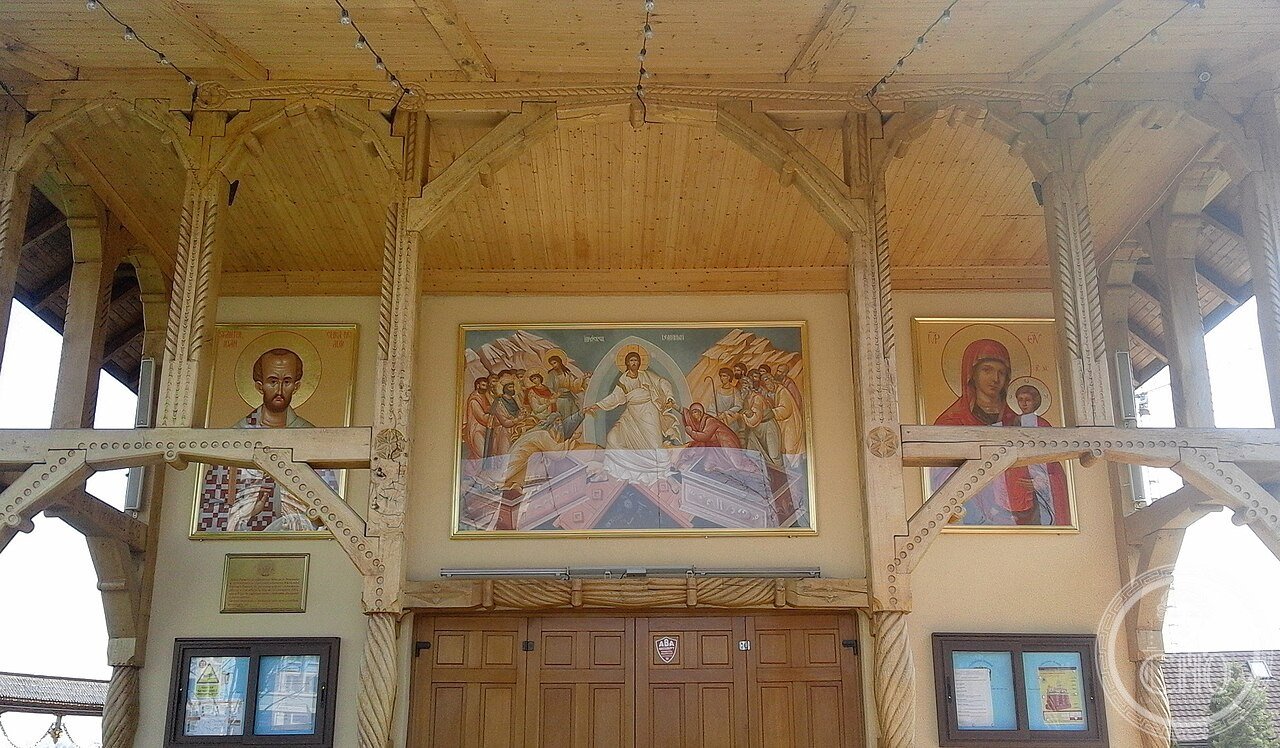
The cathedral’s massive domed silhouette, rising 132 to 133 metres above Bucharest’s Arsenal Square, dominates the skyline in direct visual dialogue with the equally colossal Palace of the Parliament facing it. Inside, extensive religious artwork and decoration, consecrated in October 2025, fill an interior volume of roughly 323,000 cubic metres — a scale intended to accommodate large-scale Orthodox liturgical ceremony as the future seat of the Romanian Patriarchate.
Practical information
- Opening hours: generally open daily; check current hours and access restrictions before visiting, as finishing work may continue
- Address: Calea 13 Septembrie, Dealul Spirii, Sector 5, Bucharest, Romania
Getting there
People’s Salvation Cathedral stands on Spirea’s Hill in central Bucharest, directly facing the Palace of the Parliament, easily reachable by metro or on foot from central Bucharest. GPS: 44.4259° N, 26.0823° E.
Nearby
- Palace of the Parliament — the colossal Ceaușescu-era building the cathedral directly faces
- Bucharest Old Town — the historic city centre, a short distance away
- Cotroceni Palace — the Romanian presidential residence, elsewhere in the city
Sources
- Wikipedia — “People’s Salvation Cathedral” (en.wikipedia.org)
- Smithsonian Magazine — “The World’s Largest Christian Orthodox Church Is Now Open in Romania” (smithsonianmag.com)
- RFE/RL — “World’s Largest Eastern Orthodox Cathedral Takes Shape Above Bucharest” (rferl.org)
Find it on the map
See this place and what’s around it →📷 Become a Cultural Heritage Online photographer
Share your photos of places: they stay published under your name as the author. The more they're seen, the more you get noticed — and soon a contest will reward the most appreciated photos.
Log in or sign up free to add a photo