

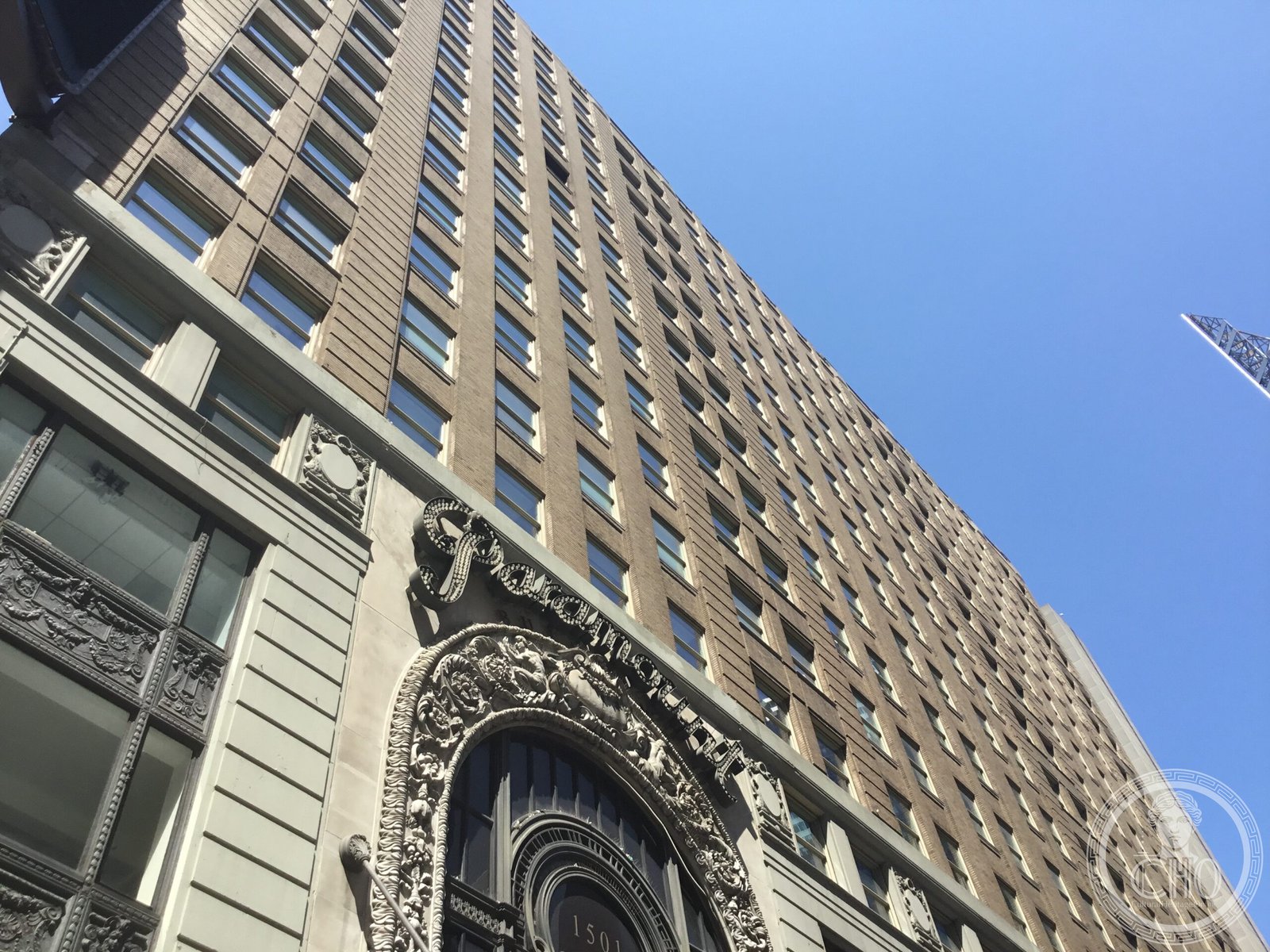
The 1927 Art Deco tower at 1501 Broadway, topped by a four-faced clock and a winged golden globe that has been a Times Square navigational landmark for nearly a century, was built for the Paramount Pictures corporation at the height of Hollywood’s golden age and once contained one of the great movie palaces of New York.
At a glance
The Paramount Building at 1501 Broadway occupies a central position in Times Square, rising in a series of Art Deco setbacks to the distinctive crown: a four-faced clock set within an ornamental base, surmounted by a bronze-and-gold celestial globe. The building was completed in 1927 as the New York headquarters of Paramount Famous Lasky Corporation and was designed by the theatrical architecture firm of Rapp & Rapp, who had built dozens of Paramount theaters across North America. The lower floors originally contained the Paramount Theatre, a 3,664-seat picture palace that became one of the most celebrated live-performance venues of the Swing era, hosting Frank Sinatra’s legendary early concert appearances in the 1940s. The theatre has since been subdivided, but the building’s exterior and iconic crown remain New York City Individual Landmarks.
Key facts
- Location: 1501 Broadway, between 43rd and 44th Streets, Times Square, Manhattan
- Architects: C.W. Rapp and George L. Rapp (Rapp & Rapp)
- Completed: 1927
- Height: Over 400 feet; multi-story Art Deco setback tower
- Style: Art Deco setback tower with clock and globe crown
- Status: New York City Individual Landmark; National Register of Historic Places
- Original tenant: Paramount Famous Lasky Corporation (later Paramount Pictures)
History
In 1926 Paramount was among the most powerful studios in Hollywood, and its need for a New York headquarters befitting that power produced one of Times Square’s most distinctive towers. The firm of C.W. Rapp and George L. Rapp, based in Chicago, had built a national reputation on Paramount theater commissions; their design for the 1501 Broadway building integrated the office tower with the Paramount Theatre in the lower floors — a 3,664-seat movie palace intended as the flagship of the studio’s national exhibition chain.
The Paramount Theatre became as famous for live performances as for films. In the 1940s the theatre hosted Frank Sinatra and Tommy Dorsey in the concerts that established Sinatra’s solo career, drawing crowds that blocked 43rd Street and required police control. The theatre also featured Glenn Miller, Benny Goodman, and other Swing era orchestras in a programming model that mixed films with live performance. By the 1960s changing entertainment patterns had undermined the economics of the large picture palace, and the theatre was eventually subdivided for retail and entertainment use, though the exterior of the building, including the globe crown, was preserved as a landmark.
The building’s most visible element — the illuminated four-faced clock surrounded by a bronze celestial globe — functions as a navigational landmark in Times Square, visible from multiple directions across the Broadway-Seventh Avenue intersection and visible from the length of Broadway from 42nd to 45th Streets.
What you see
The Paramount Building’s principal architectural contribution is its setback crown, which produces a profile unlike any other Times Square tower. The clock, large enough to be legible from the street below, is set within a tiered ornamental base that transitions to the globe through a series of geometric Art Deco steps. The globe itself, gilded and mounted on a ring of wings, catches the light differently at dawn, noon, and dusk, and illuminates at night as part of the Times Square electrical display.
At street level, the Broadway elevation retains its original Art Deco ornamental stonework at the entrance portal. The corner site, at the junction of Broadway and 7th Avenue, gives the building a prominent presence in both directions. The building can be appreciated at its best from the pedestrian plazas at the Father Duffy Square section of Times Square, a few steps north, where the full setback profile from base to globe is visible.