
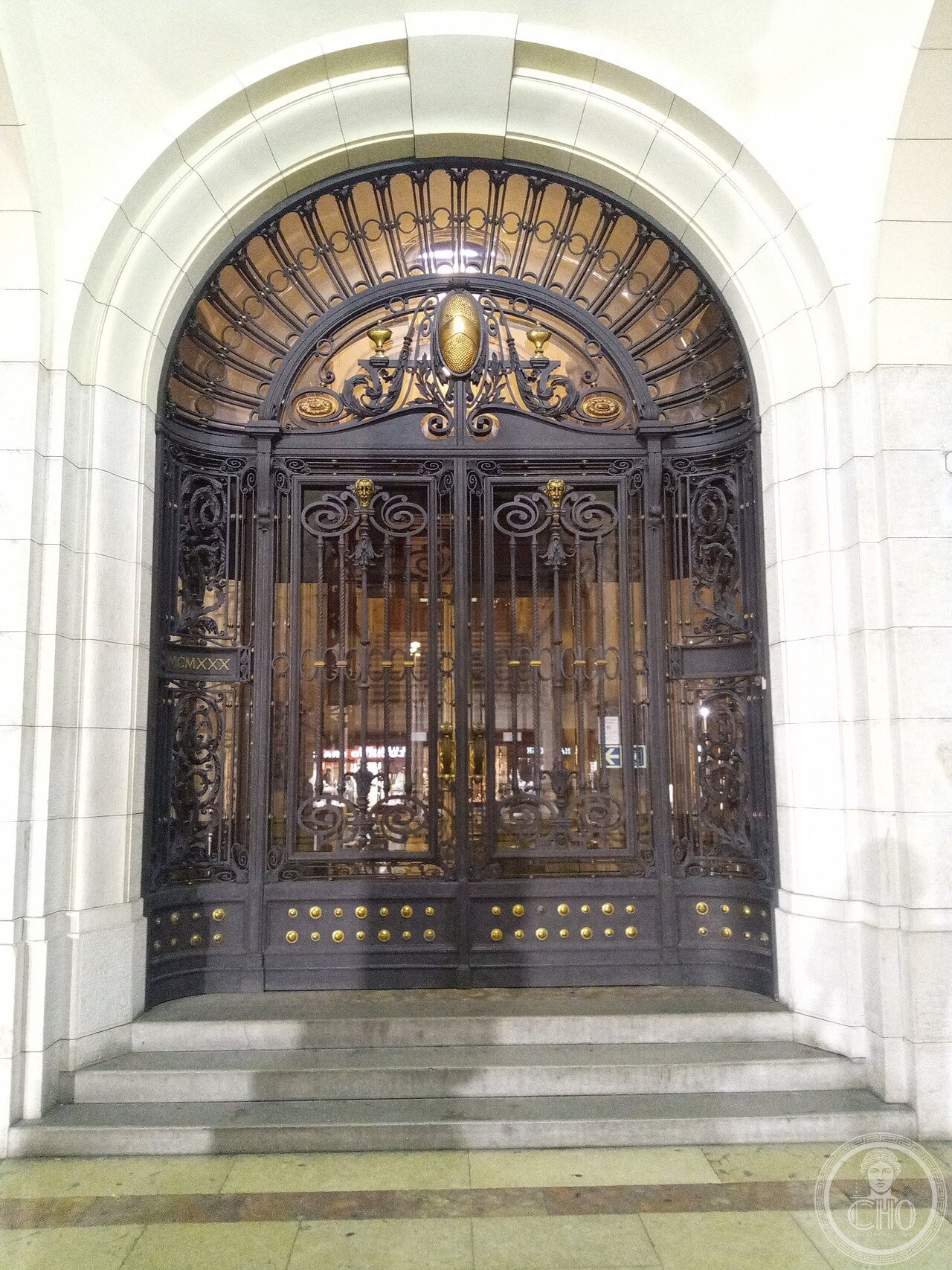

The home-city building of Raimondo D’Aronco — the Friulian master who reinvented Liberty architecture at the Ottoman court and designed the pavilions of the 1902 Turin International Exhibition.
At a glance
Palazzo D’Aronco stands on Via Nicolò Lionello in the historic heart of Udine, a short walk from Piazza Libertà and the Gothic Loggia del Lionello. The building is the most significant surviving work in D’Aronco’s home city by a man whose greatest achievements were built thousands of kilometres away, in Istanbul and at the 1902 Turin International Exhibition. Designed in a classical register — restrained masonry, ordered bays, a composed neoclassical facade — it reads as a deliberate counterpoint to the ornamental exuberance that made D’Aronco the outstanding Italian Liberty architect of his generation.
Key facts
- Architect: Raimondo D’Aronco (1857–1932)
- Location: Via Nicolò Lionello, Udine, Friuli Venezia Giulia
- Style: Classical / Neoclassical
- D’Aronco’s primary period: 1880s–1920s
- Notable other works: Istanbul Expo pavilions (1900–02); Turin 1902 International Exhibition pavilions
- GPS: 46.0627, 13.2347
History
Raimondo Tommaso D’Aronco was born in Gemona del Friuli in 1857 and trained in Venice and Vienna before establishing himself as one of the most versatile Italian architects of the Belle Époque. His path to international prominence ran through Istanbul: appointed court architect to Sultan Abdülhamid II in 1893, he spent the following decade designing pavilions, kiosks, and Ottoman public buildings in a personal vocabulary that fused Italian Liberty with Ottoman decorative tradition. His surviving masterwork from that period is the complex of exhibition pavilions built for the 1900 Yıldız Palace exposition in Istanbul.
Back in Italy, D’Aronco became the design director of the 1902 Turin International Exhibition of Decorative Arts — one of the defining moments of the European Art Nouveau movement. The Turin pavilions, demolished after the exhibition, are documented in contemporary photographs and represent the most complete Italian statement of the style at its international peak. D’Aronco spent his later years between Udine, San Remo, and occasional commissions; he died in San Remo in 1932. His Udine building, on the street named after the fifteenth-century civic architect Nicolò Lionello, is a quiet homecoming note: classical where his international work was ornate, composed where his Ottoman pavilions were exuberant.
What you see
The facade follows the conventions of early-twentieth-century Italian civic classicism: rusticated base, ordered piano nobile windows with moulded surrounds, and a measured cornice line. What distinguishes the building within its street is a precision of detail that marks the hand of a trained architect rather than a contractor working from pattern-book references. The portal proportions, the rhythm of the bays, and the articulation of the upper floor suggest D’Aronco’s academic training operative even in a restrained register.
The building should be understood in counterpoint: visitors who know D’Aronco’s Istanbul pavilions (with their sinuous tile-work and Ottoman-inflected arches) or the documentation of his Turin 1902 pavilions (wrought iron, ceramic panels, floral capitals) will recognise in Udine a deliberate simplicity — the architect working for his home city in its own civic language rather than in the international Liberty grammar that made him famous abroad.
Practical information
- Access: Exterior fully visible from Via Nicolò Lionello at any time
- Interior: Not publicly accessible
- Context: 5-minute walk from Piazza Libertà, Udine’s main civic square with the Gothic Loggia del Lionello (1448)
- Time needed: 15 minutes for exterior; 30 minutes to combine with Piazza Libertà and the castle hill
Getting there
From Udine Centrale station, walk east on Viale Europa Unita and north toward the historic centre (15 minutes on foot). Via Nicolò Lionello runs between the old market area and the castle hill; the building is easily found by walking north from Piazza della Libertà along the axis of the historic market streets. Udine’s centro storico is compact and pedestrian-friendly.
Nearby
- Piazza Libertà — 300 m south, Udine’s main square with the Gothic Loggia del Lionello (1448) and the Venetian column
- Castello di Udine — 400 m east, hilltop fortress housing the Civic Museums
- Duomo di Udine — 200 m south-east, 14th-century cathedral with Tiepolo frescoes
- Oratorio della Purà — nearby, with original Tiepolo ceiling
Sources
- Wikipedia (Italian): Raimondo D’Aronco
- Wikimedia Commons: File:L’ingresso centrale di palazzo d’Aronco su via Lionello.jpg, CC BY-SA 4.0
- Nominatim / OpenStreetMap: GPS 46.0627, 13.2347
Find it on the map
See this place and what’s around it →📷 Become a Cultural Heritage Online photographer
Share your photos of places: they stay published under your name as the author. The more they're seen, the more you get noticed — and soon a contest will reward the most appreciated photos.
Log in or sign up free to add a photoIs this page about you?
This page is read by travellers and heritage enthusiasts who find it on Google. Tell us how you are connected to this place and we will take it from there.