
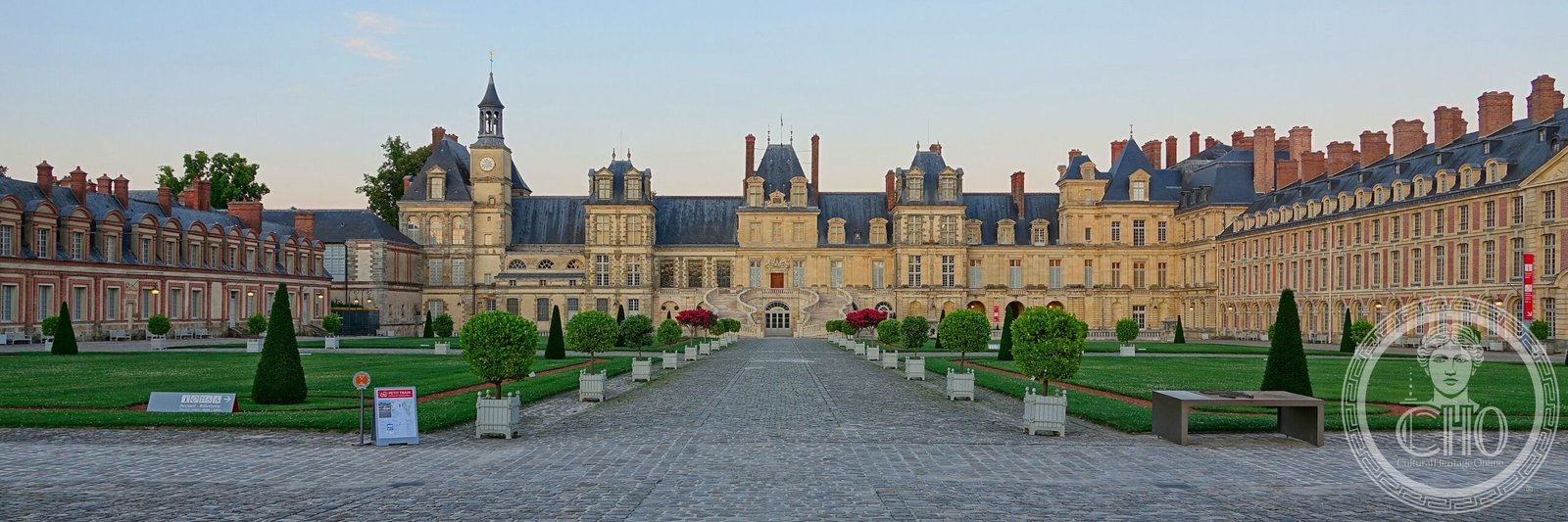
One of France’s grandest royal residences, this sprawling château transformed from a hunting lodge into a masterpiece of art and decoration under successive monarchs.
At a glance
Located 55 kilometers southeast of Paris, the Palace of Fontainebleau stands among the largest French royal châteaux. What began as a seasonal retreat became a repository of extraordinary artistic riches, shaped by the ambitions of seven centuries of French rulers.
History
The palace served successive French monarchs—Louis VII, Francis I, Henry II, Louis-Philippe, Napoleon I, and Napoleon III—primarily as a hunting lodge and autumn residence. Though the royal family occupied it only a few months each year, each generation invested in its expansion and embellishment.
By gradually accumulating art, furnishings, and decoration, the châteaux evolved from a functional retreat into a genuine palace. Napoleon I made particularly ambitious additions, while later sovereigns continued the tradition of enhancement. The palace was converted into a national museum in 1927 and recognized as a UNESCO World Heritage Site in 1981 for its unique architecture and historical significance.
What you see
The palace reflects centuries of architectural evolution and artistic patronage. Its expansive grounds and rooms showcase the accumulated tastes of French royalty, from Renaissance refinement to imperial grandeur.
Cultural significance
Fontainebleau represents the sustained development of French royal taste and power across multiple dynasties. Its transformation from lodge to palace mirrors the growing ambition and resources of the French crown, while its art collections document centuries of European cultural achievement.
Key facts
- Country: France
- Location: Fontainebleau, 55 km southeast of Paris
- Coordinates: 48.4022°N, 2.7006°E
- UNESCO World Heritage Site: designated 1981
- Status: National museum since 1927
Practical information & getting there
The palace is accessible by train or car from Paris. You can visit the grounds and interior galleries as a national museum. Check ahead for current hours and admission details.
Sources & resources
- Palace of Fontainebleau — Wikipedia
- Cultural Heritage Online
Find it on the map
See this place and what’s around it →📷 Become a Cultural Heritage Online photographer
Share your photos of places: they stay published under your name as the author. The more they're seen, the more you get noticed — and soon a contest will reward the most appreciated photos.
Log in or sign up free to add a photoIs this page about you?
This page is read by travellers and heritage enthusiasts who find it on Google. Tell us how you are connected to this place and we will take it from there.