

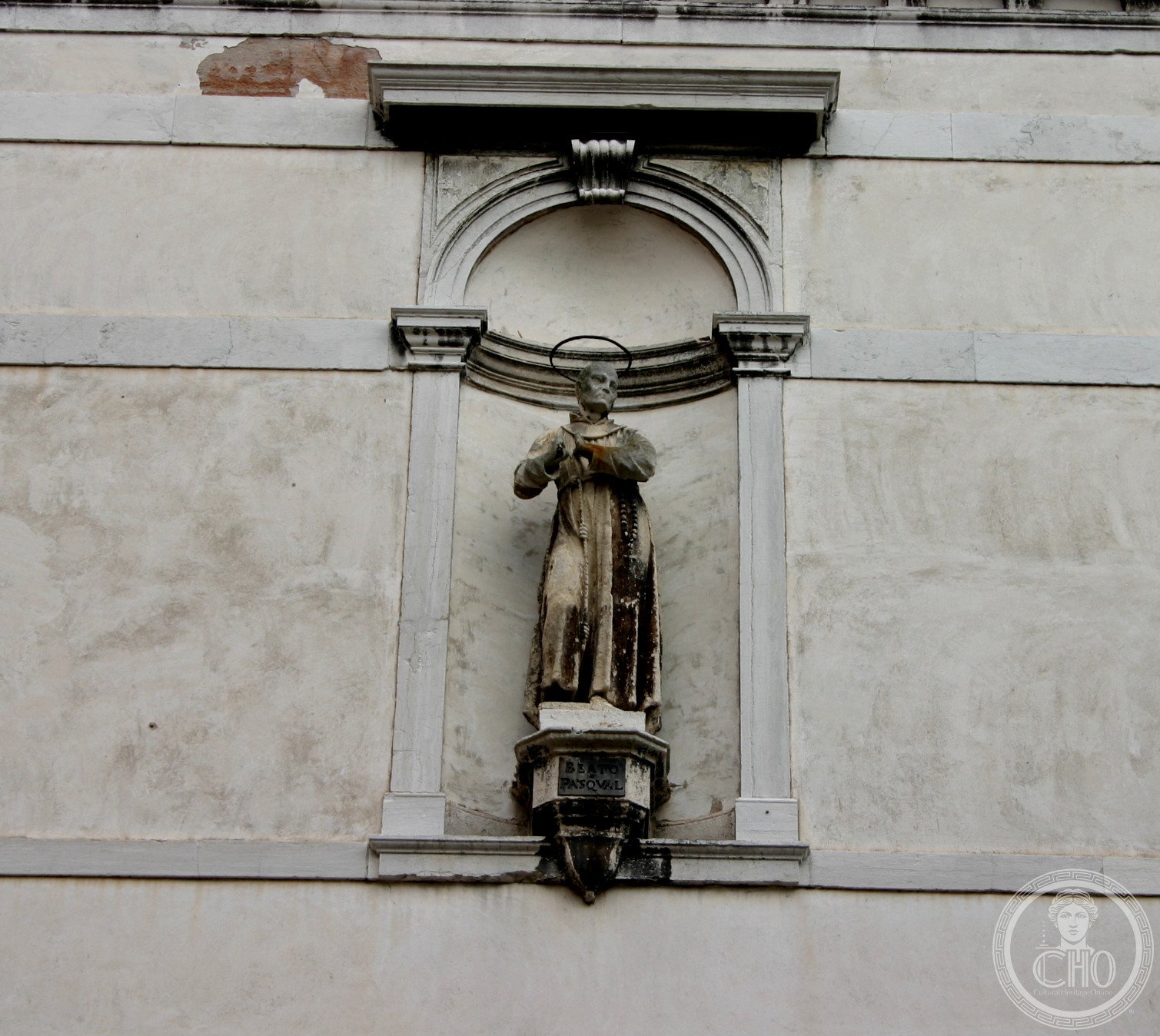
The Oratory of San Pasquale Baylon in Venice is an intimate Baroque sacred space attached to the church of Santa Maria dei Frari complex in the Sestiere di San Polo, serving as the seat of the Confraternity of the Sacred Stigmata. Built and decorated in the 17th–18th centuries, the oratory preserves an ensemble of ceiling canvases and devotional paintings in the Venetian late-Baroque manner, offering a rare glimpse into the private devotional world of a Venetian lay confraternity away from the tourist circuits of the major scuole.
At a glance
- Type
- Confraternity oratory (scuoletta) with Baroque painted interior
- Period
- 17th–18th century; dedicated to San Pasquale Baylon (canonised 1690)
- Style
- Venetian Baroque; confraternity devotional interior
- Location
- San Polo, Venice, Veneto — 45.4380° N, 12.3480° E
Overview
Venice’s religious landscape was shaped not only by its great basilicas and scuole grandi but by dozens of minor confraternity oratories (scuolette) attached to parish churches and mendicant complexes, each serving a neighbourhood brotherhood united by a shared devotion. The Oratory of San Pasquale Baylon belongs to this world of intimate lay piety, dedicated to the Spanish Franciscan friar Pasquale Baylon, canonised in 1690 and named patron saint of Eucharistic congresses and confraternities. Its host confraternity, the Scuola del Sacro Stigmata, focused its devotion on the wounds of Christ received by Saint Francis of Assisi — a fitting attachment to the Frari complex, the great Franciscan church of Venice.
History
The confraternity of the Sacred Stigmata was one of many smaller Venetian lay brotherhoods that proliferated in the 16th and 17th centuries alongside the better-known scuole grandi. Its oratory was likely established or substantially rebuilt and decorated in the decades following the canonisation of San Pasquale Baylon in 1690, when the new saint’s cult provided a focus for the community’s identity. The interior decoration programme — ceiling canvases, altarpiece, and devotional furnishings — reflects the Venetian late-Baroque taste for warm colour, illusionistic ceiling painting, and emotional religious imagery that characterised confraternity spaces of the period. The Napoleonic suppressions of religious confraternities (1806–1810) disrupted the oratory’s function, and it has passed through various states of use and restoration in the intervening two centuries.
What you see
The oratory presents a compact rectangular hall with a wooden ceiling carrying painted canvases in Baroque frames, devotional paintings on the walls, and an altar dedicated to San Pasquale Baylon. The scale is intimate — far smaller than the great scuole grandi of Venice — giving visitors a sense of the private, neighbourhood character of confraternity life. The painted decoration, executed in the manner of Venetian late-Baroque workshops of the late 17th or early 18th century, features Franciscan and Eucharistic subjects appropriate to the double dedication of the Sacred Stigmata and the Baylonite cult.
Cultural significance
Minor Venetian oratories like San Pasquale Baylon are increasingly recognised as irreplaceable documents of the social and devotional fabric of pre-modern Venice, complementing the grander narratives told by the Scuola Grande di San Rocco or the Frari basilica itself. They preserve the material culture of ordinary Venetian lay piety — its paintings, furniture, silver, and organisational memory — in a form that the tourist economy of Venice rarely makes visible.
Practical information
- Address
- San Polo, near Santa Maria dei Frari, 30125 Venezia VE
- Opening hours
- Check official website or contact the Frari complex for access information; opening may be limited or by appointment
- Coordinates
- 45.4380° N, 12.3480° E
Getting there
Take ACTV vaporetto Line 1 to the San Toma stop (San Polo waterfront), then walk approximately 5 minutes through Calle dei Frari to the Santa Maria Gloriosa dei Frari complex. The oratory is located in the immediate vicinity of the Frari basilica. Alternatively, Line 2 stops at Rialto, from which the Frari is a 10-minute walk through the San Polo market district.
Sources & resources
Find it on the map
See this place and what’s around it →📷 Become a Cultural Heritage Online photographer
Share your photos of places: they stay published under your name as the author. The more they're seen, the more you get noticed — and soon a contest will reward the most appreciated photos.
Log in or sign up free to add a photoIs this page about you?
This page is read by travellers and heritage enthusiasts who find it on Google. Tell us how you are connected to this place and we will take it from there.