

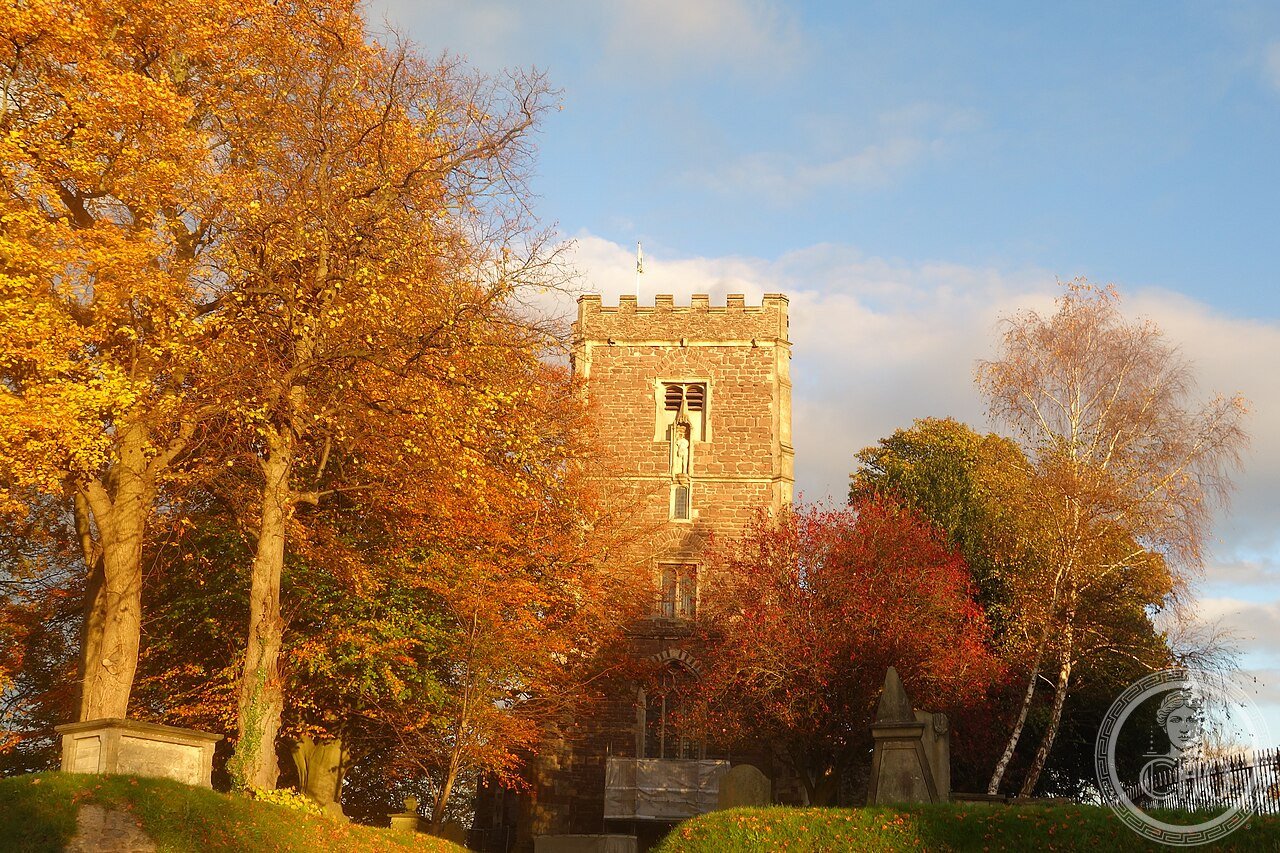
According to legend, the Welsh warlord Gwynllyw was converted to Christianity through the influence of his wife and his son Cadog, and in penance for the sins of his youth was ordered in a dream to build a church wherever he found a white ox with a black spot on its forehead. He found the animal at the top of Stow Hill, and raised his wooden hermitage there in the fifth century. In the twelfth century Norman monks added a nave whose splendid arch rests on Roman columns, taken by tradition from the legionary fort at Caerleon.
About Newport Cathedral (St Woolos)
The name “Woolos” is an English corruption of Gwynllyw, the 5th-century Welsh warlord and later saint who first founded a religious establishment on this hilltop site. According to tradition, Gwynllyw converted to Christianity through the influence of his wife and their son, Cadog, who would himself go on to become a celebrated Welsh saint; in penance for the sins of his earlier warlike life, Gwynllyw was told in a dream to build a church wherever he found a white ox bearing a black spot on its forehead. He discovered such an animal at the top of Stow Hill, and built a wooden hermitage there — the origin of the site’s long religious history. In the 9th century, the original wooden church was rebuilt in stone, an unusual and significant undertaking for Wales at the time, reflecting the growing importance of Gwynllyw’s cult and the accumulated wealth of his shrine. King William II granted the church to St Peter’s monastery in Gloucester in 1093, and the Benedictine monks there likely funded construction of most of the current nave, including its spectacular Norman arch, built between around 1140 and 1160. That arch rests on Roman columns reputedly taken from the legionary fort at Caerleon, just north of Newport, giving the building a direct physical link to the Roman military presence that had once dominated the region centuries earlier. Part of this Norman-era structure survives today as the Galilee Chapel at the cathedral’s west end. The former parish church of St Woolos was formally confirmed as the diocesan cathedral of the Church in Wales in 1949, elevating the site to cathedral status after roughly fifteen centuries of continuous religious use.
Key facts
- 5th century: founded by Gwynllyw, following the legend of the white ox with a black spot
- 9th century: the original wooden church rebuilt in stone
- 1093: King William II grants the church to St Peter’s monastery, Gloucester
- c. 1140-1160: the Norman nave and arch built, resting on Roman columns from Caerleon
- 1949: confirmed as the diocesan cathedral of the Church in Wales
- Surviving Norman work: preserved today as the Galilee Chapel
History
The legend of Gwynllyw’s white ox with a black spot belongs to a distinctive Welsh tradition of divinely guided church foundations, in which a reformed warlord’s penitential quest for a specific sign transforms a site of no prior significance into a lasting religious centre — a narrative pattern echoed in the foundation stories of several other early Welsh saints, including Gwynllyw’s own son Cadog. The reuse of Roman columns from the legionary fort at Caerleon within the cathedral’s 12th-century Norman arch situates Newport within the broader medieval practice of incorporating prestigious Roman spolia into new ecclesiastical construction, directly linking the cathedral’s fabric to the region’s earlier Roman military history.
The site’s gradual elevation from a 5th-century penitential hermitage, through a 9th-century stone rebuilding reflecting its growing shrine wealth, to its eventual 1949 confirmation as a full cathedral, traces an unusually long and gradual institutional ascent spanning roughly fifteen centuries of continuous religious use on the same hilltop site.
What you see
The cathedral’s Norman nave and its celebrated arch, built around 1140-1160 and resting on reused Roman columns, remain the building’s most architecturally significant surviving medieval feature, now incorporated as the Galilee Chapel at the cathedral’s west end. The surrounding structure reflects centuries of subsequent building and restoration layered onto this Norman core, culminating in the site’s 1949 elevation to full cathedral status.
Practical information
- Opening hours: generally open daily with seasonal variation; check current hours before visiting; free admission
- Address: Stow Hill, Newport NP20 4ED, Wales, United Kingdom
Getting there
Newport Cathedral (St Woolos) is located on Stow Hill in the centre of Newport, South Wales, easily reachable on foot. GPS: 51.5831° N, -2.9985° E.
Nearby
- Caerleon Roman fortress — the source of the cathedral’s reused Roman columns, nearby
- Newport city centre — the surrounding town
- Stow Hill — the hilltop site of Gwynllyw’s original hermitage
Sources
- Wikipedia — “Newport Cathedral” (en.wikipedia.org)
- VisitWales — “Newport Cathedral (St Woolos)” (visitwales.com)
- History Points — “St Woolos Cathedral, Stow Hill, Newport” (historypoints.org)
Find it on the map
See this place and what’s around it →📷 Become a Cultural Heritage Online photographer
Share your photos of places: they stay published under your name as the author. The more they're seen, the more you get noticed — and soon a contest will reward the most appreciated photos.
Log in or sign up free to add a photo