
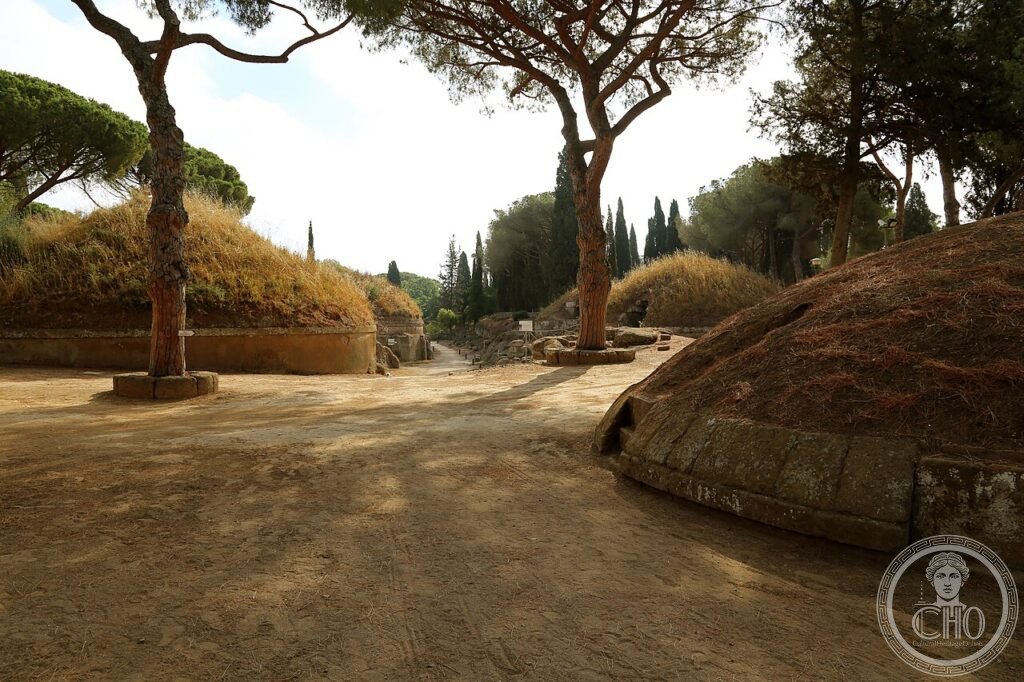
The Etruscan necropolises of Cerveteri and Tarquinia together constitute the most important and most fully documented Etruscan funerary landscape in the world: two different but complementary traditions of burial. At Cerveteri, the tumulus-city (an entire planned city of the dead, with streets, squares, and houses built underground in tufa rock). At Tarquinia, the painted chamber tomb (over 6,000 underground chambers, 200 with painted walls, offering the largest existing corpus of pre-Roman Italian fresco painting). Preserved because the Etruscan civilization that created them disappeared utterly after Roman absorption in the 3rd-1st centuries BCE, leaving their cities of the dead hidden underground for two millennia.
At a glance
The Etruscan necropolises of Cerveteri (province of Roma, Lazio) and Tarquinia (province of Viterbo, Lazio) are a UNESCO World Heritage Site inscribed in 2004 (ref. 1158) as “Etruscan Necropolises of Cerveteri and Tarquinia.” The inscription covers two separate necropolises approximately 45 km apart on the Lazio coast between Rome and the Maremma: the Necropoli della Banditaccia (Cerveteri, 400 hectares, with over 10,000 tomb mounds including 1,000 tumuli and 8,500 smaller shaft-and-chamber tombs from the 9th to 3rd centuries BCE) and the Necropoli dei Monterozzi (Tarquinia, 6,000+ tombs, of which approximately 200 have painted walls from c.650 to 100 BCE, making Tarquinia the only site in the world with a complete visual record of Etruscan painting over 500 years).
Key facts
- The Etruscans: The dominant people of central-northern Italy from approximately 900 BCE to 100 BCE. The Etruscans (or Tyrsenoi in Greek, Tyrrheni in Latin) spoke a language unrelated to any other known language (it is isolated within the Indo-European family but may have distant connections to Aegean languages). Their origin is debated (the “indigenous origin” from the Villanova culture of central Italy is now the mainstream scholarly view, against the ancient “Lydian origin” tradition recorded by Herodotus). The Etruscans developed the first complex urban civilization in central-western Europe (Rome’s legendary kings of the 7th-6th centuries BCE — the Tarquins — were Etruscan). They transmitted the Greek alphabet to the Latins (all western alphabets, including the modern Roman alphabet, descend through Etruscan mediation from the Greek alphabet).
- Cerveteri (ancient Caere): One of the most important Etruscan cities (population c.25,000 at its peak in the 7th-5th centuries BCE). The Necropoli della Banditaccia (open for visits; 300 ha of the 400-ha total are accessible) is organized as a city. Streets, crossroads, water-supply channels. With the tumuli (earth mounds over rock-cut chambers, 10-40 m diameter) representing the most wealthy families, and the more modest shaft tombs the middle class. The “Tomba dei Rilievi” (c.350-300 BCE, Matuna family) is the most elaborate surviving Etruscan tomb interior, with plaster-moulded reliefs of household objects, weapons, and mythological figures on the walls.
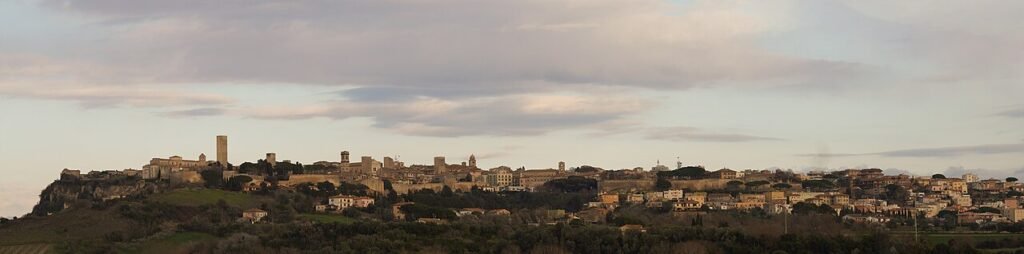
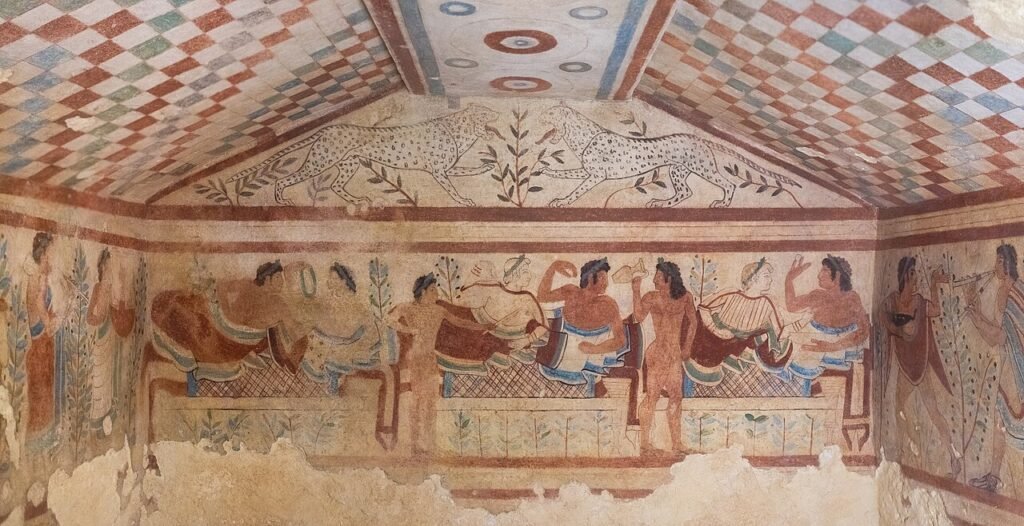
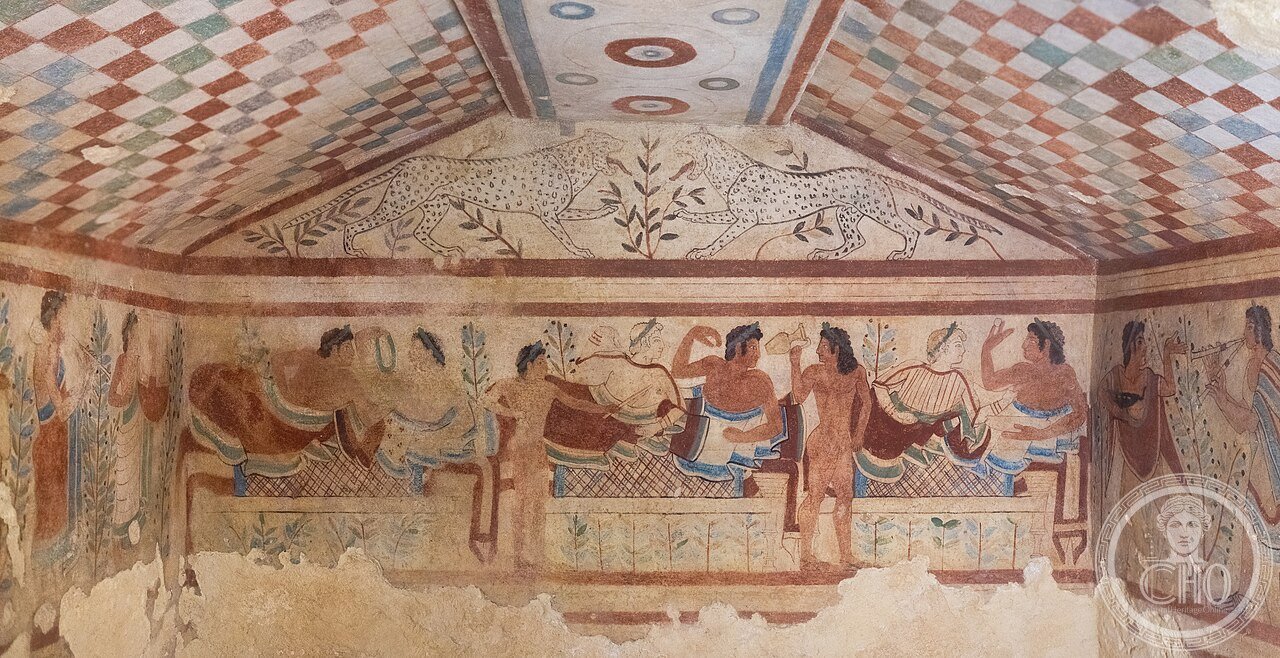
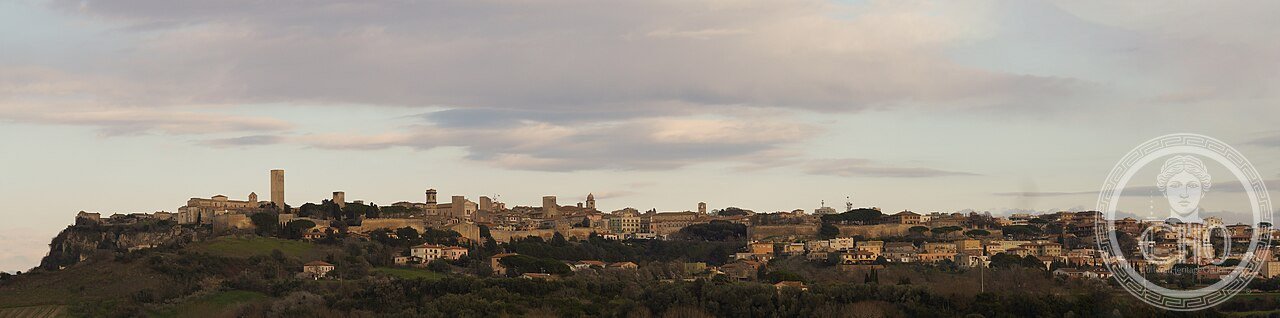
- Tarquinia (ancient Tarquinii): The walled hilltop city where Etruscan painted tomb tradition reached its highest development. The Necropoli dei Monterozzi (2 km from the modern town centre; 6,000+ tombs, 200 with frescoes). The paintings (c.650-100 BCE) are the only large body of Etruscan figural painting that survives (Etruscan paintings existed in temples and public buildings but all have been lost). They depict banquets, athletics, hunting, dancing, and the afterlife in a style that initially follows Greek conventions and then develops in an increasingly Roman-influenced direction. The Tomba della Caccia e della Pesca (c.520-510 BCE) and the Tomba dei Leopardi (c.480-470 BCE) are the finest surviving examples.
- UNESCO: 2004, ref. 1158.
- GPS: 42.0070, 11.9839. Google Maps (Banditaccia entrance).
History
The Etruscan cities of Cerveteri and Tarquinia were among the most powerful members of the Etruscan League. A loose federation of twelve city-states in Etruria (roughly modern Tuscany, Umbria, and northern Lazio). From approximately the 8th century to the 3rd century BCE. Both cities were in close trading contact with the Phoenician and Greek world: Cerveteri (Caere) produced Bucchero pottery (a distinctive black-glazed Etruscan ware) that has been found at sites across the Mediterranean. Greek vases exported to Caere formed the nucleus of the great collections now in the Vatican Museum and the Museo Nazionale Etrusco di Villa Giulia in Rome (most of the famous Greek vases in European collections — the François Vase, the Euphronios Krater, the Sarpedon Krater — were excavated from Etruscan tombs). The cities declined under Roman expansion from the 4th century BCE (Caere signed a treaty with Rome in 353 BCE after a military defeat; Tarquinii signed a 40-year truce in 351 BCE; both were eventually incorporated as Roman municipia in the 1st century BCE).
What you see
At Cerveteri, the Necropoli della Banditaccia entrance is at Via della Necropoli (north of the town centre; 5-min taxi from Cerveteri station). The main accessible area (Recinto Piccolo and Recinto Grande) contains the most important tumuli: the Tumulo dei Cardinali (5th c. BCE, with multiple chamber tombs), the Tomba dei Rilievi (c.350-300 BCE: plaster-moulded reliefs, one of the finest Etruscan interiors in existence), and the main Via Sepolcrale with its rows of tumuli flanking the processional road. The visit is self-guided with an included map. The Museo Nazionale Cerite in Cerveteri town (Piazza Santa Maria) contains objects from the necropolises.
At Tarquinia (45 km north, reachable by train from Rome Termini, 1h30, or from Cerveteri by car 45 min via SS1 Aurelia), the Necropoli dei Monterozzi entrance is at Via Ripagretta (2 km from Tarquinia town centre; taxi). Of the 6,000+ tombs, approximately 15-20 are open at any one time (the rest are kept closed and dark to preserve the pigments; a rotation system opens different tombs each season). The Museo Nazionale Tarquiniese (Palazzo Vitelleschi, Piazza Cavour, Tarquinia centre) displays the most important tomb paintings (detached and transferred to the museum for preservation) and the Winged Horses terracotta (5th-4th c. BCE). The finest Etruscan architectural terracotta in existence.
Gallery
Practical information
- Necropoli della Banditaccia, Cerveteri: Via della Necropoli, Cerveteri. Open Tuesday-Sunday 8:30-19:00 (summer), 8:30-17:00 (winter). Admission ~€10 (combined with Museo Cerite ~€15).
- Necropoli dei Monterozzi, Tarquinia: Via Ripagretta, Tarquinia. Open Tuesday-Sunday 8:30-19:30 (summer), 8:30-16:30 (winter). Admission ~€10 (combined with Palazzo Vitelleschi museum ~€15). Note: the number of open tombs and their rotation vary by season and maintenance conditions. Confirm current opening at the ticket office on arrival.
- Duration: Banditaccia (Cerveteri): 2-3 hours. Monterozzi (Tarquinia): 1-2 hours (depending on number of open tombs). Both sites in one day is feasible by car (Cerveteri AM, Tarquinia PM).
Getting there
Necropoli della Banditaccia, Via della Necropoli, Cerveteri (RM), Lazio. By train: Trenitalia from Roma Ostiense to Marina di Cerveteri (51 km, 50 min). Then COTRAL bus or taxi 7 km to the necropolis. By car: from Rome, A12 to Cerveteri exit (51 km, 40 min from Rome centre). Tarquinia: Trenitalia from Roma Termini (90 km, 1h30; direct regional service to Tarquinia station, 3 km from town centre, taxi to necropolis). By car from Cerveteri, SS1 Aurelia north (45 km, 40 min).
Nearby
- Civitavecchia. 15 km north of Tarquinia. Ferry port for Sardinia and Sicily.
- Villa Giulia (Rome). Museo Nazionale Etrusco di Villa Giulia (Viale delle Belle Arti 15, Rome; the national collection of Etruscan art from central Italy, with the best objects from Cerveteri and Praeneste; open Tuesday-Sunday 9:00-20:00; admission ~€10).
- Vulci. 50 km north of Tarquinia. Another major Etruscan city with accessible necropolis. The Castello della Badia (now a museum) at the gorge of the Fiora river.
More photographs
Sources
- UNESCO: whc.unesco.org/en/list/1158.
- Wikipedia EN: Necropolis of Banditaccia and Tarquinia necropolis.
- Haynes, Sybille: Etruscan Civilization: A Cultural History, Getty Publications, 2000.
- Polo Museale del Lazio: polomusealelazio.beniculturali.it.
Gallery
Find it on the map
See this place and what’s around it →📷 Become a Cultural Heritage Online photographer
Share your photos of places: they stay published under your name as the author. The more they're seen, the more you get noticed — and soon a contest will reward the most appreciated photos.
Log in or sign up free to add a photo