

The seat of Padua’s municipal administration for over eight centuries, this complex of interconnected palaces has served as the city’s civic heart since the 13th century.
At a glance
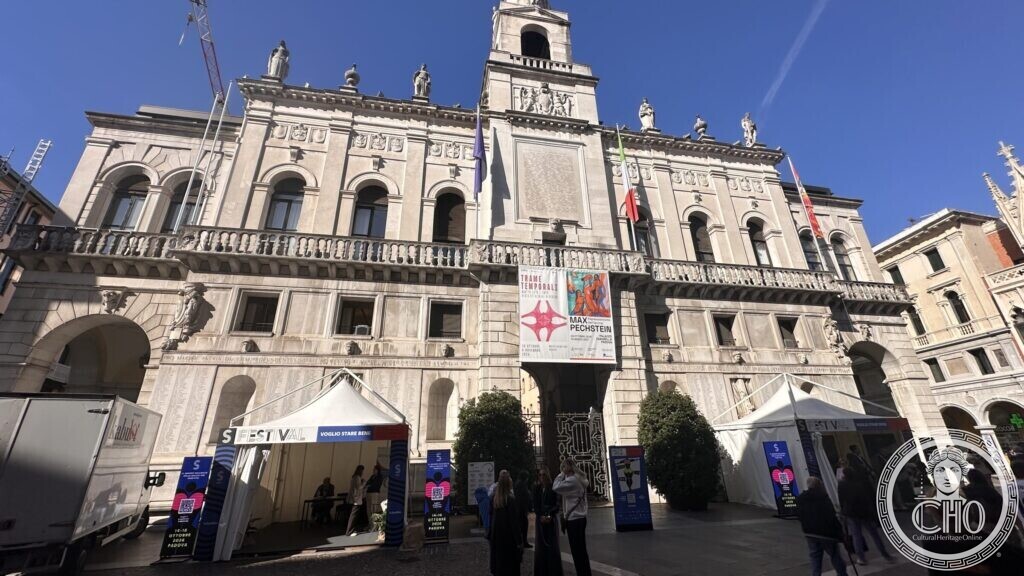
Palazzo Moroni is an imposing ensemble of buildings from various periods, unified as the Town Hall of Padua. The complex comprises multiple structures, including the celebrated Palazzo della Ragione and the Torre degli Anziani, all linked together to form the administrative nucleus of the city.
History
The municipal administration has occupied this site since the 13th century, making it one of Padua’s oldest institutional complexes. During the period of Venetian rule, the entire building was also known as the Palazzo Pretorio or Palazzo Maioris—names reflecting its primary function as a seat of power.
The Palazzo della Ragione, now part of the complex, functioned as a court until the end of the 18th century, underscoring the site’s long association with justice and governance.
What you see
The ensemble consists of multiple palaces built across different eras, connected internally to create a unified administrative space. The architectural composition reflects the various periods of construction and renovation, producing a layered historical narrative in stone and brick.
The Torre degli Anziani stands as a distinctive vertical accent within the complex, while the Palazzo della Ragione contributes significant structural and stylistic elements to the overall composition.
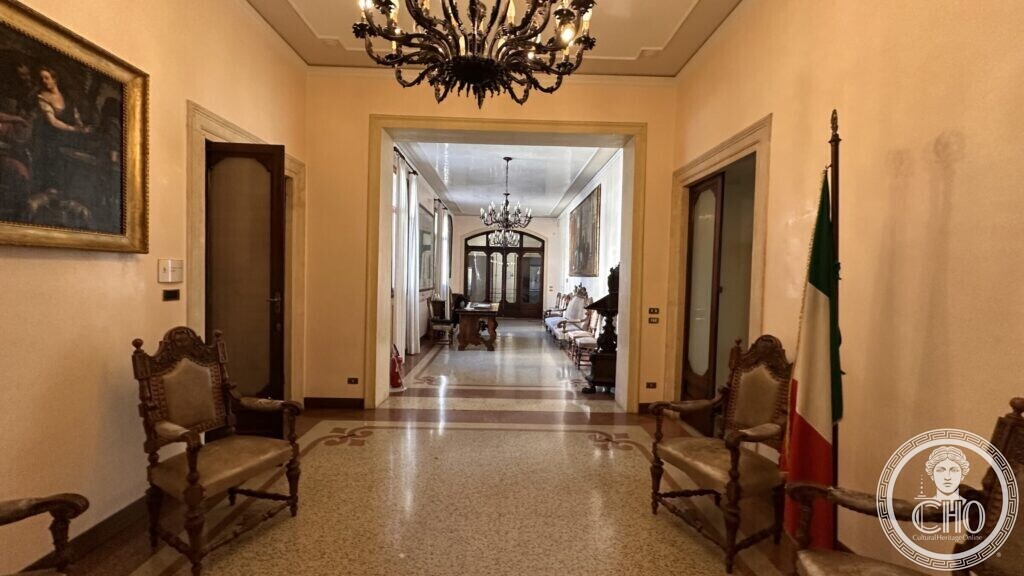
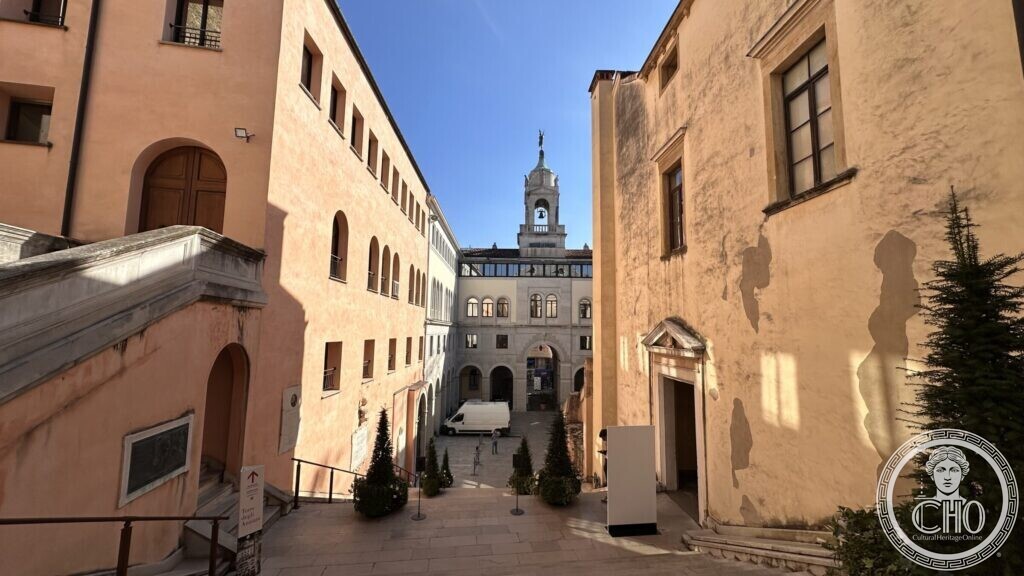
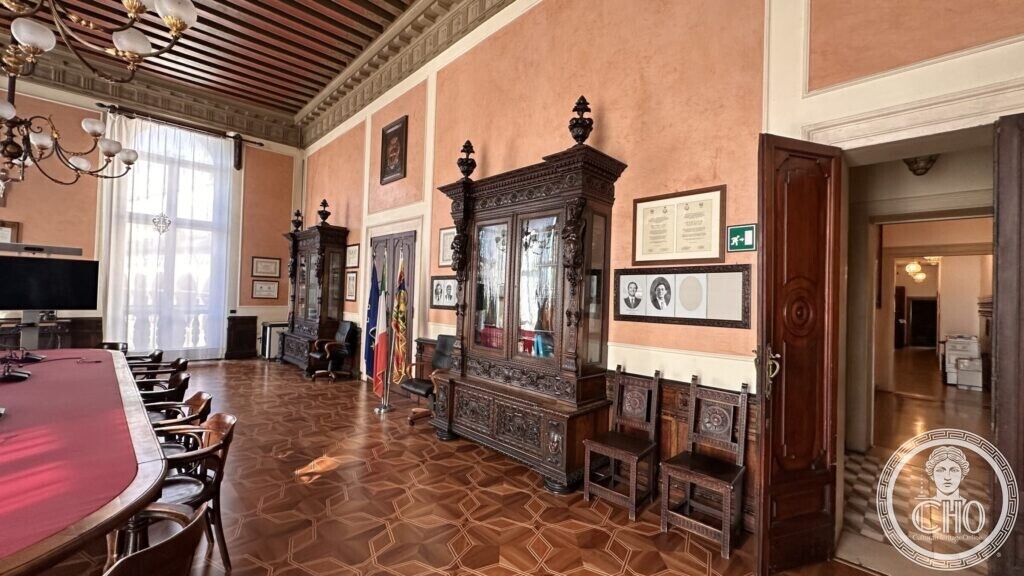
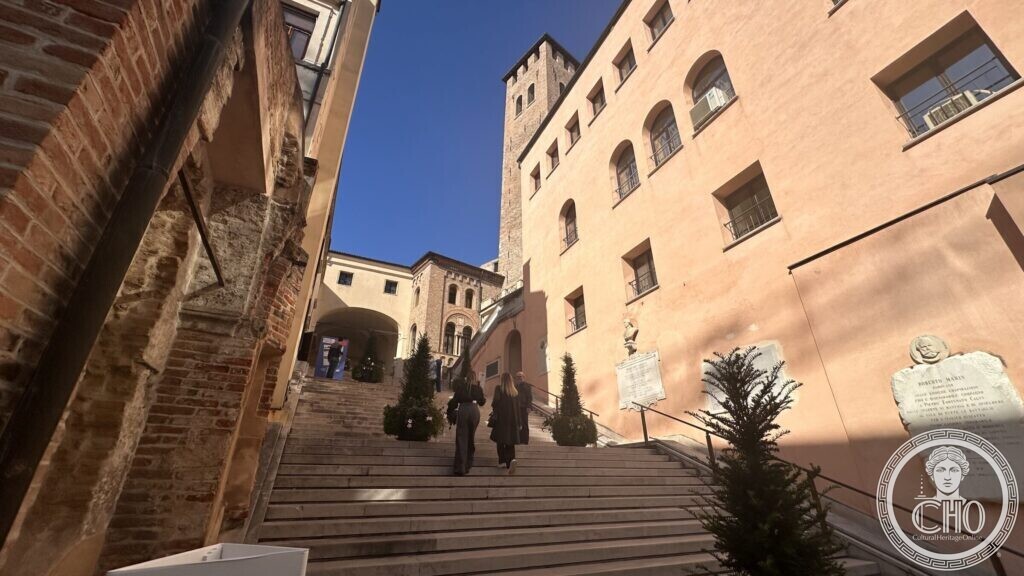
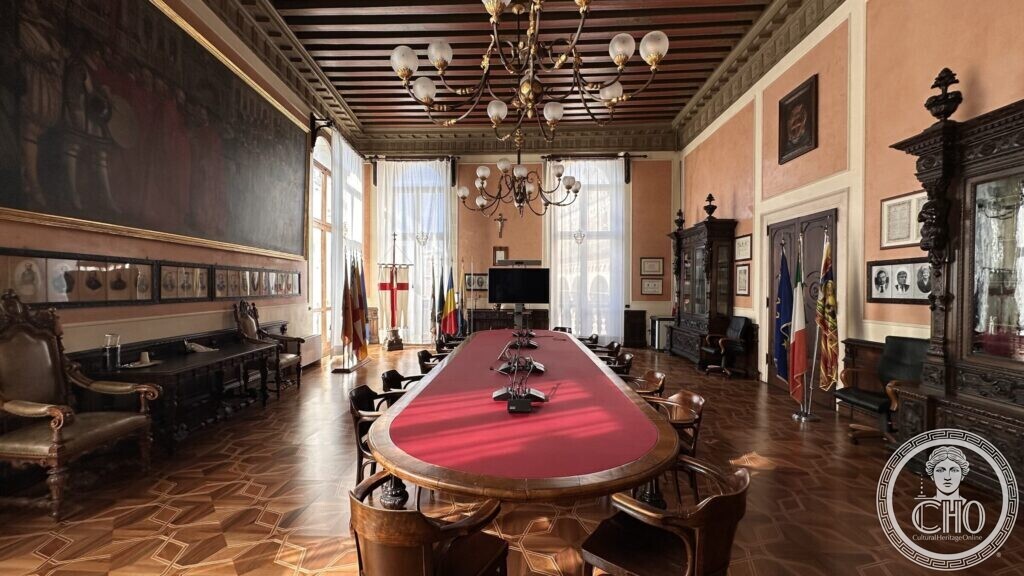
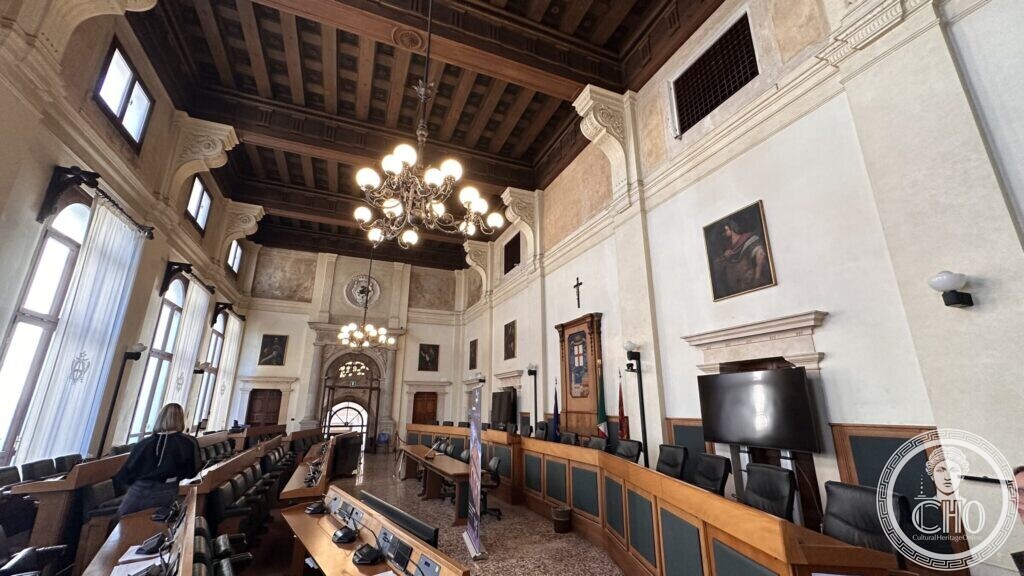
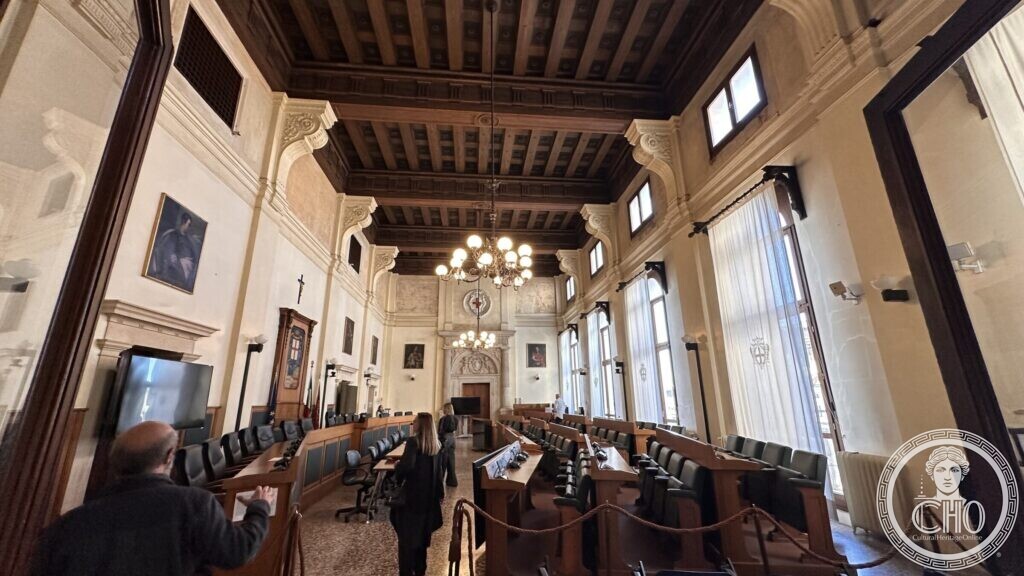
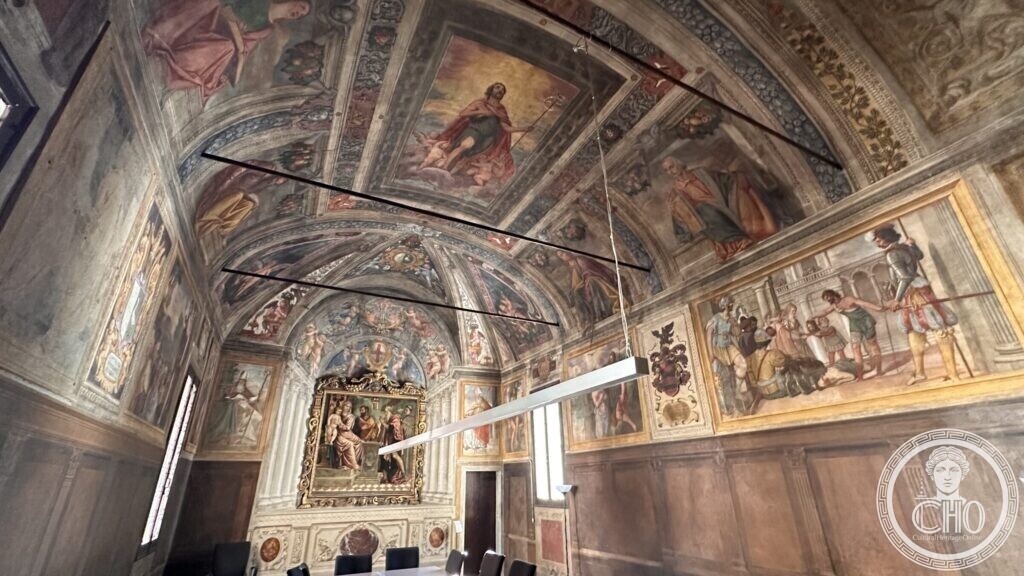
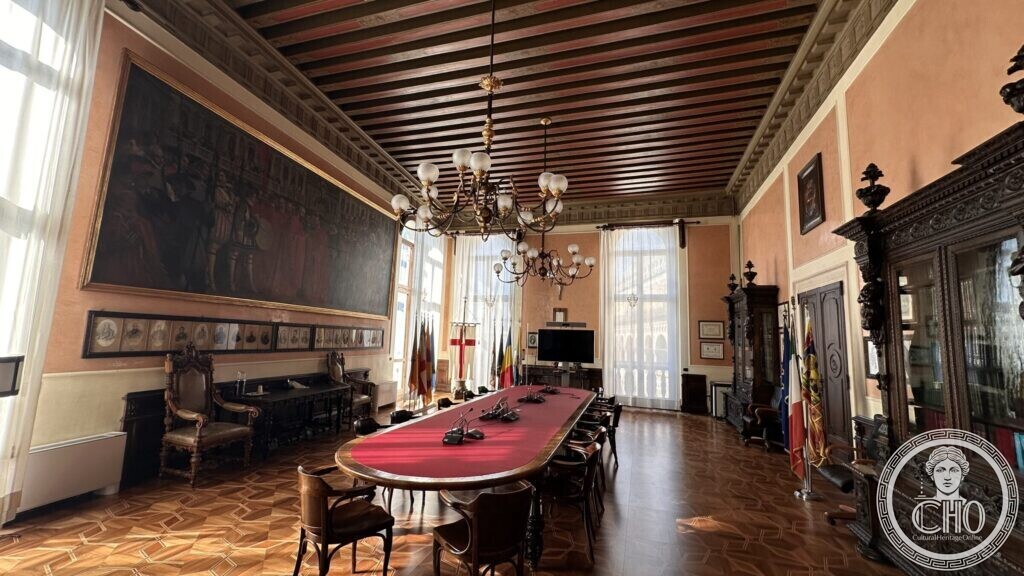
The photographs supplied by Arch Luigidemarchi extend this description into the interiors and ancillary spaces. The first and third images document a hallway and a meeting room where the polished floors, dark wooden cabinetry and framed portraits are consistent with the sixteenth-century origins of the Palazzo del Podestà, rebuilt to a design by Andrea Moroni from 1539. A later photograph shows a large hall with a long red table and chandeliers; although not named in the supplied captions, the existing sources refer to the Sala del Consiglio, a rectangular room with a wooden coffered ceiling and portraits of Roman emperors and empresses. The council chamber photograph reveals exposed wooden ceiling beams rather than the coffered ceiling described in older texts, suggesting a different room or a later intervention. The outdoor views capture the stone staircase connecting the Palazzo del Podestà to the Palazzo degli Anziani and a courtyard with the Torre degli Anziani, whose current height of 47 metres reflects the removal of the seventeenth-century lantern in 1941.
Cultural significance
Palazzo Moroni represents the institutional continuity of Padua’s civic governance across centuries. The complex embodies the city’s administrative heritage and the architectural evolution of public authority in the Veneto region.
Key facts
- Address: Via VIII Febbraio, 8, 35122 Padova
- Coordinates: 45.4071173, 11.8768319
- Official website: http://www.comune.padova.it/
- Phone: +39 049 8205572
Practical information
Hours and visiting arrangements are best confirmed through the official municipal website or by telephone, as access may vary depending on administrative activities.
Getting there
Palazzo Moroni is located in the heart of Padua at Via VIII Febbraio 8. The site is centrally positioned within the city’s medieval core, accessible by local public transport and on foot from major attractions.
Gallery
Sources & resources
Find it on the map
See this place and what’s around it →
Advertisement. Pictured, from the Cleveland Museum of Art (CC0) and not for sale: a parure of about 1850, a Lalique brooch, a Castellani bangle. How we handle this
📷 Become a Cultural Heritage Online photographer
Share your photos of places: they stay published under your name as the author. The more they're seen, the more you get noticed — and soon a contest will reward the most appreciated photos.
Log in or sign up free to add a photoIs this page about you?
This page is read by travellers and heritage enthusiasts who find it on Google. Tell us how you are connected to this place and we will take it from there.