
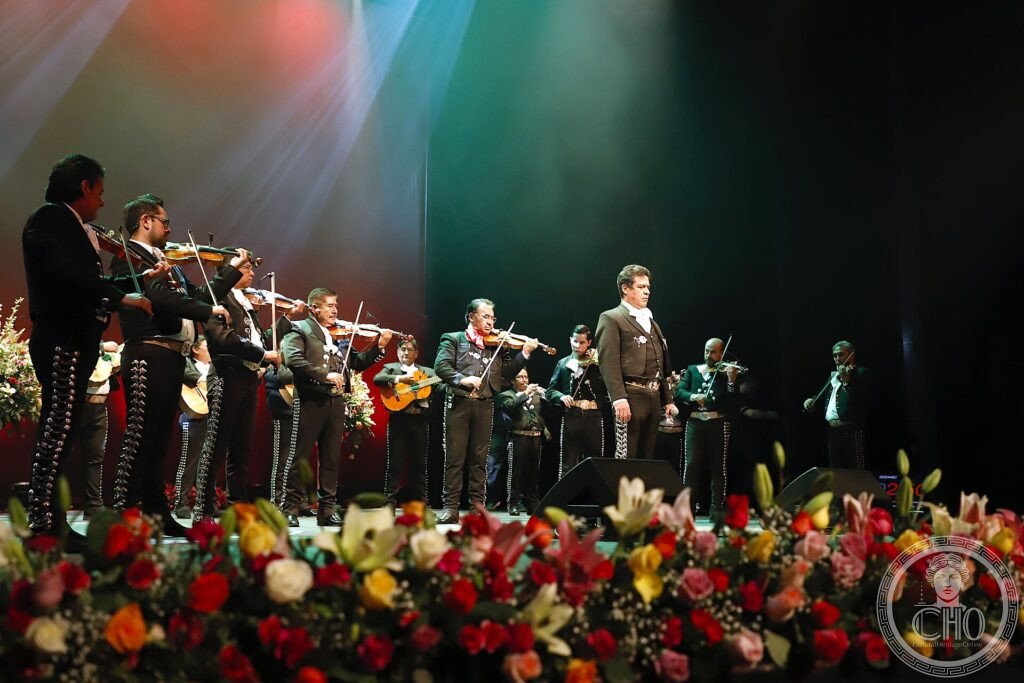
A genre of regional Mexican music blending violin, trumpet, and guitar, mariachi emerged from the countryside of western Mexico and evolved into a national symbol of Mexican identity, performed by ensembles whose members sing and play in rotation.
At a glance
Mariachi is an ensemble tradition of vocals and strings dating to at least the 18th century. Today’s typical group features eight violins, two trumpets, a high-pitched Mexican vihuela, and an acoustic bass guitarrón. All musicians share lead and backing vocal duties. The repertoire spans rancheras, corridos, cumbias, boleros, sones, huapangos, and many other regional forms—most lyrics explore themes of love, loss, machismo, politics, and rural life.
Origins & history
Mariachi evolved in the countryside of western Mexico over centuries, but crystallized as a distinctly Mexican cultural form during the 19th and 20th centuries. Rural-to-urban migration into Guadalajara, combined with the Mexican government’s deliberate promotion of national culture, elevated mariachi from regional curiosity to emblem of Mexican identity. The style gained prominence in the early 20th century through presidential inaugurations and radio broadcasts in the 1920s. Musical influences from polkas, waltzes, and other genres shaped its development alongside the iconic addition of trumpets and the adoption of traditional charro (cowboy) outfits by performers.
The practice
A mariachi ensemble is an acoustic ensemble in constant motion. Eight violins provide harmonic foundation and texture. Two trumpets cut through with bright, piercing lines. The vihuela—a small, high-pitched five-string guitar—and the guitarrón—a deep-bodied acoustic bass—anchor the rhythm and melody. What distinguishes mariachi from other ensembles is the democratic rotation of voice: every player takes turns stepping forward as lead vocalist while others blend into harmony. This vocal and instrumental interplay creates dialogue, surprise, and intimacy even in large groups. Musicians dress in tailored charro suits with silver buttons, projecting formality and pride. The sound is rich with counterpoint, punctuated by trumpet flourishes and rhythmic strum patterns that can shift from tender and introspective to exuberant and percussive within a single performance.
Cultural significance
Mariachi embodies Mexican identity and has become inseparable from celebrations of Mexican culture both domestically and internationally. The tradition represents not a frozen artifact but a living, adaptable practice that absorbs new influences while maintaining its core character. Its recognition as UNESCO Intangible Cultural Heritage in 2011 affirmed its role as a bearer of Mexican history, regional pride, and the enduring power of collective musical performance.
Key facts
- Primary country: Mexico
- Anchor heartland: Guadalajara
- Documented from at least the 18th century
- Typical ensemble: 8 violins, 2 trumpets, vihuela, guitarrón, and shared vocals
- UNESCO Intangible Cultural Heritage 2011 (reference 00575)
- One of seven Mexican entries on the UNESCO ICH list
Where to experience it
Guadalajara remains the heartland of mariachi tradition and the city most associated with the genre’s consolidation and modern practice. You will encounter mariachi ensembles performing at celebrations, restaurants, plazas, and cultural events throughout Guadalajara and across Mexico. The city hosts ongoing mariachi performances, particularly during festive occasions and at venues dedicated to traditional Mexican music.
Sources & resources
- Mariachi – Wikipedia
- Mariachi: String Music, Song and Trumpet – UNESCO Intangible Cultural Heritage
- Cultural Heritage Online
Find it on the map
See this place and what’s around it →📷 Become a Cultural Heritage Online photographer
Share your photos of places: they stay published under your name as the author. The more they're seen, the more you get noticed — and soon a contest will reward the most appreciated photos.
Log in or sign up free to add a photo