

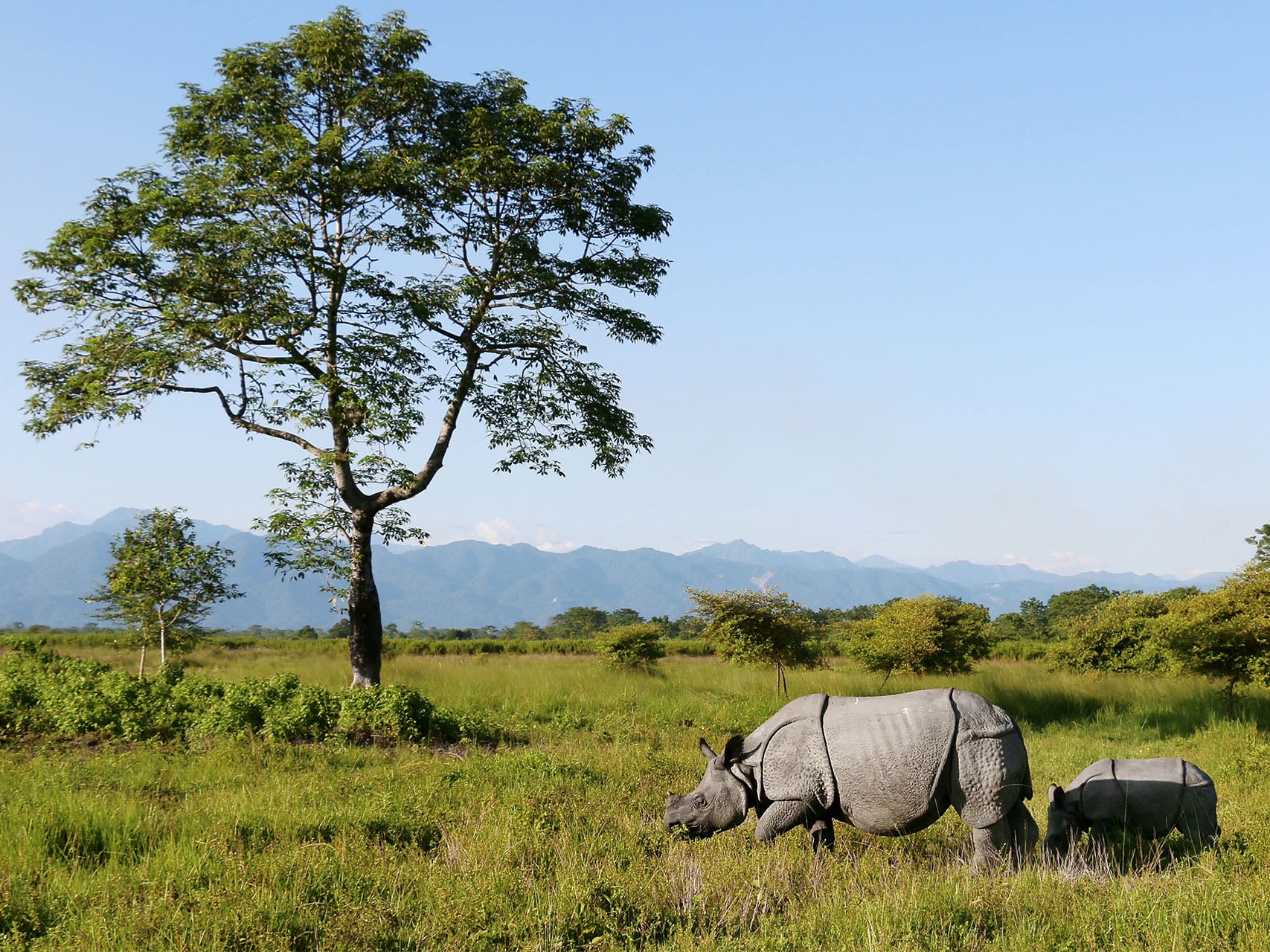
A UNESCO World Heritage Site in the Himalayan foothills, Manas protects some of Asia’s rarest wildlife and serves as the only refuge for the world’s pygmy hog population.
At a glance
Manas National Park spans the border between Assam and Bhutan in the eastern Himalayas, designated as a biosphere reserve, Project Tiger reserve, and elephant reserve. Its remote location and diverse terrain support an exceptional array of rare, endemic species found nowhere else on Earth.
History
Established to protect the region’s extraordinary biodiversity, Manas gained international recognition as a UNESCO World Heritage Site. Its dual status as both a tiger reserve and elephant reserve reflects decades of conservation effort across India and Bhutan’s shared ecological landscape.
What you see
The park’s landscape encompasses Himalayan foothills, grasslands, and riverine habitats. Visitors encounter the Manas River, which forms part of the boundary with Royal Manas National Park in Bhutan, creating a transnational conservation corridor through varied terrain.
Cultural significance
Named after the Manas River—itself sacred in Hindu tradition—the park represents India’s commitment to large-mammal conservation. It stands as a critical refuge for species on the brink of extinction, including the Assam roofed turtle, hispid hare, golden langur, and the elusive pygmy hog.
Key facts
- Country: India (Assam)
- Coordinates: 26.7167°N, 90.9333°E
- UNESCO World Heritage Site: Yes
- Designations: Biosphere Reserve, Project Tiger Reserve, Elephant Reserve
- Notable species: Pygmy hog (only known wild population), wild water buffalo, golden langur, hispid hare, Assam roofed turtle
Practical information & getting there
The park lies in Assam’s remote northeastern region, accessible via Guwahati. For current visiting hours, permits, and access information, consult local tourism authorities or the Assam Forest Department.
Sources & resources
Find it on the map
See this place and what’s around it →
📷 Become a Cultural Heritage Online photographer
Share your photos of places: they stay published under your name as the author. The more they're seen, the more you get noticed — and soon a contest will reward the most appreciated photos.
Log in or sign up free to add a photo