

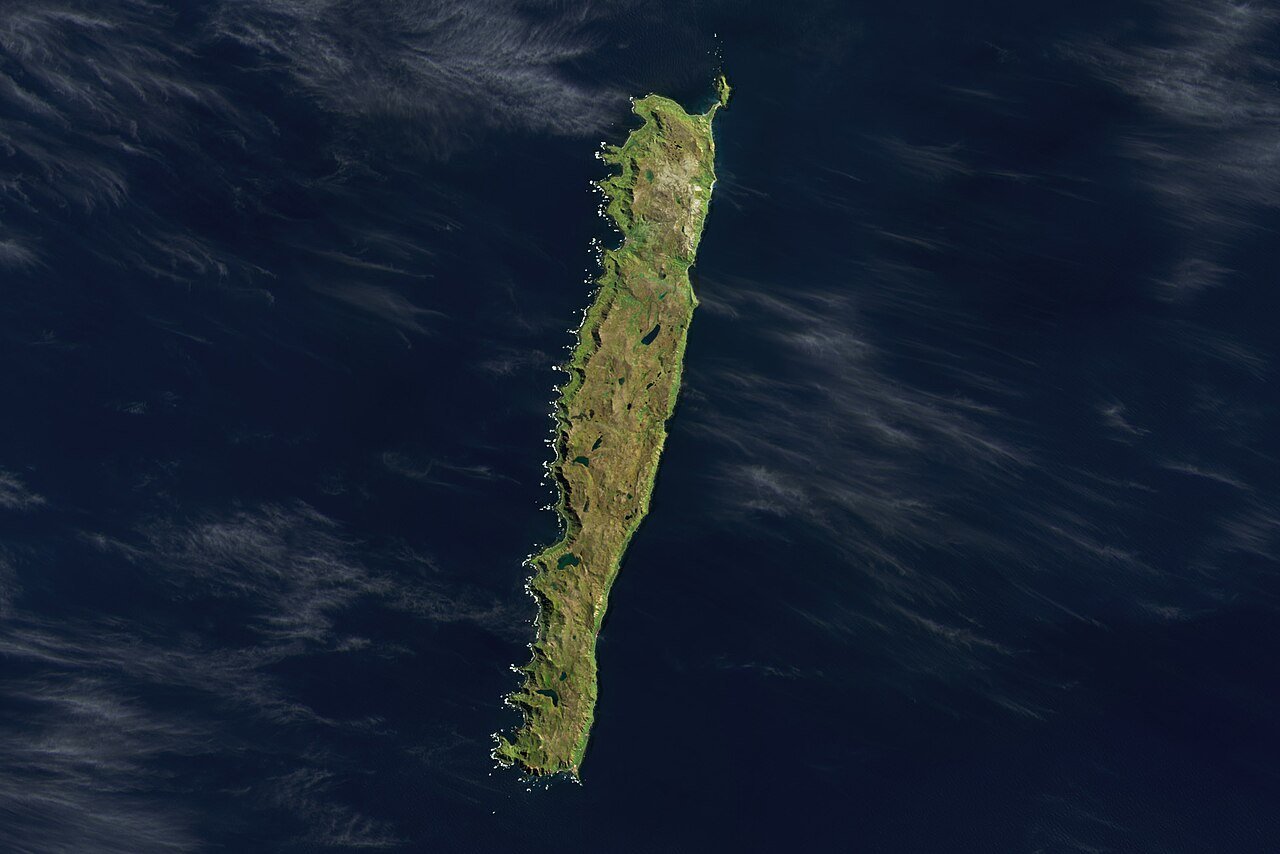
The only place on Earth where the mantle meets the air
Macquarie Island — 1,500 km south of Tasmania, 1,000 km north of Antarctica, in the most isolated stretch of the Southern Ocean — is geologically unique. It is the only place on Earth where rocks of the oceanic mantle (formed at a mid-ocean ridge spreading centre 11 km below the sea surface) have been uplifted above sea level and are exposed on land. Walking on Macquarie Island means walking on rock that was once part of Earth’s upper mantle, brought to the surface by tectonic forces over 30 million years — making it the most accessible window into the planet’s interior structure.
UNESCO inscription: geological and biological uniqueness
Inscribed in 1997, Macquarie Island was recognised as an outstanding example of geological processes associated with crustal formation and oceanic-continental plate interaction, and as a globally significant breeding site for seabirds and marine mammals. The island’s combination of geological rarity and extraordinary wildlife — three million penguins, 80,000 elephant seals, and albatrosses nesting side by side with geologists measuring tectonic uplift — makes it one of the most unusual natural heritage sites on the World Heritage List.
Oceanic crust on land: ophiolite of the Southern Ocean
The island consists of an ophiolite sequence — a section of oceanic crust and upper mantle that has been tectonically obducted (pushed upward) above sea level. The sequence is unusually complete: from the deepest peridotite and dunite rocks (the mantle), through the layered gabbros and sheeted dykes of the crust, to the pillow lavas and seafloor sediments that formed the ocean bottom. Macquarie Island’s ridge has been rising at a rate of 0.8 mm per year for the last 600,000 years, currently lifting the island at a measurable rate.
Three million penguins: the most extraordinary wildlife spectacle
The island’s coasts support one of the greatest concentrations of wildlife in the Southern Hemisphere. Royal penguins (Eudyptes schlegeli) — found only on Macquarie Island — breed in enormous colonies on the northern beaches, with the Sandy Bay colony estimated at 850,000 birds in peak season. King penguins (Aptenodytes patagonicus) crowd the isthmus at the island’s narrowest point. Rockhopper and gentoo penguins nest on the rocky coastal slopes. Total penguin numbers exceed 3 million during the breeding season.
Elephant seals: the largest seals in the world
Southern elephant seals (Mirounga leonina) — males reaching 6 metres in length and 4,000 kg — breed on Macquarie’s beaches in massive aggregations. During the September–October breeding season, dominant bull “beachmasters” control harems of 50–100 females, their deafening roars and bloody battles for dominance audible from kilometres away. The island’s seal population was decimated by 19th-century sealing; since protection began in 1933, numbers have partially recovered but remain below pre-exploitation levels.
A century of conservation: the reversal of introduced species damage
Macquarie Island was one of the most ecologically damaged places on Earth following its discovery in 1810. Sealers introduced cats, rabbits, rats, and mice; the impacts on seabird populations were catastrophic. A long-running program of introduced species eradication, completed in 2014, removed all rabbits, rats, and mice from the island in what was (at the time) the largest island rodent eradication program ever attempted. The recovery of vegetation and seabird populations since eradication has been dramatic and is closely monitored.
Visiting Macquarie Island
Macquarie Island is managed by the Tasmanian Parks and Wildlife Service and has no permanent human settlement except a small Australian Antarctic Division research station (with 4–40 staff depending on season). Tourism is permitted by permit only, on expedition cruises from Hobart (Tasmania) that operate in November–March. The cruises, lasting 10–14 days, typically visit in combination with the sub-Antarctic islands of New Zealand. The permit system strictly limits the number and behaviour of visitors to protect the island’s extraordinary wildlife and geology.
Find it on the map
See this place and what’s around it →📷 Become a Cultural Heritage Online photographer
Share your photos of places: they stay published under your name as the author. The more they're seen, the more you get noticed — and soon a contest will reward the most appreciated photos.
Log in or sign up free to add a photo