
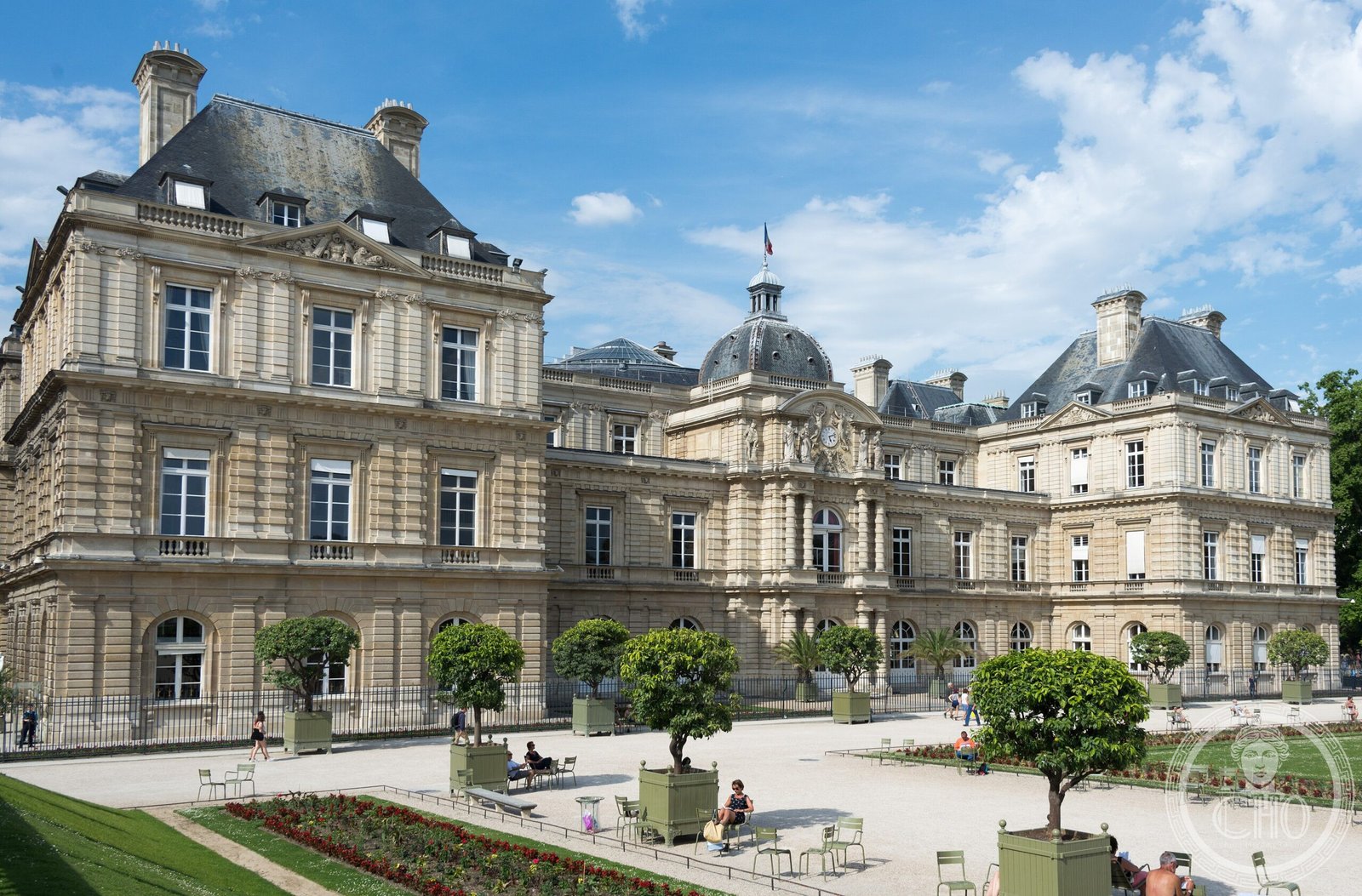
A masterwork of French palace architecture, the Luxembourg began as a royal residence for Queen Marie de’ Medici and evolved into the home of France’s Senate—a transformation spanning revolution, war, and republic.
At a glance
The Luxembourg Palace stands in Paris’s 6th arrondissement as one of France’s most important governmental and architectural landmarks. Originally commissioned as a royal residence, it has served as the seat of the upper house of parliament for over two centuries, adapting to each political era while retaining its grandeur.
History
Salomon de Brosse designed and built the palace between 1615 and 1645 for Marie de’ Medici, regent and mother of King Louis XIII. The building embodied French Renaissance ideals while incorporating elements the queen admired from her native Florence.
After the French Revolution, architect Jean-François Chalgrin refashioned it from 1799 to 1805 into a legislative chamber for the newly formed government. Alphonse de Gisors undertook extensive enlargement and remodeling from 1835 to 1856, expanding its capacity and adapting it to nineteenth-century parliamentary needs.
Since the Consulate period, the palace has housed successive upper chambers of French government—the Sénat conservateur, and since 1958, the Senate of the Fifth Republic.
What you see
The palace exemplifies French classical architecture refined through multiple periods of design. Brosse’s original structure established its proportions and dignity; Chalgrin’s Neoclassical interventions streamlined interior spaces for legislative work; and Gisors’s nineteenth-century additions enhanced its monumental scale without overwhelming the original concept.
The neighboring Petit Luxembourg, immediately west on Rue de Vaugirard, now serves as the residence of the Senate President. The former orangery has been converted into the Musée du Luxembourg.
Cultural significance
The Luxembourg Palace represents the continuity and resilience of French democratic institutions. It embodies how architectural heritage adapts to political change—transformed from symbol of absolute monarchy to instrument of republican governance without losing its cultural authority. The building’s ability to accommodate successive legislative systems makes it a living monument to French constitutional history.
Key facts
- Location: 15 Rue de Vaugirard, 6th arrondissement, Paris
- Country: France
- Coordinates: 48.84833333, 2.33722222
- Architect: Salomon de Brosse (original, 1615–1645); Jean-François Chalgrin (refashioning, 1799–1805); Alphonse de Gisors (enlargement, 1835–1856)
- Current use: Seat of the Senate of the Fifth Republic
- Adjacent Luxembourg Garden: 25 hectares (62 acres)
Practical information & getting there
The Luxembourg Palace is located in the Latin Quarter, easily accessible by metro, bus, and on foot from central Paris. The adjacent Luxembourg Garden is open to the public year-round and offers one of Paris’s finest formal landscapes. For visiting hours and legislative chamber access, consult the official Senate website.
Sources & resources
Find it on the map
See this place and what’s around it →📷 Become a Cultural Heritage Online photographer
Share your photos of places: they stay published under your name as the author. The more they're seen, the more you get noticed — and soon a contest will reward the most appreciated photos.
Log in or sign up free to add a photoIs this page about you?
This page is read by travellers and heritage enthusiasts who find it on Google. Tell us how you are connected to this place and we will take it from there.