
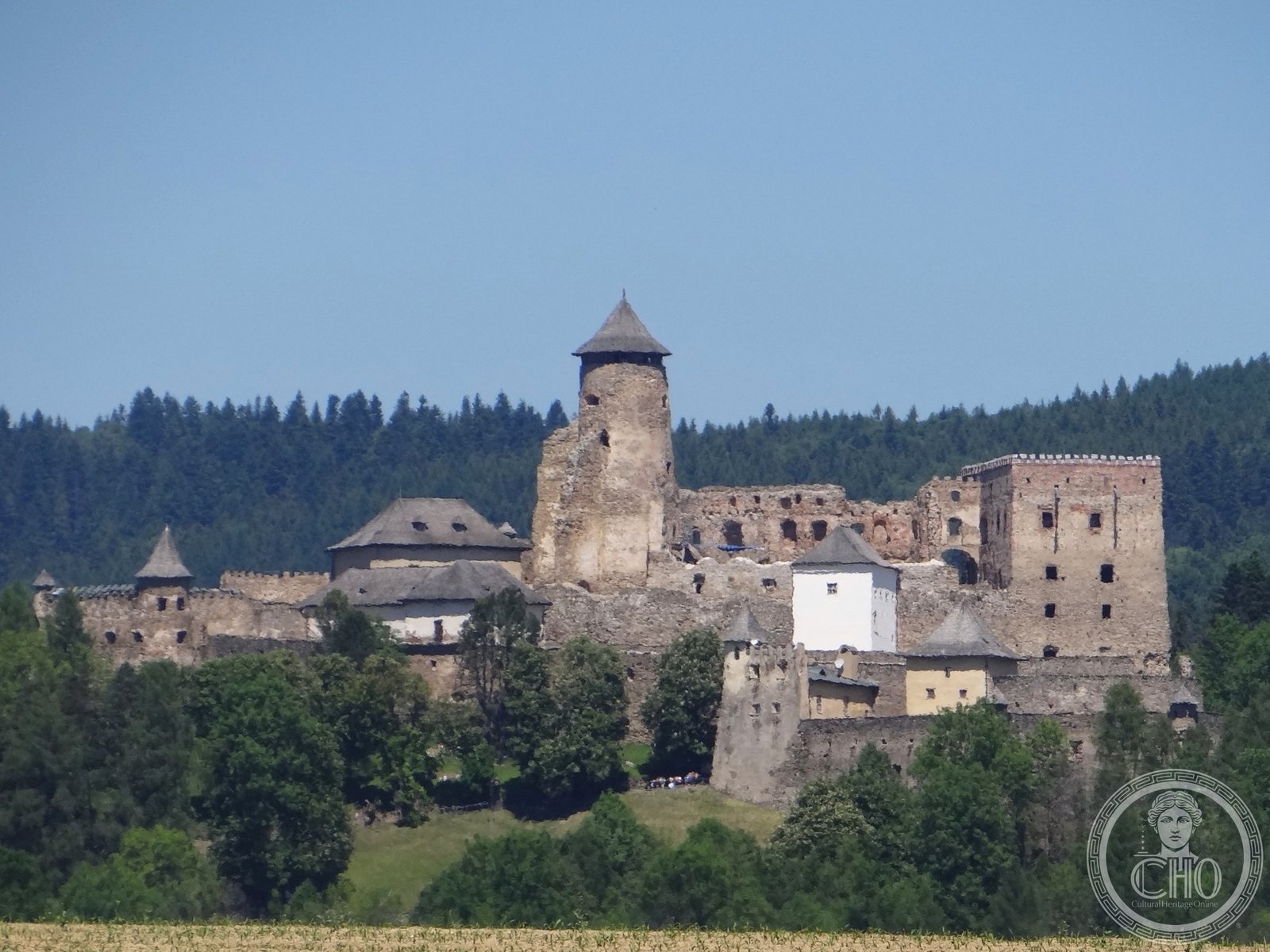
Ľubovňa Castle
A medieval fortress whose walls witnessed the forging of peace between Hungary and Poland, now home to museums and exhibitions spanning centuries of Central European history.
At a glance
Ľubovňa Castle rises above Stará Ľubovňa in eastern Slovakia, blending ruins and reconstructed sections. Its rooms function as museum spaces, while preserved chambers retain original architectural details including barrel vaults and underground features that speak to its medieval past.
History
Built in the late 13th century when the region belonged to the Kingdom of Hungary, the castle first appears in written records in 1311. The castle gained diplomatic prominence in 1412 when King Sigismund of Hungary and King Władysław Jagiellon of Poland met there to sign a pact of friendship and peace. During the Swedish Deluge, the castle served as a sanctuary for Poland’s crown jewels.
What you see
The castle survives as a partial ruin interspersed with rebuilt sections. Barrel vaults and Prussian vaults remain intact within preserved rooms. An underground torture chamber has been conserved. The castle chapel now displays copies of the Polish crown jewels, whose originals once sheltered within these walls.
Cultural significance
Ľubovňa Castle stands as a tangible record of medieval diplomacy and Central European power dynamics. Its role in safeguarding Poland’s regalia during wartime underscores the trust placed in its fortifications. The site encapsulates layers of Slovak and broader regional history.
Key facts
- Country: Slovakia
- City: Stará Ľubovňa
- Coordinates: 49.31521944, 20.69941111
- Built: Late 13th century
- First documented: 1311
- Notable event: 1412 peace pact signed by Hungarian and Polish kings
Practical information & getting there
The castle houses a museum featuring historical exhibitions, period furniture, and weaponry displays. Below the main structure lies the open-air Museum of Folk Architecture of the Spiš Region. Seasonal exhibitions occupy dedicated exhibition rooms. For current opening hours and admission details, consult local tourism resources.
Sources & resources
Find it on the map
See this place and what’s around it →📷 Diventa un fotografo di Cultural Heritage Online
Condividi le tue foto dei luoghi: restano pubblicate con la tua firma come autore. Più vengono viste, più ti fai conoscere — e presto un concorso premierà le foto più apprezzate.
Accedi o registrati gratis per aggiungere una fotoDo you manage this place?
This page is read by travellers and heritage enthusiasts who find it on Google. Keep it accurate — and make it work for you. Free for non-profit heritage institutions.