
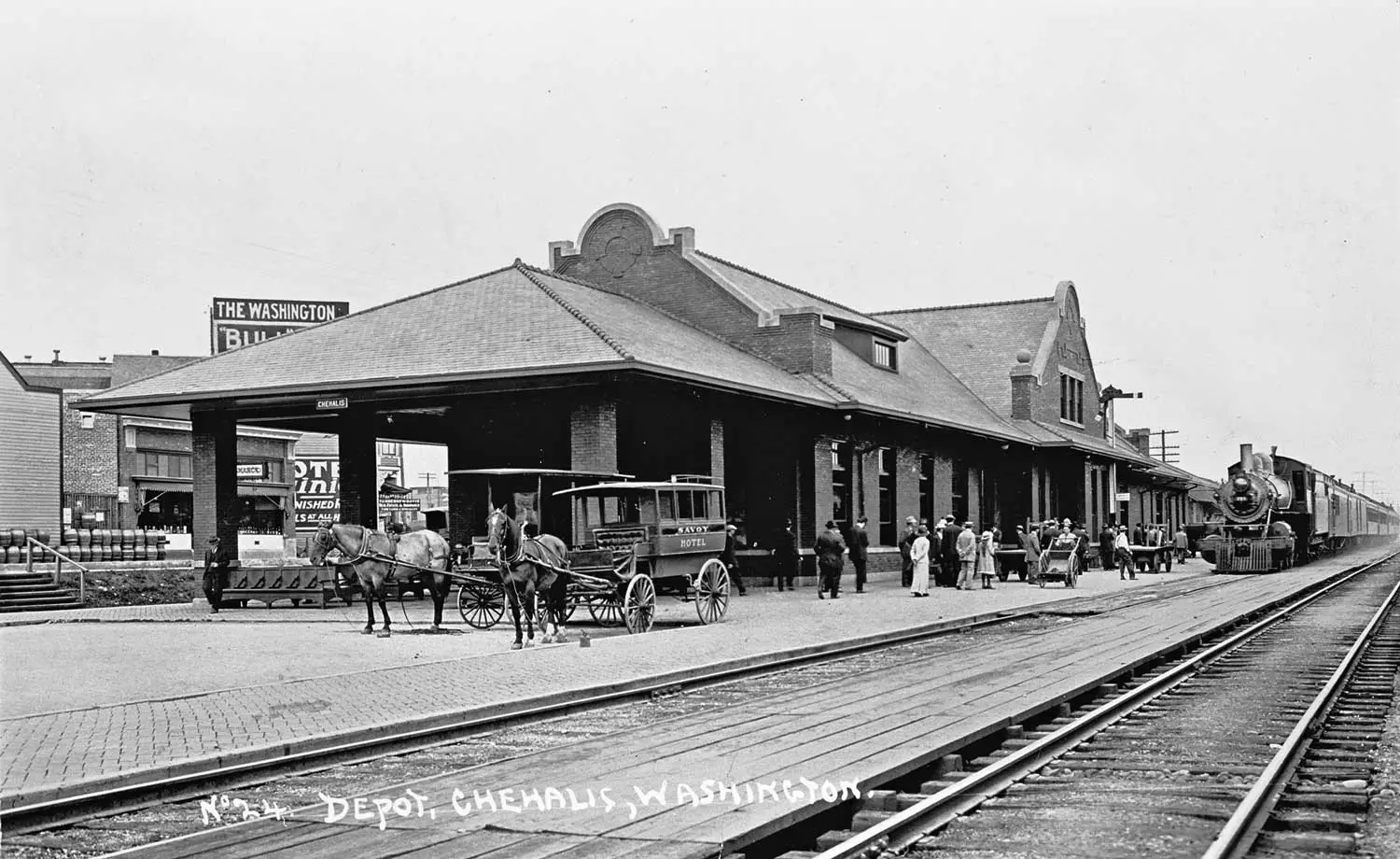
A Mission Revival railroad depot transformed into a community museum, preserving a century of regional history and transport heritage.
At a glance
Once the Northern Pacific Railway’s Chehalis station, this brick depot opened in 1912 and served as a vital transport hub for over sixty years. Presidents Benjamin Harrison and Theodore Roosevelt both stopped here. Rescued from demolition by community activism in the 1970s, it now operates as Lewis County’s primary historical museum, housing over 50,000 artifacts and a celebrated model train display.
History
The town of Chehalis—originally called Saundersville—struggled to secure a railway station after Northern Pacific laid tracks in 1872. Residents flagged down passing trains until an official stop arrived in 1874. The first Northern Pacific Depot, built in 1890, became a symbol of prosperity but fell into disrepair by century’s end.
Northern Pacific responded by constructing a new, grand station in 1912, completed at a cost of $30,000 and dedicated in January 1913. This brick structure replaced its predecessor as the community’s gateway. During World War II, the depot served as one of the nation’s first relocation hubs for Japanese-Americans.
Burlington Northern closed the station in February 1973. Community outcry prevented its demolition; after two years of protest, Lewis County leased the building for $1 annually in late 1975. Volunteers and the Lewis County Historical Society—incorporated in 1965—renovated the space, opening it as a museum in September 1979. It has operated continuously since, despite funding challenges and an endowment embezzlement in the late 2000s.
What you see
The Chehalis depot exemplifies Mission Revival architecture. Its brick façade spans nearly a block, featuring sectioned walls and prominent gables situated close to the active railroad tracks. The waiting area showcases enameled brick detailing and an original cove ceiling—hallmarks of early-twentieth-century craftsmanship.
The 4,600-square-foot interior once held separate rooms for passengers, telegraph operations, baggage, and freight. The former waiting room now serves as the main exhibit space. A portion of the 1890 station was relocated to the new site and adapted as a freight office, creating an architectural palimpsest of the town’s railway past.
Cultural significance
The depot anchored Chehalis’s economic and social life for over six decades. Its prominence attracted presidential visits and embodied the railroad’s role in connecting remote communities to national commerce and politics. The building’s preservation represents a pivotal moment in American historic preservation—a grassroots campaign that saved vernacular infrastructure before such movements gained widespread momentum.
Today it stands as a testament to community stewardship and serves as the cultural heart of Lewis County, hosting local celebrations, festivals, and educational programs.
Key facts
- Country: United States
- City: Chehalis, Lewis County, Washington
- Built: 1912 (dedicated January 1913)
- Architecture: Mission Revival
- Coordinates: 46.6656, −122.97175
- National Register of Historic Places: Listed 1974
- Collections: Over 50,000 artifacts including photographs, newspapers, audio recordings, and interactive items
- Museum opened: September 1979
Practical information & getting there
The museum is located in downtown Chehalis within the Chehalis Downtown Historic District, adjacent to the Pennsylvania Avenue–West Side Historic District. Both areas are listed on the National Register. For current hours, admission details, and exhibition information, consult the Lewis County Historical Society directly or visit the museum’s official channels.
Sources & resources
Find it on the map
See this place and what’s around it →📷 Become a Cultural Heritage Online photographer
Share your photos of places: they stay published under your name as the author. The more they're seen, the more you get noticed — and soon a contest will reward the most appreciated photos.
Log in or sign up free to add a photoIs this page about you?
This page is read by travellers and heritage enthusiasts who find it on Google. Tell us how you are connected to this place and we will take it from there.