
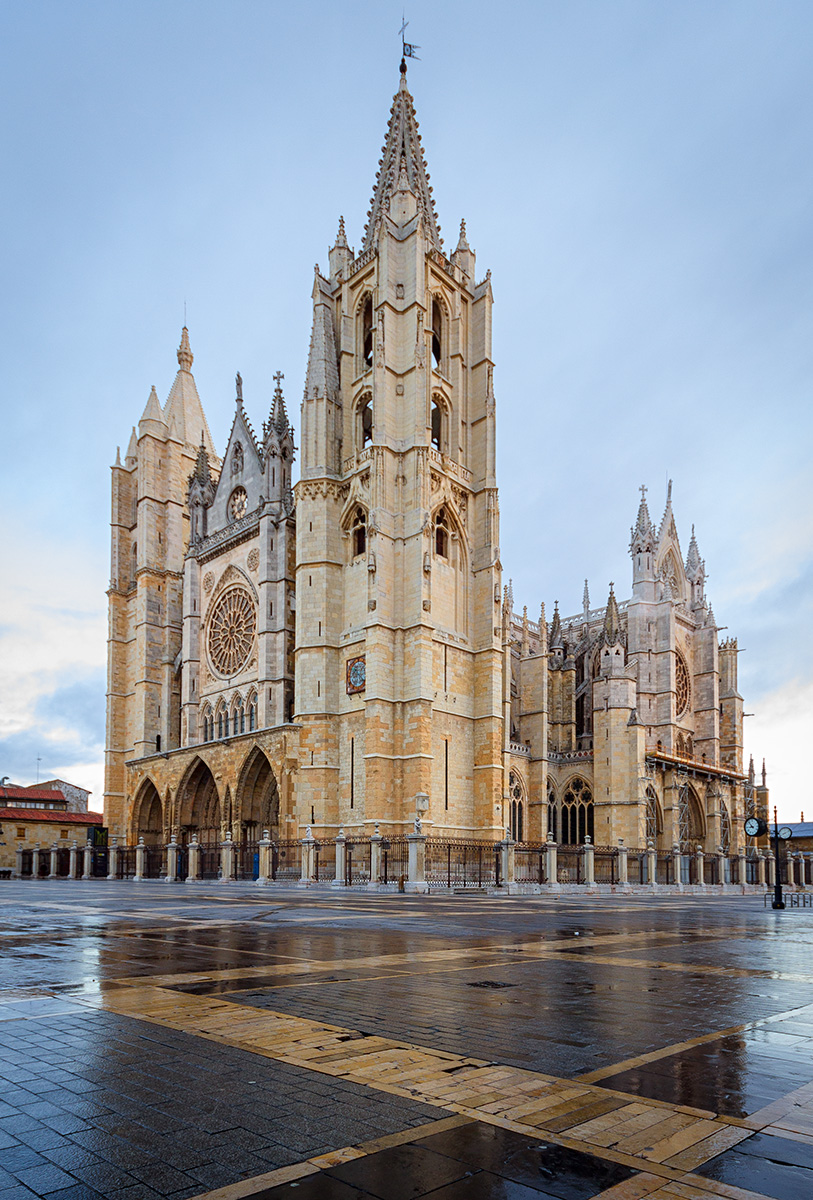
A masterwork of Gothic architecture renowned for dissolving stone walls into light, León Cathedral holds one of medieval Europe’s most significant collections of stained glass.
At a glance
The episcopal see of the diocese of León, this cathedral was the first monument officially protected by Spain’s Royal Orders (1844–1845). Known locally as the Pulchra Leonina—the Beautiful Leonese—it stands on the Camino de Santiago pilgrimage route in north-western Spain.
History
Construction began in the 13th century and continued through subsequent periods. The cathedral was consecrated under the patronage of the Virgin Mary. Its declaration as Spain’s first officially protected monument in 1844 established a precedent for national heritage conservation.
What you see
The cathedral exemplifies the Gothic style with strong French influences. Its defining characteristic is the radical dematerialization of Gothic architecture: walls have been reduced to their structural minimum and replaced by expansive stained glass surfaces. This transformation creates an ethereal interior flooded with colored light.
The glass collection ranks among the world’s largest assemblies of medieval stained glass, a testament to both artistic ambition and technical mastery.
Cultural significance
León Cathedral represents a pinnacle of Gothic evolution—the moment when medieval builders pushed the architectural language toward pure light and color. Its position on the Way of Saint James connected it to one of Christianity’s great pilgrimage traditions, influencing spiritual journeys for centuries.
Key facts
- Country: Spain
- City: León, Castile and León
- Coordinates: 42.5994, -5.5667
- Initiated: 13th century
- Status: First monument declared by Spanish Royal Order (28 August 1844)
Practical information & getting there
The cathedral is located in the city of León on the Camino de Santiago. For current opening hours, admission details, and visitor information, consult the official diocese website or local tourism resources.
Sources & resources
Find it on the map
See this place and what’s around it →
📷 Become a Cultural Heritage Online photographer
Share your photos of places: they stay published under your name as the author. The more they're seen, the more you get noticed — and soon a contest will reward the most appreciated photos.
Log in or sign up free to add a photoIs this page about you?
This page is read by travellers and heritage enthusiasts who find it on Google. Tell us how you are connected to this place and we will take it from there.