

The Prehistoric Flint Mines of Europe’s Heartland
In the rolling limestone uplands of the Świętokrzyskie Mountains in south-central Poland, between approximately 3900 and 1600 BC, Neolithic and early Bronze Age communities dug one of the most extensive flint mining complexes ever created. Today the Krzemionki Prehistoric Striped Flint Mining Region, inscribed by UNESCO in 2019, protects over 4,000 individual mining shafts and a network of underground galleries, preserved under a thin layer of soil in an exceptional state of completeness. The site offers an unparalleled window into the organisation of prehistoric industry and the long-distance trade networks that distributed its product across much of prehistoric Europe.
A Unique Raw Material: Striped Chocolate Flint
The driving force behind millennia of mining activity at Krzemionki was a geological peculiarity: the local bedrock contains a distinctive variety of flint known as banded or striped flint, characterised by alternating bands of dark chocolate-brown and cream-white colour. This material is both visually striking and mechanically superior to many other flint types — it fractures predictably and produces long, sharp-edged blades with a natural lustre. Artefacts made from Krzemionki flint have been identified at archaeological sites more than 600 kilometres from the source, demonstrating the commodity's prestige and the effectiveness of Neolithic exchange networks.
The Mining Shafts: Engineering in Stone Age
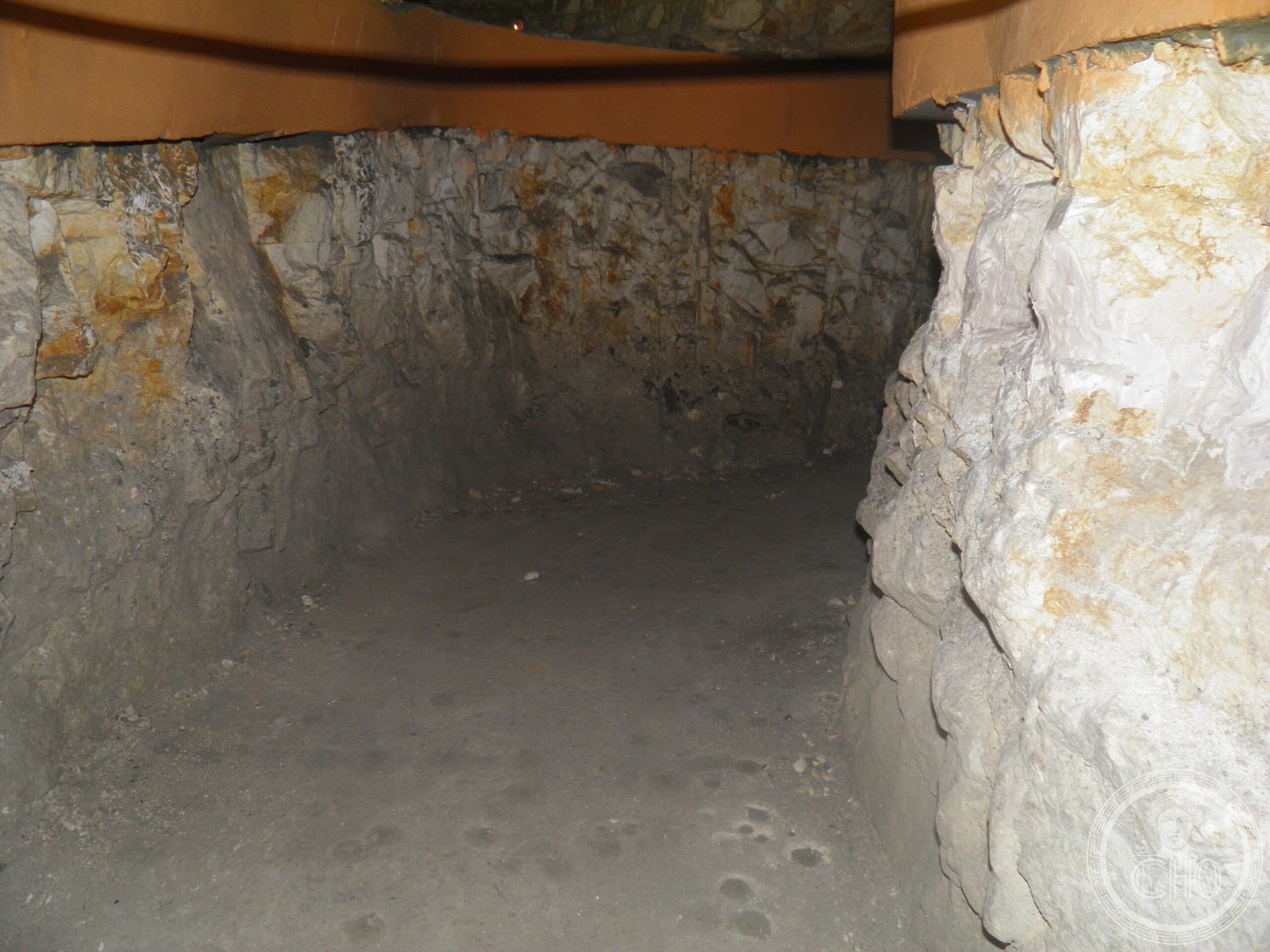
The miners of Krzemionki developed four principal shaft types adapted to the varying depth and geometry of the flint-bearing layer. Pit mines sufficed where the layer was near the surface; where it lay deeper, the miners sank shafts up to nine metres deep and then excavated lateral galleries following the flint seams horizontally through the rock. The gallery systems at Krzemionki are among the most complex known from Neolithic Europe, with individual underground complexes extending over 100 metres in total gallery length. Working by antler pick, flint tool, and fire-setting, the miners extracted tonnes of raw material annually.
Tools, Workshops, and the Organisation of Production
Excavations around the shaft heads have revealed extensive knapping workshops where raw nodules were reduced to pre-forms and finished tools above ground. The full production sequence — from shaft sinking to blank production to finished implement — took place within the mining complex itself, suggesting a specialist workforce rather than a community of generalist farmers who mined part-time. Among the most common products were large axe-heads, adzes, and sickle blades, distributed through exchange to farming communities across the Polish lowlands, the Carpathians, and beyond into what is now Germany and Ukraine.
Scale and Duration: Numbers in Context
The sheer scale of the Krzemionki operation is staggering when considered against the context of Stone Age demography and technology. Over 2,300 years of continuous or near-continuous extraction, miners removed an estimated 2.3 million tonnes of rock to access and extract the flint-bearing layer. The 4,000-plus shafts form an almost continuous band three kilometres long and up to one kilometre wide, visible on aerial photographs as circular depressions across the hilltop landscape. No other Neolithic or Bronze Age flint mining site in Europe approaches this combination of scale, complexity, and preservation.
Preservation: Why Krzemionki Survived
The extraordinary preservation of the Krzemionki shafts and galleries owes much to geological good fortune. When mining ceased around 1600 BC, the shafts were not deliberately backfilled but simply abandoned; over millennia, gradual soil accumulation capped the openings while the underground galleries remained open — their limestone walls stable in the dry subsoil environment. Modern archaeological exploration, beginning in earnest in the 1920s, found galleries still containing the miners
Find it on the map
See this place and what’s around it →📷 Become a Cultural Heritage Online photographer
Share your photos of places: they stay published under your name as the author. The more they're seen, the more you get noticed — and soon a contest will reward the most appreciated photos.
Log in or sign up free to add a photo