

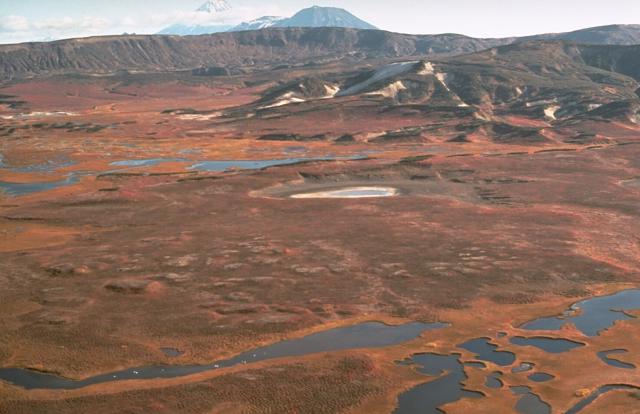
A strict nature reserve in Russia’s remote Far East, Kronotsky protects a landscape of volcanoes, geysers, and pristine wilderness across nearly 11,000 square kilometres of the Kamchatka Peninsula.
At a glance
Kronotsky is one of Russia’s most isolated protected areas, designated as a zapovednik—a strict nature reserve dedicated to scientific study. The reserve encompasses active and extinct volcanoes, mountain ranges, and the country’s sole geyser basin. Its dramatic terrain, where fire meets ice, makes it one of the world’s most geologically dynamic regions.
History
The reserve was established in 1934 to preserve the unique natural environment of southeastern Kamchatka. Today it remains a UNESCO World Heritage Site as part of the broader Volcanoes of Kamchatka designation, recognizing its global significance for geology, ecology, and scientific research.
What you see
The landscape is dominated by multiple volcanic peaks, some still active. Lake Kronotskoye, the reserve’s largest water body at 246 square kilometres, lies at the heart of the protected area. Russia’s only geyser basin provides a spectacle of geothermal activity rarely encountered outside Iceland and New Zealand. The harsh subarctic climate creates an ecosystem unlike any other in the region.
Cultural significance
Kronotsky represents a pristine example of a Far Eastern volcanic ecosystem. Its geothermal features and intact wilderness make it invaluable for understanding plate tectonics, volcanology, and cold-climate ecology. The reserve serves primarily as a living laboratory for Russian scientists.
Key facts
- Location: Kamchatka Peninsula, Russia
- Coordinates: 54.93°N, 160.54°E
- Area: 10,990 km² (4,240 sq mi)
- Established: 1934
- UNESCO World Heritage Site: Yes (Volcanoes of Kamchatka)
- Largest lake: Lake Kronotskoye (246 km²)
Practical information & getting there
Access is strictly limited. Only scientists conducting approved research and approximately 3,000 tourists per year are permitted entry. Tourist visits require advance arrangement and a helicopter fee of roughly US$700 for a single day’s visit. The reserve’s remote location on the Kamchatka Peninsula means travel from mainland Russia requires substantial planning and resources.
Sources & resources
Find it on the map
See this place and what’s around it →📷 Become a Cultural Heritage Online photographer
Share your photos of places: they stay published under your name as the author. The more they're seen, the more you get noticed — and soon a contest will reward the most appreciated photos.
Log in or sign up free to add a photo