
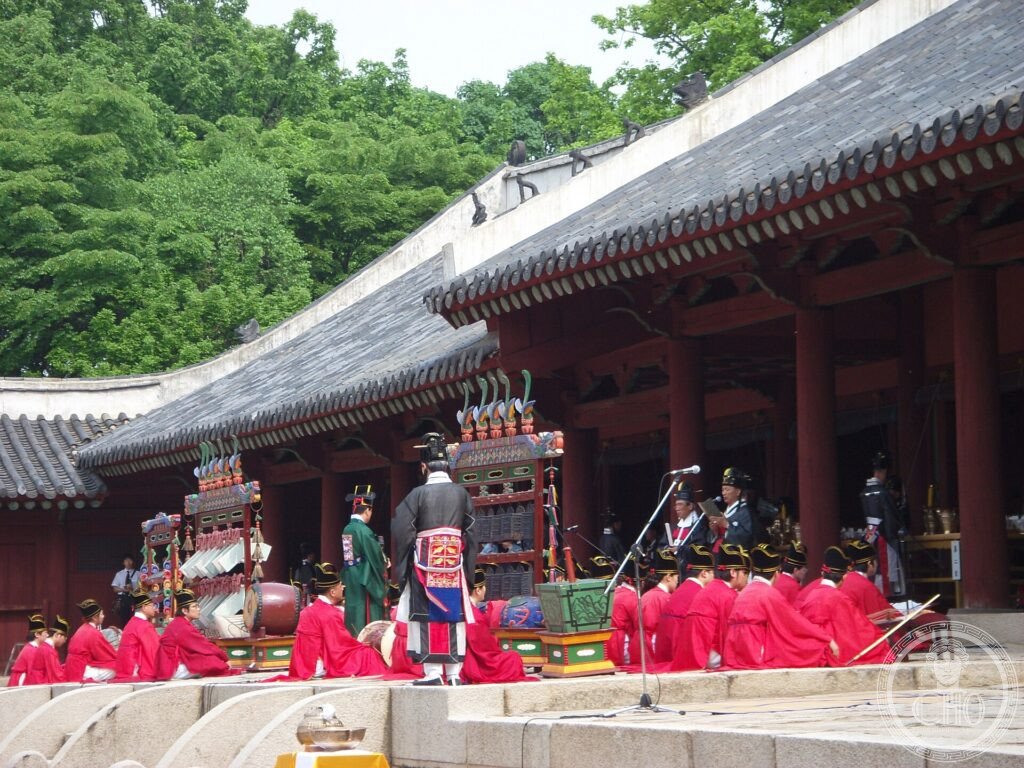
Each May, the Jongmyo Shrine becomes a living temple of remembrance as court musicians and dancers honour the spirits of Joseon dynasty monarchs through ritual, music, and graceful movement.
In UNESCO’s words
The Jongmyo Shrine in Seoul is the setting for a Confucian ritual dedicated to the ancestors of the Joseon dynasty (14th to the 19th century) that encompasses song, dance and music. The ritual is practised once a year on the first Sunday in May and is organized by the descendants of the royal family. It offers a unique example of a Confucian ritual, which is no longer celebrated in China. The tradition is inspired by classical Chinese texts concerning the cult of ancestors and the notion of filial piety. It also includes a prayer for the eternal peace of the ancestors’ spirits in a shrine conceived as their spiritual resting place. The order of the ceremony was defined in the fifteenth century and most elements have remained unchanged until today. During the rite, the priests, dressed in ritual costume with a crown for the king and diadems for the others, make offerings of food and wine in ritual vessels. The Jongmyo Jerye is music played to accompany the rituals and is performed on traditional instruments, such as gongs, bells, lutes, zithers and flutes. The dances are performed by 64 dancers in 8 lines representing the opposing yet complementary forces of Yin and Yang as set out in the Confucian texts.The Munmu dance, accompanied by the harmonious and soothing Botaepyong music, is characterized by a first step to the left. While the Munmu dance symbolizes the force of the Yang, the Mumu dance, accompanied by Jeongdaeeop music and characterized by a movement to the right, represents the force of the Yin. The ancestral ritual is nowadays often considered to be devoid of meaning, especially in the context of the growing importance of Christianity. However, the ritual and its music are protected through the National List of Intangible Heritage and the 1982 Law for the Protection of Cultural Property.
Official description, UNESCO Intangible Cultural Heritage List — Royal ancestral ritual in the Jongmyo shrine and its music
At a glance
Jongmyo Jerye is a Confucian ritual performed once yearly at Jongmyo Shrine to honor the ancestors of the Joseon dynasty. The ceremony combines prayer, song, dance and music in a single observance organized by descendants of the royal family. It remains a rare example of ancestor-veneration practice—similar rituals are no longer celebrated in China—and reflects classical Chinese teachings on filial piety and the spiritual significance of honoring the deceased.
Origins & history
The ritual draws inspiration from classical Chinese texts on ancestor worship and filial duty. The order of the ceremony was established in the fifteenth century, and most of its elements have persisted unchanged to the present day. The shrine itself serves as a spiritual resting place for ancestral spirits, embodying the Confucian framework that shaped the practice across the Joseon period.
The practice
The ceremony unfolds with priests in ritual costume—the king wears a crown while others wear diadems—making offerings of food and wine in ritual vessels. Musicians perform Jongmyo Jerye on traditional instruments including gongs, bells, lutes, zithers and flutes. Sixty-four dancers move in eight lines, with the Munmu dance stepping to the left to the harmonious Botaepyong music, and the Mumu dance stepping right to Jeongdaeeop music. The dancers embody the complementary Yin and Yang forces described in Confucian texts.
Cultural significance
The ritual faces pressure from changing beliefs, particularly the growing influence of Christianity, which has led many to view the practice as lacking meaning. Nevertheless, both the ritual and its music are protected under the National List of Intangible Heritage and the 1982 Law for the Protection of Cultural Property, ensuring its continuance for future generations.
Key facts
- Country: Republic of Korea
- Inscribed: 2008
- UNESCO list: Representative List of the Intangible Cultural Heritage of Humanity
- UNESCO reference: 00016
- UNESCO vocabulary: Confucianism; Dance; Rituals
- Map: Seoul — the locality named in UNESCO’s official description of this element
- Related World Heritage site: Jongmyo Shrine (a different UNESCO designation, not the place of the tradition)
Where to experience it
The Jongmyo Shrine in Seoul is the sole location where this ancestral ritual unfolds in its complete form. Held once yearly on the first Sunday in May, the ceremony draws visitors to witness priests in ritual costume making offerings while musicians perform on traditional instruments and 64 dancers move in precise formations. Organized by descendants of the royal family, the ritual represents a living Confucian practice that has remained largely unchanged since the fifteenth century, offering a rare glimpse into ceremonial traditions no longer celebrated elsewhere.
Sources & resources
- UNESCO — official element page: Royal ancestral ritual in the Jongmyo shrine and its music
- UNESCO — open data record: Intangible Heritage List, reference 00016
- UNESCO — official video: UNESCO film on this element — embedded on this page
- UNESCO — official photograph: Photograph of this element — Seo Heon-gang — National Research Institute of Cultural Heritage, 2008
- Reference — Wikipedia (secondary): Jongmyo jerye — consulted as a secondary reference, not as confirmation
- Cultural Heritage Online: Our archive and city guides

Find it on the map
See this place and what’s around it →📷 Become a Cultural Heritage Online photographer
Share your photos of places: they stay published under your name as the author. The more they're seen, the more you get noticed — and soon a contest will reward the most appreciated photos.
Log in or sign up free to add a photo