
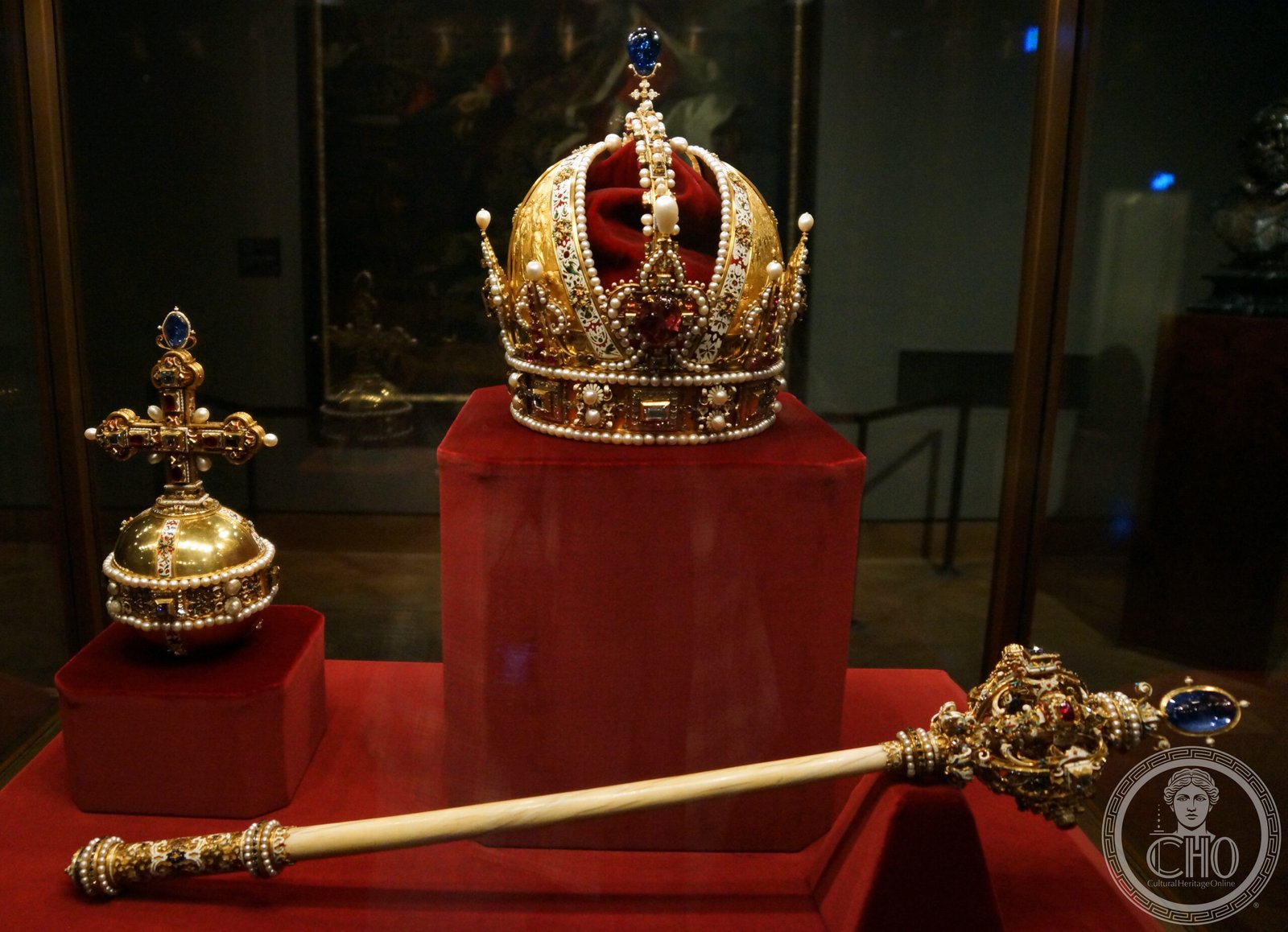
The Imperial Treasury at the Hofburg Palace in Vienna holds one of the world’s most significant collections of secular and ecclesiastical treasures, spanning over a thousand years of European history. Maintained by the Habsburg dynasty across centuries, it now presents 21 rooms of regalia, relics, and dynastic objects — including the Imperial Crown of the Holy Roman Empire, among the most important surviving artefacts of medieval European governance.
At a glance
- Type
- Imperial treasury and permanent museum collection
- Period
- Collection assembled 10th–19th century; museum function formalised after 1918
- Style
- Treasury housed in Renaissance-era Schweizerhof wing of the Hofburg
- Location
- Schweizerhof, Hofburg Palace, 1010 Vienna, Austria
- Coordinates
- 48.2070° N, 16.3639° E
Overview
The Imperial Treasury is one of the most important repositories of European dynastic heritage, assembled by the House of Habsburg over many centuries. It is now affiliated with the Kunsthistorisches Museum and open to the public within the historic Hofburg complex. The 21 display rooms cover secular treasures — crowns, sceptres, orbs, regalia — alongside an extensive collection of ecclesiastical vestments, relics, and devotional objects.
History
The Schweizerhof, where the treasury entrance is located, is the oldest surviving part of the Hofburg and was rebuilt in the sixteenth century in the Renaissance style under Holy Roman Emperor Ferdinand I. Habsburg rulers systematically gathered regalia, jewels, and relics as expressions of dynastic legitimacy and religious authority. After the dissolution of the Habsburg monarchy in 1918, the collection passed to the Austrian state and was opened as a public institution, preserving objects once accessible only to the imperial court and its guests.
What you see
The centrepiece of the secular collection is the Imperial Crown of the Holy Roman Empire, an octagonal goldsmith’s masterpiece dating to the tenth century, alongside the Orb and Sceptre of Austria. Visitors also encounter the Burgundian Treasure — regalia of the Order of the Golden Fleece — and the Habsburg family jewels. The ecclesiastical rooms display elaborate vestments, monstrances, and relics including items associated with the True Cross and the Holy Lance.
Cultural significance
The Imperial Treasury preserves material symbols of political and spiritual authority that shaped the governance of Central Europe for nearly a millennium. Its holdings are irreplaceable primary documents of dynastic culture, religious practice, and goldsmiths’ craft at the highest level. The collection is listed among Austria’s national treasures and managed as part of the federal museum system.
Practical information
- Address
- Schweizerhof, Hofburg, 1010 Vienna, Austria
- Hours
- Wednesday–Monday 09:00–17:30; closed Tuesday. Check official website for current schedule and public holiday exceptions.
- Admission
- Check official website for current ticket prices; combined tickets with Kunsthistorisches Museum available.
- Website
- khm.at/kaiserliche-schatzkammer
Getting there
The Hofburg is in the heart of Vienna’s first district. Take U3 (subway) to Herrengasse or U2 to Museumsquartier, both within a short walk. Tram lines 1, 2, and D stop nearby at Burgring or Rathausplatz. The treasury entrance is in the Schweizerhof courtyard, accessible on foot from Michaelerplatz.
Sources & resources
Find it on the map
See this place and what’s around it →📷 Become a Cultural Heritage Online photographer
Share your photos of places: they stay published under your name as the author. The more they're seen, the more you get noticed — and soon a contest will reward the most appreciated photos.
Log in or sign up free to add a photo