
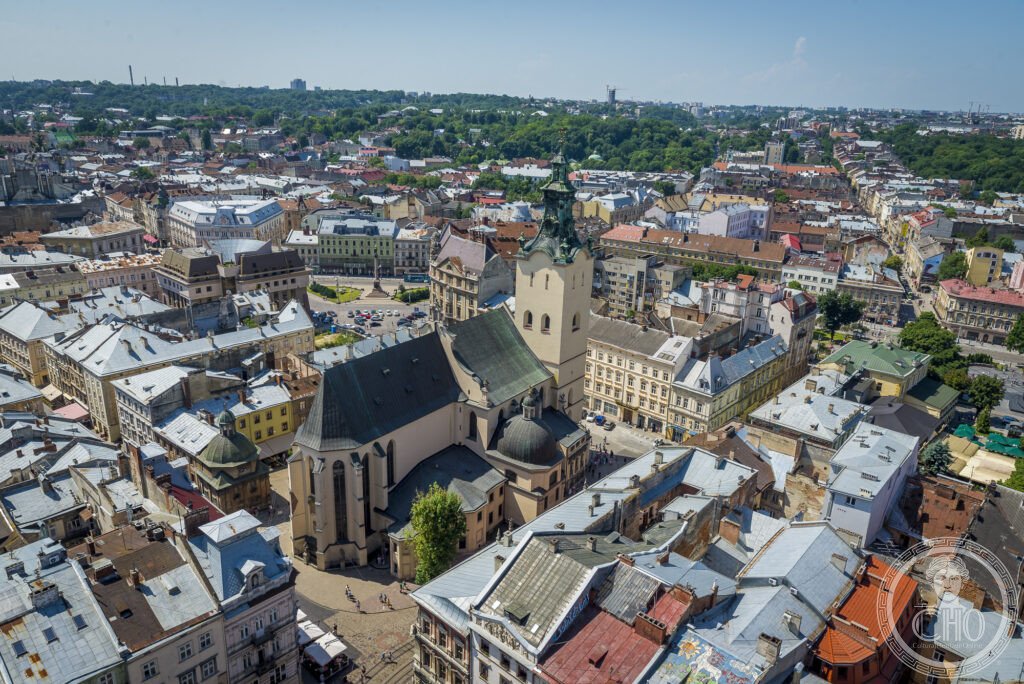
The most architecturally layered city in Ukraine and one of the finest medieval and Renaissance city centres in central Europe — Lviv preserves in extraordinary completeness a city shaped by Polish, Habsburg Austrian, Armenian, Jewish, and Ukrainian cultures simultaneously, and today stands as a living cultural capital of extraordinary resilience, visited by millions precisely because of the threat now facing it.
At a glance
The Historic Centre of Lviv (UNESCO WHS 1998; the inscribed zone covers the historic city centre; population of the city of Lviv approximately 760,000 (the largest city in western Ukraine and the fourth-largest in Ukraine overall)) is located in western Ukraine, approximately 70 km from the Polish border and 550 km west of Kyiv; the city was founded in the mid-13th century by King Danylo of Galicia (Daniel of Galicia; the king who unified the Principality of Galicia-Volhynia and briefly held off the Mongol advance; he named the city Lemberg (German: Lion City) after his son Lev I (Leo I of Galicia)) and grew to become the most important city in the Kingdom of Poland-Lithuania, then the most important city in the Austrian crownland of Galicia under the Habsburg Empire; the architectural character of the city reflects this layering: the Gothic and Renaissance Polish-influenced core (13th–16th century); the Austrian Baroque and Neoclassical expansion (18th–19th century); and the Ukrainian and Soviet-era additions (20th century); the city is unique in Ukraine in having been spared the wholesale destruction that most Ukrainian cities suffered during World War II (Lviv changed hands multiple times — Polish, Soviet, German, Soviet, Ukrainian — but the historic centre was not significantly bombed or destroyed; this is the primary reason for its exceptional preservation); Lviv is the cultural capital of western Ukraine (the Lviv Opera House, the Lviv Philharmonic, the Ivan Franko National University (founded 1661; one of the oldest universities in Ukraine)); the UNESCO inscription specifically recognises the outstanding fusion of Polish, Ukrainian, Armenian, and Jewish cultural traditions that shaped the city over 700 years.
Key facts
- The Rynok Square: the finest Renaissance and Baroque market square in Ukraine — the Rynok Square (the Market Square; approximately 142 × 129 m; the heart of the historic city; surrounded on all four sides by merchant houses from the 16th–18th century; the most important ensemble of Renaissance and Baroque architecture in Ukraine; the Town Hall (the central feature; 65 m; 1835 neoclassical; the observation platform at 45 m gives the finest panoramic view of the city; the staircase; the tower clock); the four Baroque fountains (Neptune, Diana, Amphitrite, Adonis; 18th century; each with a different classical deity; the fountains were added when the square was repaved in the Baroque style; they are smaller than the Roman Baroque model but are the finest examples in Ukraine); the Black House / Kornyakt’s House (Rynok Square 4; the finest Italian Renaissance building in Lviv; completed 1580 by Peter the Italian (an architect whose surname has not survived); the black limestone facade (the colour comes from the pollution and oxidation of the local limestone; the building was never painted; the original colour may have been lighter — the current name “Black House” reflects centuries of patina); the Florentine-influenced rusticated stone portal; now the Museum of Pharmacy, which holds an extraordinary collection of historical pharmaceutical instruments and vessels))
- The Latin Cathedral: the oldest Roman Catholic cathedral in Ukraine and the finest Gothic church in the city — the Latin Cathedral of the Assumption of the Blessed Virgin Mary (Lviv Latin Cathedral; the oldest Roman Catholic cathedral in Ukraine; begun 1360; consecrated 1479; the complex building history (the 14th-century Gothic structure was remodelled repeatedly; the interior is the most complex stylistic layering in any church in Lviv: Gothic ribs and vaults (14th–15th century) + Renaissance chapels (16th century) + Baroque side altars (17th–18th century) + neoclassical and historicist restorations (19th–20th century)); the Boim Chapel (1609–1615; adjacent to the cathedral; the most elaborate single funerary chapel in Ukraine; built by the Boim merchant family; the facade carved with a mass of religious figures and decorative motifs that constitutes the most densely ornamented surface of any 17th-century building in Ukraine))
- The Lychakiv Cemetery: the most important historic cemetery in Ukraine — the Lychakiv Cemetery (Личаківський цвинтар; founded 1786; a UNESCO-associated heritage site; considered one of the finest 19th-century cemeteries in Europe, comparable to Père Lachaise in Paris, Staglieno in Genova, or the Kerepesi in Budapest; 42 hectares; the tombs of Polish, Ukrainian, Jewish, Austrian, and Armenian notables from the 18th–21st centuries; the most moving section (the Field of Mars; the military cemetery for soldiers who died in various conflicts including WWI, the Polish-Ukrainian War of 1918–1919, and those who died in the current conflict with Russia; the Ukrainian flag on many of the graves); the neoclassical and historicist mausoleums (the most elaborate individual monuments date to the Austrian period (1772–1918); the Pushkarev mausoleum (a miniature Greek temple); the sculpture quality is consistently high throughout the cemetery))
- Heritage: UNESCO World Heritage Site, Historic Centre of Lviv, inscribed 1998
- GPS: 49.8419° N, 24.0316° E
History
Foundation by King Danylo of Galicia (c. 1256; the name Lemberg; “Lion City” after the king’s son Leo/Lev); Kingdom of Poland-Lithuania period (1349–1772; the most important period; Lviv was the commercial and cultural capital of the Polish Crown’s Red Ruthenia (Ruś Czerwona); the Armenian community (the Armenian Cathedral, 1363, the oldest building surviving in the historic centre); the Jewish community (the Jewish quarter of Lviv was one of the most important in central Europe from the 14th century); the Italian Renaissance influence (Polish-Italian cultural exchange; the Black House; the Dominican Cathedral); the Holy Roman Empire and Ottoman siege (1672; the Ottomans besieged Lviv but failed to capture it)); the Habsburg Austrian period (1772–1918; the most transformative; Lviv (Lemberg in German) became the capital of the Habsburg crownland of Galicia; the Austrian administration built the Opera House, the University, the neoclassical districts, and the Lychakiv Cemetery; the city was the centre of both Polish and Ukrainian national movements simultaneously); World War I (the city changed hands between Austria-Hungary, Russia, and the newly independent Poland); the interwar period (1918–1939; the Second Polish Republic; Lwów was Poland’s third largest city); World War II (the city was devastated culturally — the Jewish community of approximately 150,000 was almost entirely murdered (the Holocaust in Lviv; the Janowska concentration camp; the Lychakiv ghetto liquidations); the historic buildings however survived); Soviet period (1945–1991); Ukrainian independence 1991; UNESCO WHS 1998; February 2022: Russian full-scale invasion of Ukraine — Lviv became the main entry point for millions of Ukrainian refugees and for international aid; the city’s cultural institutions moved artworks from Kyiv and other cities at risk; the historic centre has not been directly attacked but is on UNESCO’s monitoring list.
What you see
The Rynok Square (start here; the Town Hall observation platform at 45 m; the four Baroque fountains; the Black House at No. 4; the Kornyakt House at No. 6 (the Italian courtyard, the finest Renaissance courtyard in Lviv)); the Latin Cathedral complex (the Boim Chapel is the most extraordinary single structure to visit; allow 30 min for the chapel alone); the Armenian Cathedral (Вірменський собор; 1363; the oldest surviving building in the historic centre; the most complete medieval Armenian church in Europe outside Armenia; the restored interior frescoes; the courtyard with the 16th–17th-century khachkars (Armenian stone crosses)); the High Castle Hill (Високий замок; no intact castle remains, but the hill (413 m; 80 m above the city centre) gives the finest panoramic view of the historic centre and the surrounding region; the path from the Old Town takes approximately 20–25 min); the Lychakiv Cemetery (allow at least 2h; pick up the map at the entrance; the Field of Mars).
Practical information
- Getting there: Lviv Danylo Halytskyi International Airport (LWO; 6 km from the city centre; tram 9 or taxi approximately EUR 3–5; LOT, Ryanair, Wizz Air, Austrian, Lufthansa, and several other European airlines serve Lviv; note: direct flights resumed in 2023 to some destinations but the airspace situation should be verified before travel; the Lviv train station (the main hub for domestic Ukrainian rail; intercity trains to Kyiv (approximately 5–6h on the fastest services; the rail connection is the most common way to travel between Lviv and Kyiv); international trains to Warsaw (9h; PKP/Ukrzaliznytsia; the connection has been heavily used by refugees and returning Ukrainians since 2022); the Kraków bus connection (the Kraków–Lviv route (approximately 5h; multiple bus operators; the most popular cross-border route between Poland and Ukraine; approximate EUR 10–20; the border crossing at Medyka-Shehyni)))
- The coffee house culture of Lviv: the most developed coffee culture in Ukraine and one of the most distinguished in eastern Europe — Lviv coffee (the Austrian heritage in coffee-house culture; Lviv has more cafes per capita than any other Ukrainian city; the Lviv coffee tradition (the city claims that the first coffee house in Austria-Hungary opened in Lviv (Lemberg) in 1829; the precise date and location are disputed but the Austrian coffeehouse culture is palpably present in the surviving 19th-century interiors); the Svit Kavy (World of Coffee) chain (the most atmospheric of the contemporary Lviv coffeehouses; multiple locations; the underground vault at the Rynok Square location); the Dom Legenid (House of Legends; a multi-floor coffee experience building with whimsical themed rooms; the most theatrical coffee experience in Ukraine); the Dzyga (the famous Dzyga (spinning top) café-gallery-arts-space on Virmenska Street; adjacent to the Armenian Cathedral; the most important alternative cultural space in Lviv; exhibitions, concerts, and the most interesting cross-section of the Lviv arts community))
- The Jewish Lviv memory trail: one of the most important Holocaust heritage sites in central Europe — the Jewish Lviv memory trail (before 1939, Lviv (then Lwów) had approximately 150,000 Jewish inhabitants — approximately one-third of the city’s population; the Jewish community of Lviv was among the most culturally distinguished in central Europe; after 1941, the Jewish community was almost entirely murdered — the Einsatzgruppen killings, the Janowska concentration camp (operated by the SS on the outskirts of the city), the Bełżec extermination camp deportations, and the ghetto liquidations of 1942–1943; fewer than 1% of Lviv Jews survived; the sites of memory: the Jewish Quarter (the former Galician Jewish neighbourhood around Staroyevreyska Street; many of the historic synagogues were destroyed; the Golden Rose Synagogue ruins (the most important synagogue in 16th-century Poland, destroyed by the Nazis in 1941; the foundation walls and the bimah platform survive as a memorial); the Janowska Memorial (the site of the Janowska concentration camp on the western outskirts of the city; accessible by tram)))
Getting there
Lviv Airport (6 km; tram or taxi EUR 3–5). Trains from Kyiv (5–6h) or Warsaw (9h). GPS: 49.8419, 24.0316.
Nearby
- Olesko Castle and the Golden Horseshoe of Podolia — 70 km east of Lviv (1h by road); the most romantic medieval castles in Ukraine — the Golden Horseshoe (Золота підкова; a tourist route connecting three medieval castles east of Lviv: Olesko (the birthplace of the Polish King Jan III Sobieski (1674–1696), the king who defeated the Ottomans at the Battle of Vienna in 1683; the castle museum); Pidhoirtsi (one of the finest Renaissance palace-castles in Ukraine; the most intact Baroque palace in western Ukraine; the gardens (partially restored)); and Zolochiv (the most accessible of the three castles; a 17th-century Baroque palace with Japanese and Chinese pavilions (the exotic follies added by the Austrian administration))); the most efficient way to visit all three is by car or guided tour from Lviv
- Carpathian Mountains (Bukovel) and Hutsul culture — 200–250 km south of Lviv (3–4h by road); the finest mountain landscape in Ukraine and the richest folk culture in the Carpathian region — the Ukrainian Carpathians (the eastern extension of the Carpathian mountain chain; the highest peak in Ukraine, Mount Hoverla (2,061 m); the Bukovel ski resort (the largest ski resort in Ukraine and one of the largest in Eastern Europe (after the major Russian and Austrian resorts); 60 km of pistes; the resort was built almost from scratch after 2003; the infrastructure is modern; the ski season runs November–March)); the Hutsul culture (the mountain people of the Ukrainian Carpathians; one of the most distinctive folk cultures in central Europe; the traditional wooden churches (the most important UNESCO Intangible Heritage site in Ukraine is the tserkvy (wooden churches) of the Carpathian region); the Pysanky (the Ukrainian Easter eggs; the Hutsul Pysanka tradition is the most elaborate in Ukraine; decorated with beeswax resist technique and vegetable dyes; each symbol has a specific meaning))
- Kamianets-Podilskyi — 300 km south-east of Lviv (4h by road or 5h by train); the most dramatically situated medieval castle in Ukraine — Kamianets-Podilskyi (the medieval city built on a rocky peninsula in a canyon of the Smotrych River; the canyon walls drop approximately 50 m on three sides of the city; the defensive position is natural and extraordinary; the castle (the Old Fortress; built from the 14th to the 17th century; 12 towers; the entrance bridge across the deep canyon; the fortifications were contested between Polish, Cossack, Ottoman, and Ukrainian forces repeatedly over 400 years; the Ottoman minaret added during the Turkish occupation (1672–1699) to convert the Polish Cathedral into a mosque — when the Poles returned, they added a golden figure of the Virgin Mary to the top of the minaret instead of removing it; the minaret with the golden Madonna is the most unusual architectural hybrid in Ukraine))
Sources
- Wikipedia, Lviv; Rynok Square; Lychakiv Cemetery; Latin Cathedral of Lviv, accessed June 2026
- UNESCO, Historic Centre of Lviv, WHS reference 865, inscribed 1998
- Yaroslav Hrytsak, A History of Ukraine: The Land and Its People, University of Toronto Press, 2023
Find it on the map
See this place and what’s around it →📷 Become a Cultural Heritage Online photographer
Share your photos of places: they stay published under your name as the author. The more they're seen, the more you get noticed — and soon a contest will reward the most appreciated photos.
Log in or sign up free to add a photo