
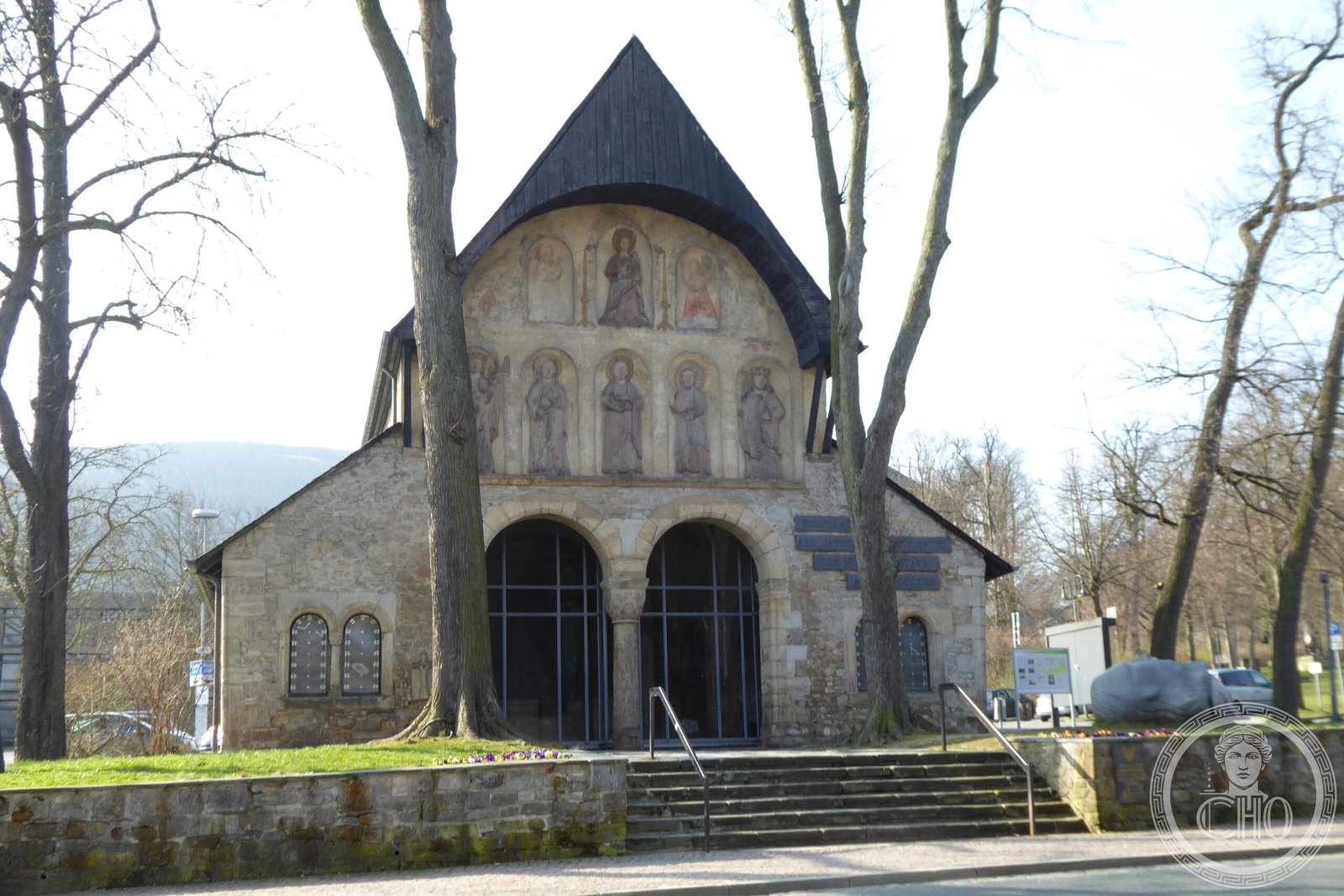
A Benedictine collegiate church dedicated to Saints Simon and Jude, built as part of Goslar’s imperial palace complex in the mid-11th century. Though demolished two centuries ago, its northernmost portal survives as a haunting reminder of medieval grandeur.
At a glance
Goslar Cathedral was a church of Benedictine canons, not a bishop’s seat, yet bore the German title Dom—a term applied to both cathedrals and collegiate churches. Built between 1040 and 1050, it stood at the heart of the Imperial Palace district until its demolition in 1819–1822.
History
The church was constructed during the reign of the Salian emperors, when Goslar flourished as an imperial residence. It served the canons regular of the Benedictine order for nearly eight centuries. Religious and political upheaval in the early 19th century sealed its fate: the structure was torn down between 1819 and 1822, a loss emblematic of the period’s often careless demolition of medieval monuments.
What you see
Almost nothing remains. The sole survivor is the porch of the north portal—a fragment of Romanesque stonework that testifies to the church’s former architectural ambition. Visitors to Goslar must imagine the vanished basilica from this solitary threshold and the historical records that preserve its memory.
Cultural significance
Goslar Cathedral embodied the deep intertwining of religious and secular power in the Holy Roman Empire. Its position within the imperial palace complex underscored the close relationship between church and crown during the 11th century. Though physically obliterated, it remains significant to the study of Romanesque ecclesiastical architecture and the urban history of one of medieval Germany’s most important cities.
Key facts
- Country: Germany
- City: Goslar
- Coordinates: 51.90325, 10.4278
- Dedicated to: Saints Simon and Jude
- Built: 1040–1050
- Demolished: 1819–1822
- Surviving element: North portal porch
Practical information & getting there
Goslar is accessible by rail and road in Lower Saxony. The site of the former cathedral lies within the medieval town center, a UNESCO World Heritage Site. While the church itself no longer stands, the town preserves extensive Romanesque and Gothic architecture, and the Imperial Palace district rewards exploration. Contact Goslar tourism for current visiting information and guided tours.
Sources & resources
Find it on the map
See this place and what’s around it →📷 Become a Cultural Heritage Online photographer
Share your photos of places: they stay published under your name as the author. The more they're seen, the more you get noticed — and soon a contest will reward the most appreciated photos.
Log in or sign up free to add a photoIs this page about you?
This page is read by travellers and heritage enthusiasts who find it on Google. Tell us how you are connected to this place and we will take it from there.