Giardino della Kolymbethra

Giardino della Kolymbethra Agrigento Valle dei Templi Terone 488 BCE aranci amari FAI 2001 Sicilia
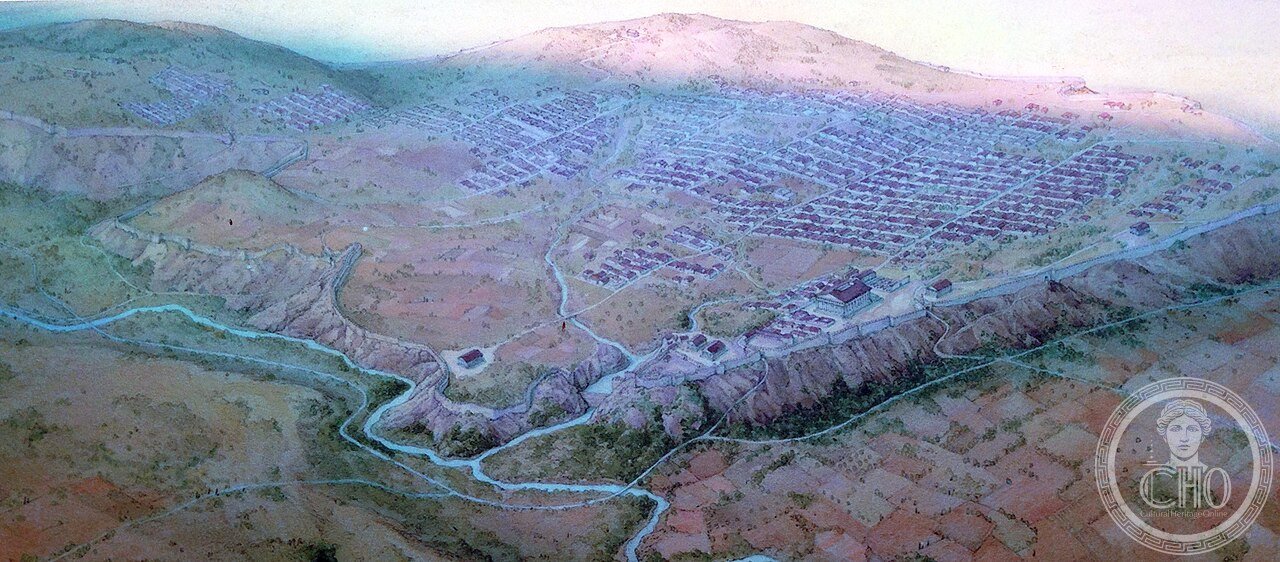
Giardino della Kolymbethra, Agrigento, Sicilia, Italia. Il Giardino della Kolymbethra (FAI, Fondazione Ambiente Italiano, dal 2001) visto dall’alto dal bordo del promontorio della Valle dei Templi: la “kolymbethra” (la piscina artificiale greca 488 BCE: il nome greco κολυμβήθρα = vasca / piscina per nuotare: costruita dalla tirannia di Akragas-Agrigento (Terone (c.488-472 BCE) + suo genero Gelone di Siracusa) dopo la vittoria nella Battaglia di Imera (480 BCE) usando 20.000 prigionieri di guerra cartaginesi come manodopera; le dimensioni originali della piscina (la Kolymbethra di Terone: 20 iugeri secondo Diodoro Siculo (23 ettari; 450 m × 510 m; la più grande piscina artificiale dell’antichità; usata per l’allevamento del pesce + la riserva idrica per l’irrigazione + il nuoto ricreativo della classe dirigente akragantina); il giardino attuale (5 ettari su 23: il FAI gestisce solo la parte centrale della Kolymbethra originale, circa 1/5 della superficie); il canale greco di irrigazione del IV sec. BCE visibile nella parte meridionale del giardino (la canaletta in pietra (60 cm × 40 cm; tecnica in opus incertum); gli aranci amari (Citrus aurantium: 250 esemplari; l’arancia amara di Agrigento; usata come porta-innesto per il limone IGP della Sicilia; fiorita a marzo-aprile); i carrubbi (Ceratonia siliqua: 45 esemplari; età stimata 300-400 anni))). FAI Fondo Ambiente Italiano (in gestione da 2001 CE dalla Regione Siciliana). Foto via Wikimedia Commons.
Agrigento, Sicilia, Italia · La “kolymbethra” (piscina artificiale greca 488 BCE di Terone; 20.000 prigionieri cartaginesi di Imera; la più grande piscina dell’antichità); 5 ettari di giardino mediterraneo FAI (aranci amari + olivi + carrubbi); tra il Tempio dei Dioscuri e il Tempio di Vulcano; UNESCO Valle dei Templi (rif. 831)

Giardino della Kolymbethra

Il Giardino della Kolymbethra (FAI dal 2001) è uno dei giardini più insoliti d’Italia — 5 ettari di aranci amari, olivi e carrubbi centenari cresciuti al fondo dell’antica piscina artificiale greca di Akragas (488 BCE, scavata da prigionieri cartaginesi dopo la battaglia di Imera), incuneati tra il Tempio dei Dioscuri e il Tempio di Vulcano nella Valle dei Templi di Agrigento.

At a glance

Kolymbethra Agrigento Valle Templi (the most precisely Kolymbethra zone Agrigento Sicilia Italy 37.2886 N 13.5803 E FAI Fondo Ambiente Italiano managed since 2001: the site (the Garden of Kolymbethra: the FAI-managed garden occupies the floor of the ancient Greek artificial pool (“kolymbethra” = κολυμβήθρα: a Greek word meaning “pool for swimming” or “tank for fish-farming”)); the ancient pool (the Kolymbethra of Akragas: the most precisely described artificial pool of the ancient Greek world (the primary source is Diodoros Sikoulos (Diodorus Siculus, c.90-30 BCE, Library of History 11.25.3): “Terone built a pool called the Kolymbethra, 7 stadia in circumference and 20 cubits deep, which he fed with water from the spring of Akragas and from the river; a multitude of fish was farmed there for the table, and many swans nested there”; the specific calculation: 7 Greek stadia = 7 × 185 m = 1,295 m perimeter; 20 Greek cubits = 20 × 0.463 m = 9.26 m depth; area = approximately 110,000 m² (11 hectares); the FAI garden is 5 hectares, approximately 1/2 of Diodoros’s stated area — the discrepancy is explained by the accumulation of 2,500 years of silt (the original depth of 9 m has been reduced to 0.5–2 m by silting)); the FAI management (the FAI assumed management of the Kolymbethra in 2001 CE under a 25-year lease from the Regione Siciliana (renewable); the restoration work: the FAI cleared 3 meters of accumulated vegetation (1990s CE invasive plants: giant cane (Arundo donax), wild fennel (Foeniculum vulgare)) in 2001–2005 CE; the planted garden: 250 bitter orange trees (Citrus aurantium; planted 2002–2006 CE), 45 carob trees (Ceratonia siliqua; estimated 300–400 years old; pre-existing), 80 olive trees (pre-existing; estimated 150-250 years old))).

Key facts

  • I 20.000 prigionieri cartaginesi di Imera e perché la piscina di Terone fu la più grande opera di ingegneria idraulica della Grecia occidentale del V sec. BCE: the Himera battle and its hydraulic legacy (the Battle of Himera (480 BCE; the same year as Thermopylae in Greece): the Sicilian coalition forces (Terone of Akragas + Gelone of Syracuse: combined army c.55,000 men) defeated the Carthaginian invasion force of Hamilcar Barca (army c.100,000-300,000 in ancient sources; modern estimates: 20,000-50,000) at the mouth of the Himera river; the Carthaginian defeat was total: Hamilcar Barca was killed during the battle (the ancient sources disagree on whether he died fighting or threw himself into the sacrificial fire (the sacrificial fire is the version in Herodotus 7.167); the prisoners: Diodoros Sikoulos records 20,000 Carthaginian prisoners of war were taken; Terone allocated them as slave labor to the Kolymbethra construction; the construction: the pool required: (1) excavation of the pool basin to 9 m depth (the bedrock at Agrigento is soft calcarenite limestone (calcite sand-stone: Pliocene, 5-2 Ma): relatively easy to cut with iron pickaxes at 20,000 workers × 180 work-days × 0.5 m³/day-worker = 1,800,000 m³ of excavation in 200 days (a plausible figure)); (2) the hydraulic canal system (the channels feeding the pool from the Akragas spring + the Akragas river: the visible channel section in the FAI garden (the “canale greco del IV sec. BCE”: 60 cm × 40 cm; 180 m of visible length; built in opus incertum (irregular stone without mortar) — the same technique as the contemporary Greek temples of Akragas)))
  • GPS (Giardino della Kolymbethra, ingresso): 37.2886° N, 13.5803° E

History

Dalla piscina di Terone 488 BCE al giardino FAI 2001 CE (the most precisely Kolymbethra zone history: the Akragas context (Akragas (the Greek name; the Roman name: Agrigentum; the modern name: Agrigento): the largest Greek city in Sicily in the 5th century BCE; Diodoros Sikoulos estimated the population at 200,000 (a probable overcount; modern estimates: 50,000-100,000); the wealth of Akragas in the 5th century BCE (the primary source for the prosperity of Akragas: Pindar’s Pythian Odes (Od. 12, 498 BCE) written for an Akragas victor at the Pythian Games in Delphi: “δέκομαι τὸν εὐκλέα ἄνθρωπον ἐνθρόνιον” (I welcome the glorious man to his throne): Pindar wrote this as a compliment to Terone, who had won the chariot race at Delphi 498 BCE; the historical context: Akragas in 500-472 BCE was the second wealthiest Greek city in the Mediterranean after Syracuse)); the 2,500 years of abandonment (the pool abandoned after the Carthaginian destruction of Akragas in 406 BCE: the city was sacked and burned by Hannibal Mago and Himilcon; the surviving population fled to Gela and Syracuse; the Kolymbethra was never restored to its original function after 406 BCE; the subsequent 2,300 years: gradual silting + vegetation growth + informal agricultural use (olive and citrus cultivation by local farmers from the 16th century CE onwards))); the FAI restoration (2001 CE: the FAI assumed management; 2001-2005 CE: clearance of invasive species + archaeological survey; 2006 CE: opening to the public).

What you see

Il giardino, il canale greco, gli aranci amari, i carrubbi, e i templi (the most precisely Kolymbethra zone visit (1–1.5 hours): the access (the Kolymbethra garden is inside the Archaeological Park of the Valley of Temples; ticket: €12 for park + €4 for Kolymbethra (combined)); the entry (the garden entrance is near the Temple of Castor and Pollux (Tempio dei Dioscuri; 480 BCE ruins); GPS: 37.2886, 13.5803; the descent into the garden: a cobbled path descends 6 m from the park level to the garden floor (the descent represents entering the ancient pool basin)); the bitter orange trees (the 250 bitter oranges in 3 rows: the harvest (November–January): the FAI harvests the bitter oranges and produces the “Marmellata di Arance Amare della Kolymbethra” (bitter orange marmalade; sold at the FAI shop at the garden exit; €8/jar; production: approximately 4,000 jars/year)); the Greek canal (the “canale greco del IV sec. BCE”: visible on the southern edge of the garden (60 m from the bitter orange grove); a channel cut in the rock (60 cm wide, 40 cm deep, 180 m visible length) that carried spring water from the Akragas spring into the pool (the spring: still active; GPS: 37.2884, 13.5799); the carob trees (the 45 ancient carob trees: the oldest (estimated 400 years, CE 1620 planting) has a 4 m trunk circumference; visible at the center of the garden; the carob pod (Ceratonia siliqua fruit): the sweet pulp of the pod was used as a substitute for chocolate in Sicilian pastry from the 16th century CE; the FAI produces “Farina di Carrubo della Kolymbethra” (carob flour); the view to the temples (from the garden looking south: the Temple of Vulcan (Hephaistos; 450 BCE; ruins) on the western ridge; from the garden looking north: the Temple of Castor and Pollux (only 4 columns standing; 480 BCE)).

Practical information

  • Come visitare il Giardino della Kolymbethra nell’ambito del tour della Valle dei Templi di Agrigento e quando va per la fioritura degli aranci: la visita (il Giardino della Kolymbethra è dentro il Parco Archeologico della Valle dei Templi (biglietto parco €12 + Kolymbethra €4 = €16 totale; il parco è aperto 8:30–19:00 (apr-ott) e 9:00–17:00 (nov-mar)); il momento migliore per visitare: (1) marzo–aprile: la fioritura degli aranci amari (la fiorita: piccoli fiori bianchi (zagara); il profumo intenso di zagara: i 250 aranci in fiore producono un aroma percepibile da 300 m di distanza; la produzione di miele di zagara a Agrigento); (2) novembre–gennaio: la raccolta delle arance (il colore degli agrumi arancio contro le foglie verdi e il cielo blu invernale di Agrigento)); il trasporto (Roma → Agrigento: Trenitalia + Busitalia (4h30; €40); Palermo → Agrigento: Autoservizi Cuffaro (2h; €9; 8 corse/giorno); la navetta del Parco dei Templi: pullmino elettrico circolante sui 3 km del parco (incluso nel biglietto); la Kolymbethra è a 15 min a piedi dall’ingresso principale))

Getting there

Dal Parco Archeologico Valle dei Templi (biglietto parco €12 + Kolymbethra €4). Auto: SS115 da Agrigento (3 km). Bus TUA da Agrigento centro (€1.20). GPS: 37.2886, 13.5803. Apertura 9 AM–17 PM.

Nearby

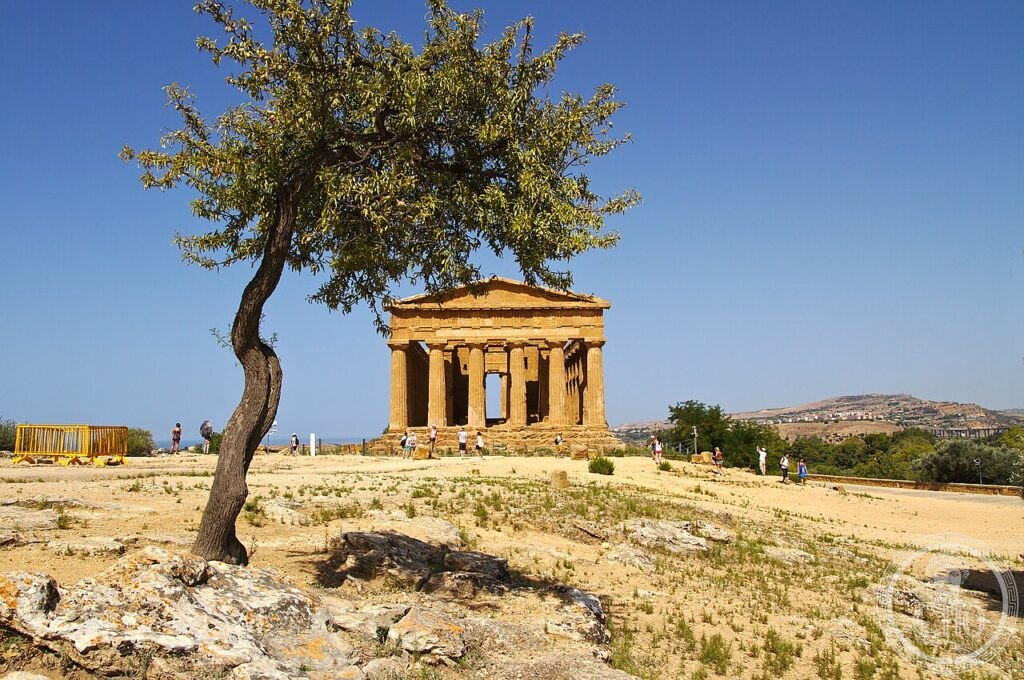
  • Valle dei Templi — Tempio della Concordia (UNESCO 1997 rif. 831) — 500 m (il tempio greco meglio conservato al mondo dopo il Partenone; 440 BCE; visita inclusa nel biglietto parco)
  • Museo Regionale Archeologico Agrigento (C. Empedocle 90) — 2 km (la collezione vascolare della Sicilia greca; il Telamon di Zeus Olimpio (7.75 m; il più grande frammento di statua greca in pietra; V sec. BCE); €8)

Sources

  • Wikipedia, Garden of Kolymbethra; Akragas; Battle of Himera, accessed June 2026
  • Diodoros Sikoulos, Bibliotheke Historike 11.25.3, c.60-30 BCE (primary source for the 488 BCE Kolymbethra)
  • FAI Fondo Ambiente Italiano, Giardino della Kolymbethra, fondoambiente.it, accessed June 2026

Hero image: Giardino della Kolymbethra, Agrigento, Sicilia, Italy, Wikimedia Commons. Editorial text © Cultural Heritage Online, 2026.

📷 Diventa un fotografo di Cultural Heritage Online

Condividi le tue foto dei luoghi: restano pubblicate con la tua firma come autore. Più vengono viste, più ti fai conoscere — e presto un concorso premierà le foto più apprezzate.

Accedi o registrati gratis per aggiungere una foto

Do you manage this place?

This page is read by travellers and heritage enthusiasts who find it on Google. Keep it accurate — and make it work for you. Free for non-profit heritage institutions.

📋 Copy & share on social
Scroll to Top