

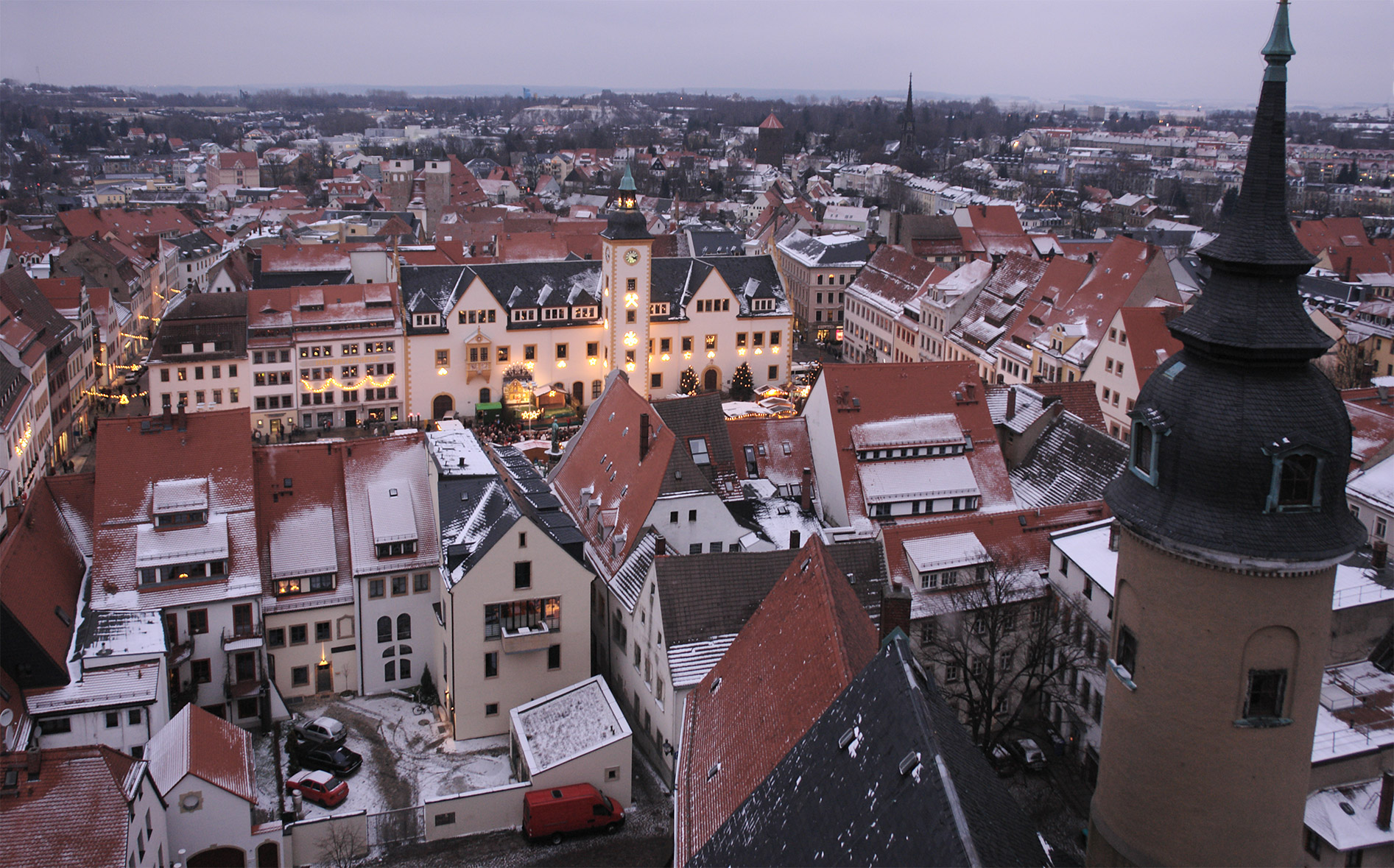
A former silver-mining powerhouse in Saxony that reinvented itself as a center of technological innovation, Freiberg preserves eight centuries of mining heritage within a protected medieval core and hosts the world’s oldest mining university.
At a glance
Freiberg is a university town of approximately 41,000 inhabitants located on the Freiberger Mulde river in the foothills of the Ore Mountains. Its historic center remains entirely under monument protection. The city anchors the Saxon urbanization axis stretching from Plauen through Chemnitz to Dresden, and connects to the capital via the Dresden S-Bahn S3 line.
History
Mining and metallurgy dominated Freiberg for roughly 800 years until 1969, making it the “Silver City” of Saxony. The Reiche Zeche ore mine stands as a principal monument to this era. Freiberg University of Mining and Technology was founded in 1765 as the world’s oldest institution dedicated to mining and metallurgy education. After the decline of extractive industries, the city transformed into a hub for semiconductor manufacture and solar technology, earning its place within Silicon Saxony.
What you see
Freiberg Cathedral ranks among Saxony’s most richly appointed churches. Its treasures include the distinctive tulip pulpit, two organs by master builder Gottfried Silbermann, and the choir converted into a burial chapel for the Albertine Wettins. The cathedral’s Golden Gate (Goldene Pforte) is so significant that three replicas exist in Moscow, Budapest, and Cambridge, Massachusetts. The medieval townscape reflects centuries of prosperity built on silver extraction.
Cultural significance
In 2019, Freiberg joined the UNESCO World Heritage Site Erzgebirge/Krušnohoří Mining Region, recognized for its exceptional testimony to the evolution of mining techniques across multiple centuries. The city embodies the transition from resource extraction to knowledge economy, while its architectural and artistic patrimony documents the wealth generated by its subterranean riches. The annual Freiberger Christmarkt perpetuates regional traditions, featuring mining-themed decorations and the distinctive wooden crafts—Raachermännel, Schwibbögen, and Christmas pyramids—characteristic of the Ore Mountain region.
Key facts
- Location: Freiberg, Saxony, Germany
- Coordinates: 50.9119, 13.3428
- Population: approximately 41,000
- UNESCO World Heritage Site: Erzgebirge/Krušnohoří Mining Region (inscribed 2019)
- Freiberg University of Mining and Technology founded 1765
Practical information & getting there
Freiberg is easily reached from Dresden via the S3 line of the Dresden S-Bahn commuter rail. The city serves as the administrative seat of Landkreis Mittelsachsen (Central Saxony District). The cathedral and historic center are open to visitors; the Reiche Zeche mine offers guided tours. The Freiberger Christmarkt runs annually during the Christmas season.
Sources & resources
Find it on the map
See this place and what’s around it →
📷 Become a Cultural Heritage Online photographer
Share your photos of places: they stay published under your name as the author. The more they're seen, the more you get noticed — and soon a contest will reward the most appreciated photos.
Log in or sign up free to add a photo