
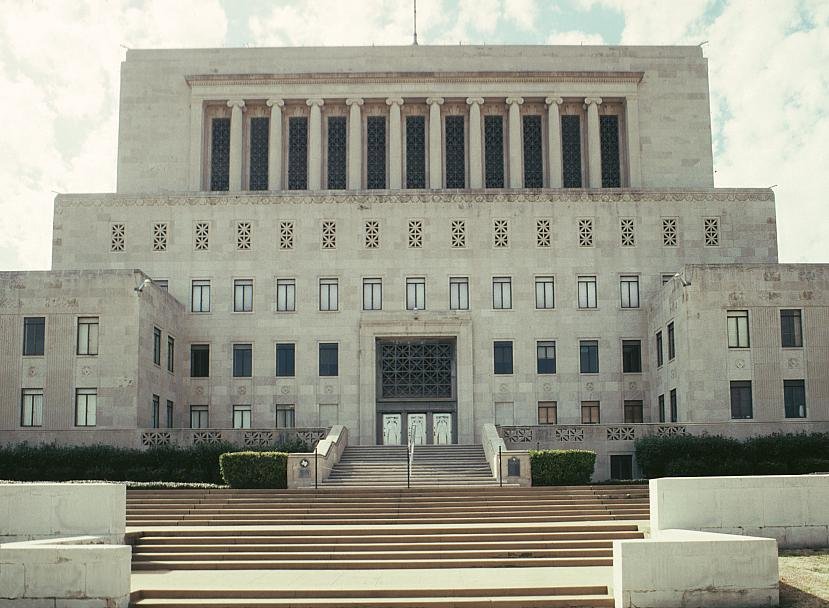
A striking Neoclassical and Art Moderne temple completed in 1931, designed by Wiley G. Clarkson and largely preserved in its original state.
At a glance
This Masonic Temple stands as a significant example of early 1930s institutional architecture in Texas. The building combines Neoclassical restraint with the geometric dynamism of PWA Art Moderne, a style favored for civic and fraternal structures during the Depression era.
History
Completed in 1931, the temple was designed by architect Wiley G. Clarkson during a period of ambitious civic building in Fort Worth. The structure has remained substantially unchanged since its completion, preserving its original design and character for nearly a century.
What you see
The building exemplifies the transition between Neoclassical and Art Moderne aesthetics. Clarkson’s design employs clean lines and geometric forms characteristic of PWA Moderne while maintaining the proportional dignity of classical architecture. The temple’s exterior reflects the institutional confidence of interwar American Masonry.
Cultural significance
The temple represents Fort Worth’s architectural heritage during a transformative period. As a Masonic Temple, it served the fraternal and community functions central to 20th-century American civic life. Its recognition on the National Register in 2017 affirmed its historical and architectural importance to the region.
Key facts
- Location: 1100 Henderson Street, Fort Worth, Texas
- Architect: Wiley G. Clarkson
- Completed: 1931
- Style: Neoclassical/early PWA Art Moderne
- National Register listing: 2017
- Coordinates: 32.7472°N, 97.3383°W
Practical information & getting there
The temple is located on Henderson Street in downtown Fort Worth. Visitors interested in early-twentieth-century civic architecture and Masonic history will find the building’s exterior accessible. Contact information for interior tours should be obtained through the Fort Worth Masonic Lodge.
Sources & resources
Find it on the map
See this place and what’s around it →📷 Become a Cultural Heritage Online photographer
Share your photos of places: they stay published under your name as the author. The more they're seen, the more you get noticed — and soon a contest will reward the most appreciated photos.
Log in or sign up free to add a photoIs this page about you?
This page is read by travellers and heritage enthusiasts who find it on Google. Tell us how you are connected to this place and we will take it from there.