
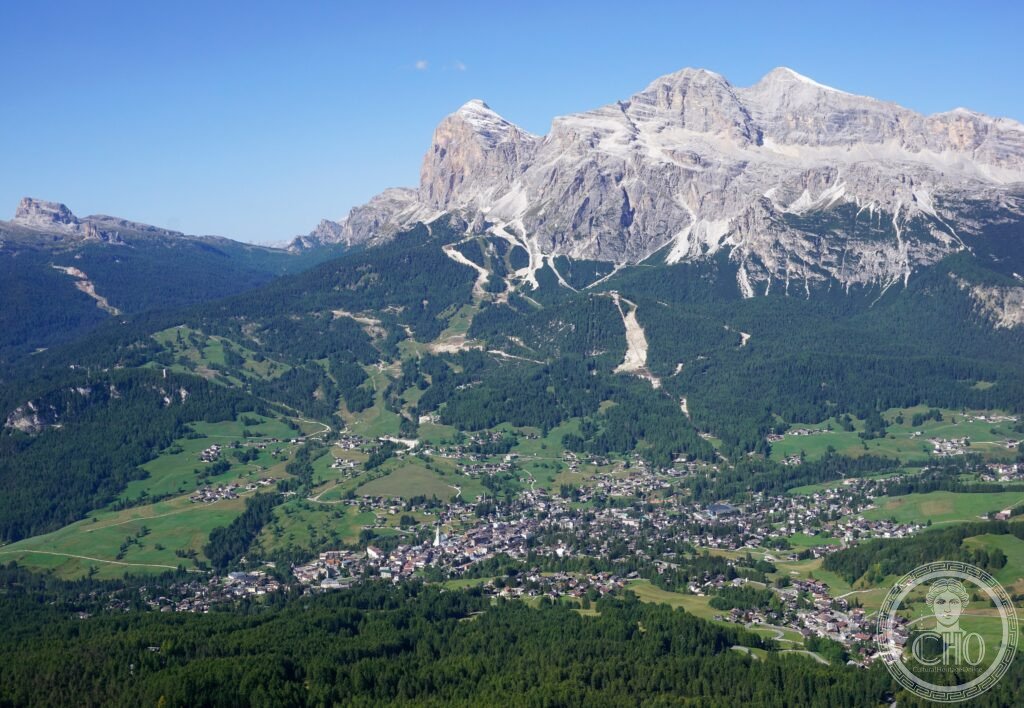
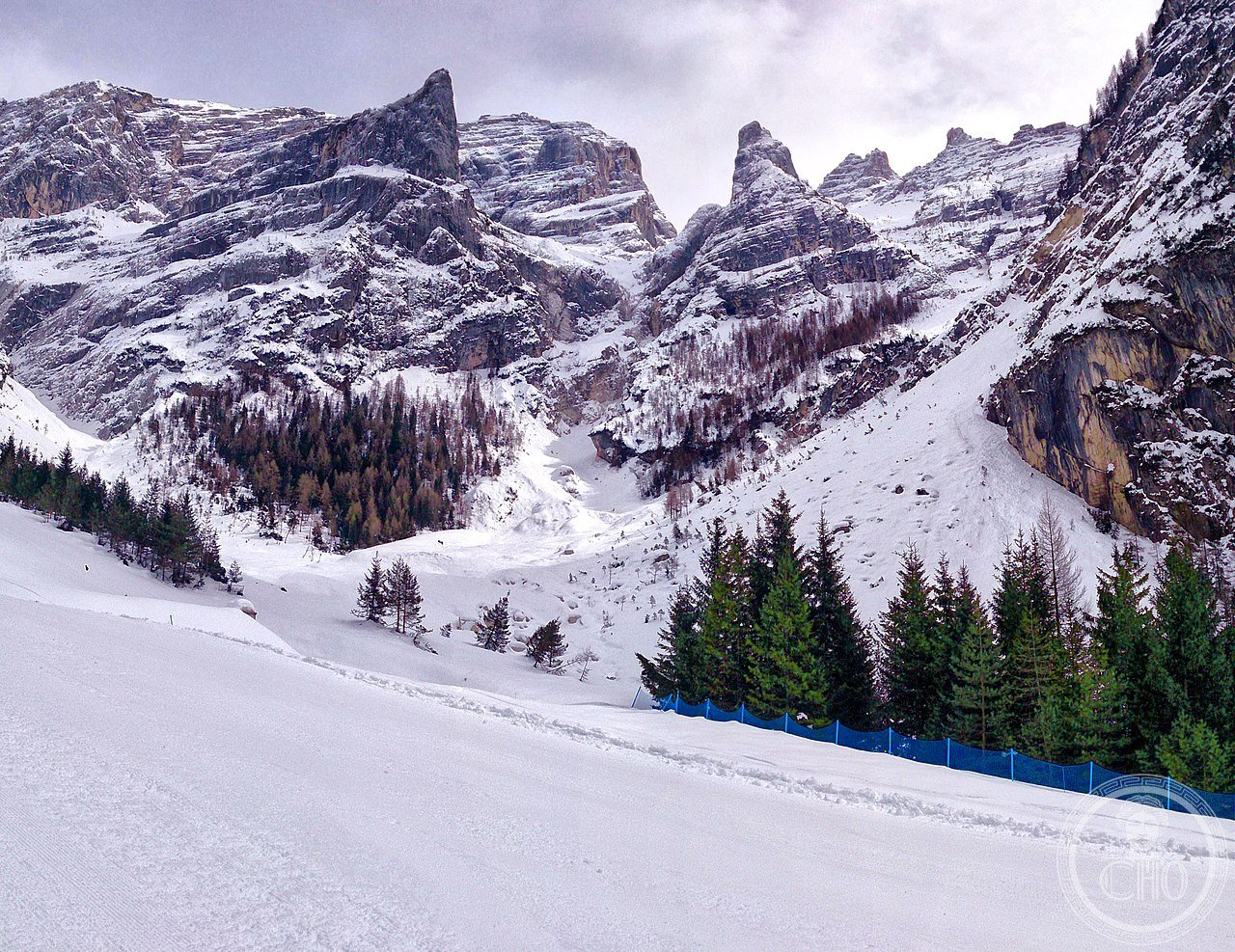
Vertical walls of pale limestone that turn orange-pink at dusk, formed from a 240-million-year-old coral reef and shaped further by war. The Dolomites combine dramatic climbing terrain, Ladin mountain culture, and trenches still cut into the rock from the First World War.
At a glance
The Dolomites are a range of nine distinct massifs spread across Veneto, Trentino-Alto Adige and Friuli-Venezia Giulia, inscribed as a UNESCO World Heritage Site in 2009 for their geology and scenery. They cover 141,903 hectares across eighteen municipalities and take their name from the French geologist Déodat de Dolomieu, who first described the rock in 1791.
The range includes the Pelmo, Marmolada, Pale di San Martino, the Sciliar, the Catinaccio and Latemar, and the Tre Cime di Lavaredo, whose north face rises 2,999 metres. Cortina d’Ampezzo sits close to some of the best-known peaks and is one of the main gateways into the mountains.
Key facts
- Location: Veneto, Trentino-Alto Adige and Friuli-Venezia Giulia, Italy
- Extent: 141,903 hectares across nine massifs
- Rock type: dolomite, calcium magnesium carbonate, distinct from ordinary limestone
- Formation: a Triassic coral reef roughly 240 million years old, uplifted during the Alpine orogeny
- Recognition: UNESCO World Heritage Site, inscribed 2009, under natural criteria
History
The dolomite that gives the range its name and shape began as a tropical coral reef in the Tethys Sea some 240 million years ago. As the African and European plates collided, the reef material was compressed and, during the Alpine orogeny between 50 and 15 million years ago, pushed upward to heights above 3,000 metres. The last glacial maximum, around 20,000 years ago, stripped away softer surrounding rock and left the dolomite towers exposed in their present vertical form.
People have lived in the valleys since the Neolithic and Bronze Age, and the Ladin population, who speak a Rhaeto-Romance language related to Latin, still inhabit these valleys today. Celtic and Venetic peoples traded amber, tin and copper across the mountain passes before the Roman conquest of Raetia brought roads and trade routes through the region. German colonisation from the medieval period brought mining for silver and copper, particularly around South Tyrol, while Belluno came under Venetian control.
Modern mountaineering arrived in the nineteenth century with German, Austrian and British climbers; Paul Grohmann made early ascents of the Marmolada in 1864 and the Tre Cime in 1869, guided by local Innerkofler climbers. Between 1914 and 1918 the Dolomites formed a high-altitude front line between Italian and Austrian forces, with trenches and tunnels cut directly into the rock, some still visible today at Pasubio, Passo Falzarego and the Marmolada glacier, where Austro-Hungarian forces excavated tunnels through the ice known as the Città di Ghiaccio. The wartime engineers also built the first via ferrata, fixed iron rungs and cables that let ordinary soldiers cross terrain that would otherwise require technical climbing. After 1919 these military routes were preserved and expanded for civilian use, and the Dolomites now have several hundred named via ferrata, the most developed network of its kind anywhere. The range was inscribed as a UNESCO World Heritage Site in 2009.
What you see
Each massif offers a different character. The Tre Cime di Lavaredo present a sheer 500-metre north face, with the nearby Laghi dei Piani a short walk away offering reflected views. The Marmolada, at 3,343 metres the highest peak in the range, carries the largest glacier in the Dolomites and is reached by cable car from the Fedaia Pass in both summer and winter. The Pale di San Martino forms a high plateau at 2,589 metres, a flat alpine landscape above the treeline reached by cable car from San Martino di Castrozza.
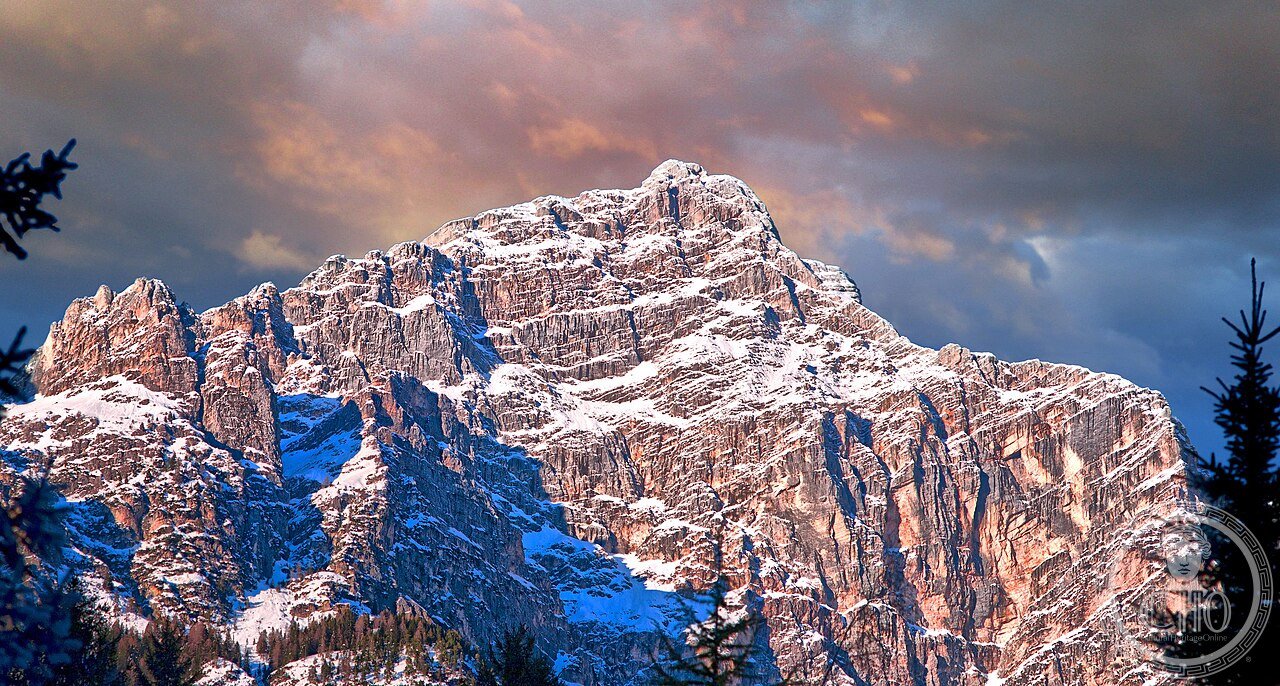
Near Cortina, the Cinque Torri at 2,361 metres are reached by chairlift and preserve an open-air museum of First World War trenches among the five rock towers. The Catinaccio, or Rosengarten, near Bolzano rises to 2,981 metres and is considered one of the best places to see the enrosadira, the alpenglow effect in which the dolomite rock turns pink and orange for twenty to thirty minutes after sunset, a result of how the mineral’s crystal structure reflects light rather than simple romantic effect.
The Ladin valleys, including Badia, Gadertal and Fassa, retain a trilingual culture of Italian, German and Ladin, with a Ladin culture museum at San Martin de Tor in the Badia valley and traditional costume worn at alpine festivals in late summer.
Practical information
- Best bases: Cortina d’Ampezzo for central access to the Tre Cime, Tofane and Cristallo; Ortisei for the Alpe di Siusi and Ladin culture; Moena or Pozza di Fassa for the Catinaccio; Auronzo di Cadore for proximity to the Tre Cime
- Seasons: summer, from July to September, for hiking and via ferrata; winter, from December to March, for skiing across the Dolomiti Superski network, including the Sella Ronda circuit linking four passes and four valleys; May and October for quieter conditions, wildflowers or autumn colour
- Activities: hiking circuits, via ferrata climbing, mountain biking on the Alpe di Siusi, and skiing in winter
- Official information: check current access, cable car and lift schedules with local tourist offices before travelling
Getting there
Cortina d’Ampezzo can be reached by car from Venice via the A27 to Belluno and then the SS51, from Milan via the A4 to Bergamo, or from Bolzano to the various massifs. By train, Venice connects to Belluno with a bus link onward to Cortina, while Bolzano sits on the Brenner mainline with bus connections into the valleys.
Nearby
- Tre Cime di Lavaredo — the range’s best-known formation, with a walking circuit around the peaks
- Cinque Torri — reachable by chairlift near Passo Falzarego, with preserved First World War trenches
- Alpe di Siusi — high plateau accessible from Ortisei, popular for hiking and mountain biking
- Marmolada — the highest peak in the range, with cable car access to its glacier
Sources
- UNESCO
Gallery
Find it on the map
See this place and what’s around it →📷 Become a Cultural Heritage Online photographer
Share your photos of places: they stay published under your name as the author. The more they're seen, the more you get noticed — and soon a contest will reward the most appreciated photos.
Log in or sign up free to add a photo