
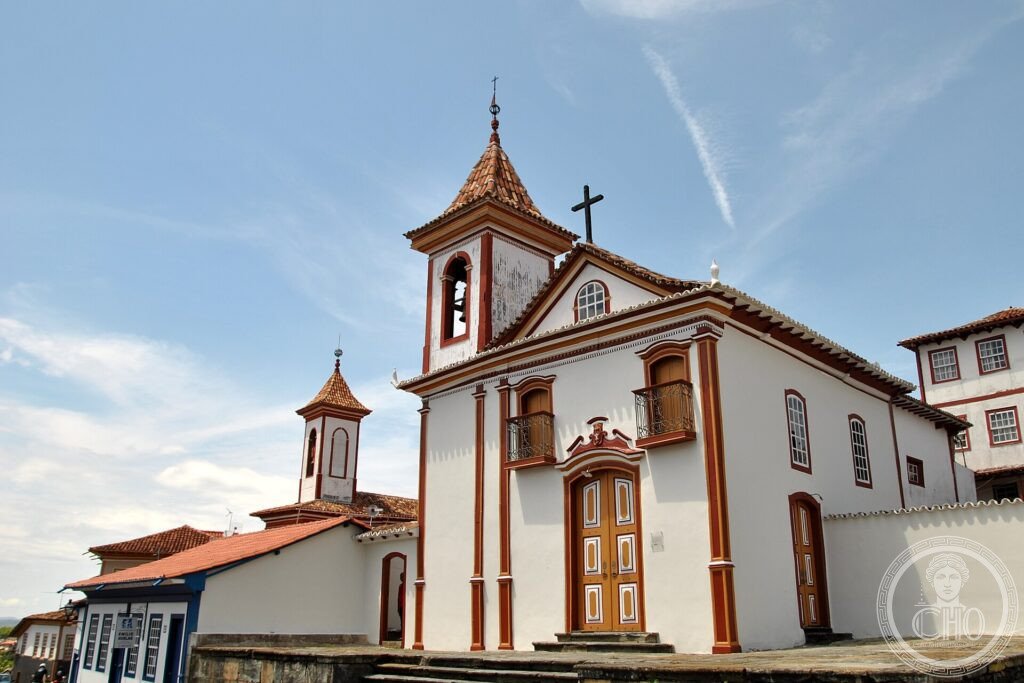
Diamantina rose in the arid mountains of Minas Gerais, where diamonds were discovered in the eighteenth century: a small town of baroque churches and colourful houses clinging to the slopes. Remote and isolated, it keeps intact the charm of a colonial outpost enriched by precious stones.
At a glance
Diamantina, set among the harsh mountains of Minas Gerais in Brazil, was a centre of 18th-century diamond mining, when the discovery of diamonds drew settlers to this remote outpost of the Portuguese empire. The wealth of the gem fields built a town of Baroque churches and colourful colonial houses clinging to the slopes, an elegant settlement in a wild setting. Well-preserved and remote, its historic centre was inscribed by UNESCO in 1999.
Key facts
- UNESCO: World Heritage since 1999 (Historic Centre of the Town of Diamantina)
- Diamonds: a centre of 18th-century diamond mining
- Baroque: colonial churches and painted houses
- Remote setting: in the rugged Espinhaço mountains
- Minas Gerais: one of the historic gold-and-gem towns of the region
- Juscelino Kubitschek: birthplace of the president who built Brasília
History
When diamonds were found in this part of Minas Gerais in the early 18th century, the Portuguese crown took tight control of the lucrative fields, and a town grew up — Arraial do Tijuco, later Diamantina — to serve them. Despite its isolation in the mountains, the diamond wealth funded fine Baroque churches, civic buildings and the homes of officials and miners, built in the colonial manner with painted woodwork and bracketed eaves.
When the diamond boom faded the town was left much as it had been, preserving its 18th-century fabric. In the 20th century it gained fame as the birthplace of Juscelino Kubitschek, the president who built Brasília.
What you see
Steep cobbled streets climb between colourful colonial houses with carved wooden balconies and overhanging eaves, opening onto squares dominated by white Baroque churches with painted trim. The cathedral, the old market hall and the house of Chica da Silva recall the diamond age.
The town’s setting, ringed by the bare Espinhaço mountains, heightens the sense of a remote colonial outpost.
Practical information
- Old town: walkable, but steep and hilly
- Time needed: a day
- Note: on the Estrada Real, the old royal road of Minas
- Setting: in the Espinhaço range, northern Minas Gerais
Getting there
Diamantina is in the north of Minas Gerais, Brazil, about 290 km north of Belo Horizonte. It has an airport and road links. GPS: 18.241° S, 43.600° W.
Nearby
- Serra do Espinhaço — the mountains around the town
- Ouro Preto — the great UNESCO gold town to the south
- Biribiri — a preserved 19th-century mill village nearby
Sources
- UNESCO World Heritage Centre — “Historic Centre of the Town of Diamantina” (ref. 890)
- IPHAN — Brazilian National Historic and Artistic Heritage Institute
- Encyclopaedia Britannica — Diamantina; Minas Gerais
Find it on the map
See this place and what’s around it →📷 Become a Cultural Heritage Online photographer
Share your photos of places: they stay published under your name as the author. The more they're seen, the more you get noticed — and soon a contest will reward the most appreciated photos.
Log in or sign up free to add a photo