
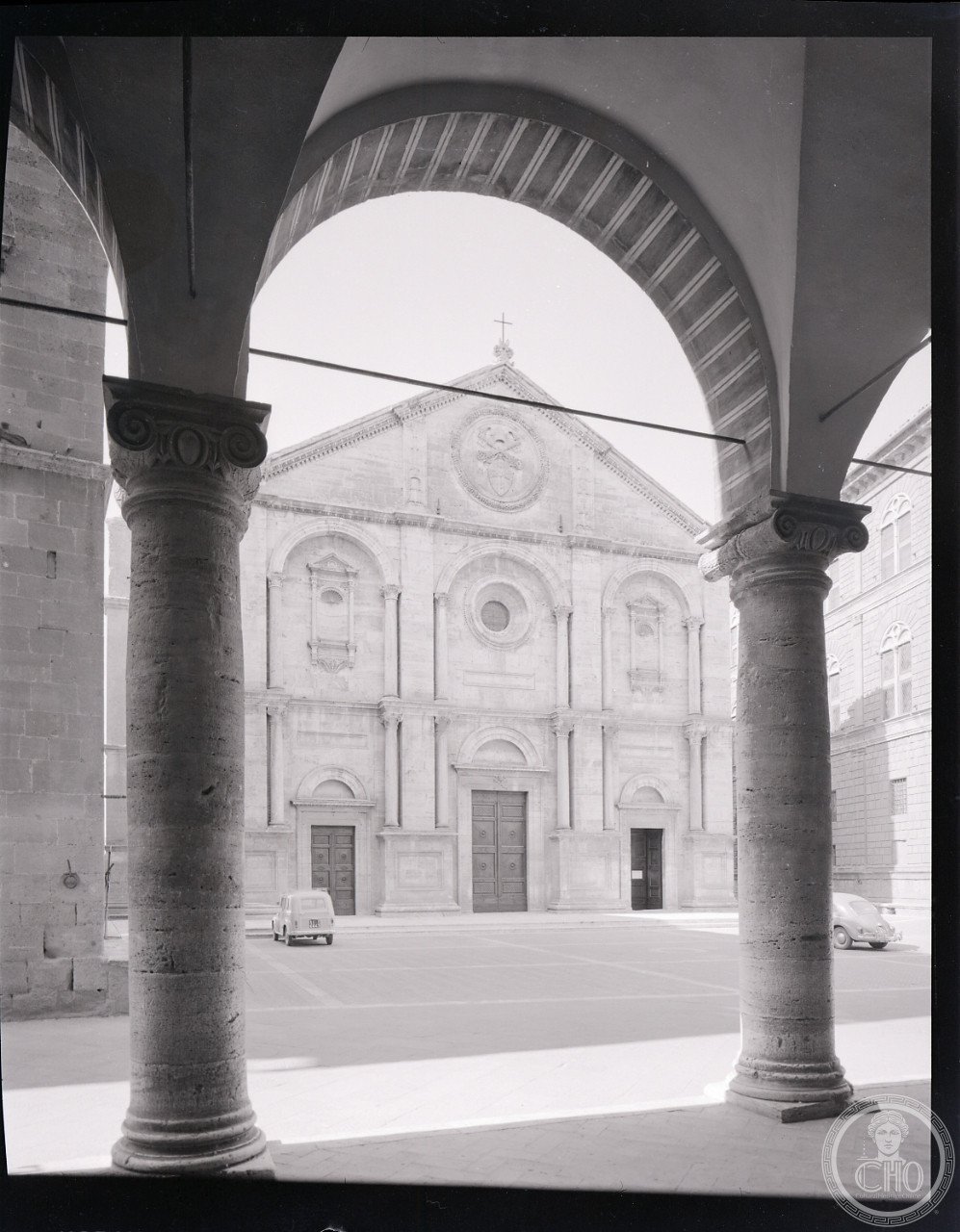
The Co-cathedral of Santa Maria Assunta is a Roman Catholic cathedral dedicated to the Assumption of the Virgin Mary, situated in a historic town in the province of Grosseto in southern Tuscany. Sharing its diocesan authority with a principal cathedral as a co-cathedral — a status common in Italian dioceses reorganised after the Second Vatican Council — it ranks among the most significant religious buildings of its territory and preserves architectural and artistic fabric spanning from the medieval period through the Baroque. The dedication to the Assumption of the Virgin is among the most widespread in Italian sacred architecture and reflects the intense Marian devotion of central Italian communities across the centuries.
At a glance
- Type
- Co-cathedral; Roman Catholic church dedicated to Santa Maria Assunta
- Period
- Medieval foundation; significant later additions and remodelling
- Style
- Central Italian ecclesiastical architecture — Romanesque to Baroque elements
- Location
- Province of Grosseto, Tuscany, Italy · 43.0760° N, 11.6778° E
Overview
Co-cathedrals in Italy are full cathedrals of a diocese that share episcopal functions with another principal cathedral, typically as a result of diocesan mergers carried out in the twentieth century. The title preserves the building’s full canonical dignity and usually reflects the historical importance of the settlement it serves — a town that was once a bishop’s seat in its own right before the reorganisation of ecclesiastical boundaries. Santa Maria Assunta, as a patronal dedication, signals a community with deep roots in Marian devotion and medieval liturgical tradition.
The Grosseto province of southern Tuscany is rich in this pattern of historic bishoprics: the area known as the Maremma was divided among numerous small medieval dioceses — Grosseto, Sovana, Pitigliano, Massa Marittima — before successive papal reforms consolidated them into larger units. The co-cathedral designation preserved the dignity of buildings that would otherwise have been demoted to parish churches.
The church’s interior typically preserves evidence of multiple construction phases, from Romanesque masonry in the foundations to Renaissance chapels and Baroque altarpieces — a compressed history of Italian sacred building traditions.
History
The origins of the dedication to Santa Maria Assunta in this area reflect the early medieval Christianisation of the Maremma and the establishment of episcopal sees that followed the Lombard and Frankish settlements of the seventh and eighth centuries. The oldest fabric of churches bearing this dedication in the Grosseto province often dates to the Romanesque period (eleventh to thirteenth centuries), when systematic cathedral-building across Tuscany transformed the landscape of sacred architecture.
The consolidation of small Tuscan dioceses was accelerated by the Council of Trent (1545–1563) and continued through papal decrees into the twentieth century. The Second Vatican Council’s reorganisation of Italian dioceses in 1986 created the current framework of co-cathedrals, conferring that status on churches whose communities had lobbied for the preservation of their building’s dignity.
Subsequent centuries brought the addition of chapels, altarpieces, and furnishings by local noble families and religious confraternities, leaving the building as a layered record of patronage and artistic taste from the medieval period to the Baroque.
What you see
The facade of a Tuscan co-cathedral of this type characteristically displays Romanesque stonework — banded or plain pietra serena or limestone — with later portal additions and sometimes a Renaissance or Baroque overlay to the upper register. The interior follows a basilican plan with nave, side aisles, and apsed chancel, the walls and altars carrying devotional paintings and sculptural programmes from multiple periods.
Chapels dedicated to local saints and noble families line the aisles, each preserving altarpieces that document the artistic patronage networks of the surrounding territory across several centuries. Choir stalls, pulpits, and baptismal fonts add further layers of decorative and liturgical furniture to the interior.
The surrounding piazza or square in which such buildings are embedded is usually itself of historical significance, with the cathedral forming one side of a civic composition that includes a palazzo comunale or bishop’s residence.
Cultural significance
Co-cathedrals are markers of the ecclesiastical geography of medieval Italy: their distribution across the Tuscan Maremma charts the network of early medieval bishoprics, the consolidations of the Counter-Reformation, and the rationalisation of the modern Church. Buildings that retain this status embody the continuity of Catholic institutional life in small Italian towns over a span of more than a thousand years.
The dedication to the Assumption of the Virgin connects this building to one of the great cycles of Italian sacred art and to the feast of the Assunta (15 August), which remains among the most celebrated religious and civic occasions in communities throughout Tuscany and Lazio.
Practical information
- Location
- Province of Grosseto, Tuscany, Italy (43.0760° N, 11.6778° E)
- Hours
- Check the local parish or diocesan office for current opening times; many Tuscan cathedrals are open for visits outside liturgical hours on a seasonal schedule
- Admission
- Generally free; donations welcome
Getting there
The Province of Grosseto in the Maremma is best reached by car from the A1 motorway (exit Grosseto Nord or Sud) or the SS1 Aurelia coastal road. Rail connections serve Grosseto on the Pisa–Rome line; local bus services reach smaller hill towns in the province from Grosseto station. For specific directions to this co-cathedral, consult local tourist information offices or the Diocesi di Grosseto website for the precise municipal location.
Sources & resources
- Diocesi di Grosseto — official diocesan records
- Regione Toscana cultural heritage portal
- Cultural Heritage Online — Italian and world heritage guides
See the place
Find it on the map
See this place and what’s around it →📷 Become a Cultural Heritage Online photographer
Share your photos of places: they stay published under your name as the author. The more they're seen, the more you get noticed — and soon a contest will reward the most appreciated photos.
Log in or sign up free to add a photo