
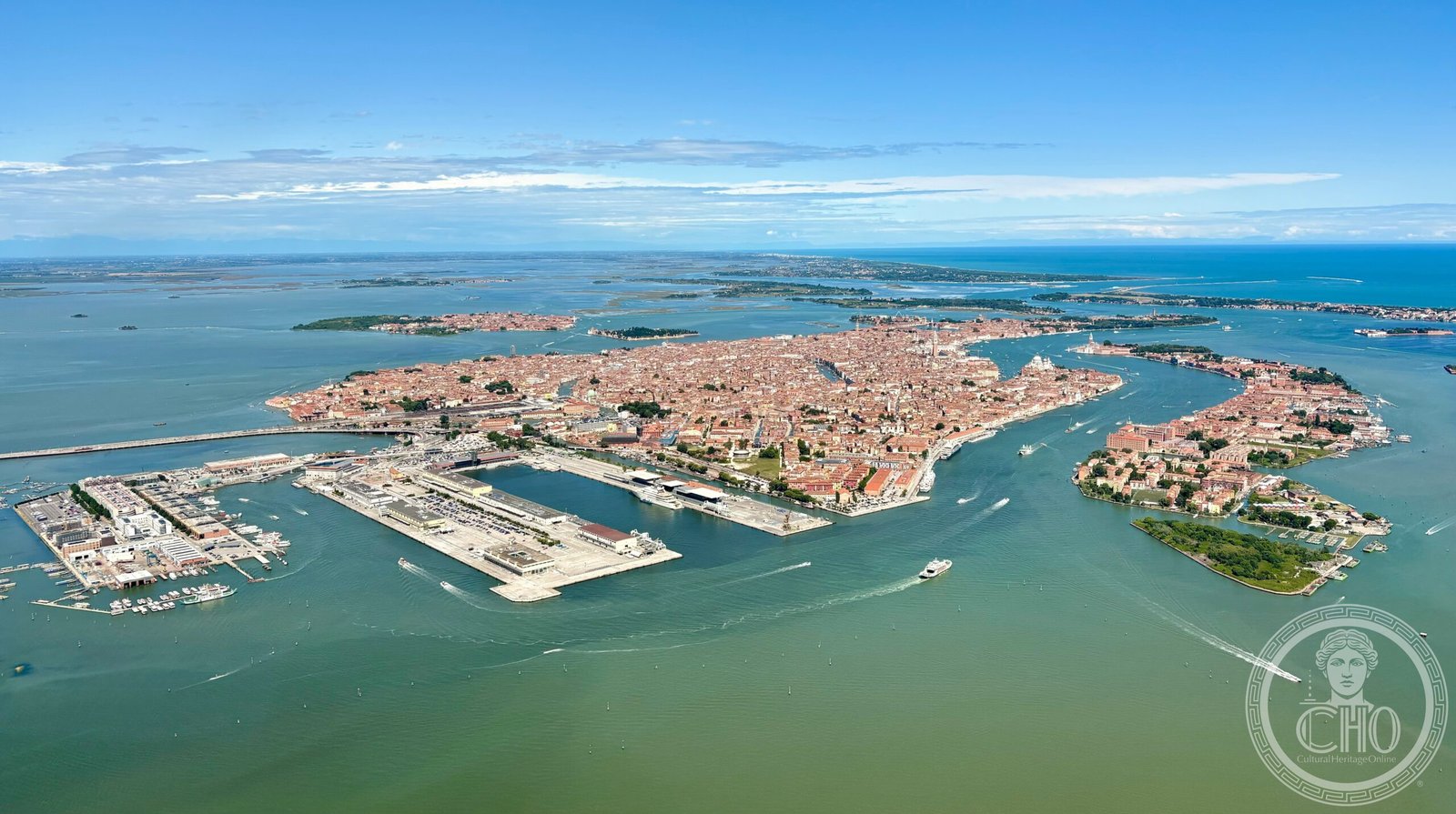
Venice
The capital of the former Republic of Venice, this lagoon city stands as one of the world’s most celebrated urban centres, celebrated for its artistic heritage and distinctive waterborne architecture.
At a glance
Venice served as capital of the Venetian Republic for more than a thousand years, earning titles including the Serenissima and the Queen of the Adriatic. The city and its lagoon are inscribed as a UNESCO World Heritage Site. With 261,728 inhabitants, Venice ranks as Italy’s third most-visited city after Rome and Milan, drawing visitors predominantly from abroad.
History
Venice functioned as the seat of the Venetian Republic throughout the medieval and early modern periods. The republic’s maritime power and commercial networks shaped the city’s development across more than twelve centuries. Its political significance as a major Mediterranean power left lasting imprints on Venetian culture and urban form.
What you see
The city’s physical character reflects its lagoon setting: a network of waterways replacing traditional streets, with palaces, churches and civic buildings reflecting Byzantine, Islamic and Gothic influences. Buildings span centuries of Venetian history, their facades often rising directly from water. The urban layout itself—a intricate arrangement of islands, canals and bridges—constitutes Venice’s defining architectural feature.
Cultural significance
Venice represents a unique achievement in urban planning and cultural development. Its artistic heritage, accumulated over more than a millennium of independent republican life, established it as one of the world’s most beautiful cities. The lagoon environment demanded innovative engineering solutions and shaped a distinctive Venetian civilization recognized globally for its contributions to art, commerce and architecture.
Key facts
- Region: Veneto
- Metropolitan city: Venice
- Population: 261,728 (city); 363,468 (urban area)
- Area: 414.6 km²
- Patron Saint: Mark the Evangelist
- UNESCO World Heritage Site (city and lagoon)
- Address: San Marco 4136
- Coordinates: 45.441063, 12.331633
- Phone: 041 2748111
- Website: https://www.comune.venezia.it/it/content/cultura-venezia
Practical information
Venice’s position on the Adriatic lagoon requires water-based or pedestrian access rather than vehicular transport. Most visitors arrive by train, boat or private car to the mainland stations and then continue by water taxi, ferry or on foot. Opening hours for specific monuments and museums vary; consult individual venue websites for details.
Getting there
Venice is accessible by rail via Venezia Santa Lucia station, served by regional and international trains. The Tronchetto car park and bus terminal serve drivers arriving from the mainland. Boats and water taxis connect the city centre to arrival points. The lagoon city centre is entirely pedestrian.
Sources & resources
- City of Venice official website: https://www.comune.venezia.it/it/content/cultura-venezia
- UNESCO World Heritage Sites: Venice and its Lagoon
- Cultural Heritage Online: https://culturalheritageonline.com
Find it on the map
See this place and what’s around it →Historical events at this place (28)
- 2017 Fino alla fine del mare
- 2017 Varo Meta Gondola Fisica Redentore
- 2017 Electro Camp festival
- 2017 Art Way Channel
- 2017 BeDifferent Art Show
- 2018 Mostra personale di Lionello Trabuio in VirtualTour 3d
- 2018 Festival delle Ville Venete 2018
- 2018 Mostra Vangogh Multimedia Experience
- 2018 Stati Generali del Patrimonio Industriale - Convegno AIPAI 2018
- 2018 14° Giornata del Contemporaneo
- 2018 Le professioni dell’arte: Workshop intensivo sulla movimentazione delle opere d'arte
- 2019 El va! El va! El va! El Carneval el va!
- 2019 Compleanno della nascita della città di Venezia
- 2019 VENICE FASHION WEEK 2019
- 2020 Carnevale di Venezia 2020
- 2020 Selezioni per la Clown Gallery 2020
- Architetto, Scrittore e Ingegnere Tommaso Temanza nato oggi
- 1906 Architetto e Designer Carlo Alberto Scarpa è nato oggi
- Aviatore, militare e imprenditore italiano Giorgio Parodi - nato oggi
- 2020 Festa di San Marco e del boccolo
- 2020 Le Donne Imprenditrici si trovano a Venezia presso Ca' Nigra Lagoon Hotel
- 2021 Happy Birthday Venice! Concerto in live-streaming per celebrare I 1600 anni di Venezia!
- 2021 VENEZIA E FIRENZE: TURISMO, QUALE GOVERNO?
- 2022 Venice Design Week
- 2022 Venice Design Week 2022
- 2022 VENEZIA 1601
- 2024 Carnevale di Venezia - Ad Oriente. Il mirabolante viaggio di Marco Polo, ed. 2024
- 2026 one touch of nature makes the whole world kin
📷 Diventa un fotografo di Cultural Heritage Online
Condividi le tue foto dei luoghi: restano pubblicate con la tua firma come autore. Più vengono viste, più ti fai conoscere — e presto un concorso premierà le foto più apprezzate.
Accedi o registrati gratis per aggiungere una foto